


Tag Archives: Sen. Perry Dozier

Senate passes three budgets, and one has big problems

Dear Neighbors,

There are now less than 10 days left for legislators to wrap up their work at the Capitol. The time remaining in this session will be devoted to debating and voting in the Senate chamber, while some of us put in extra hours negotiating final versions of the three budgets (operating, capital, transportation) — including a lot of hours this Sunday, when we’re not scheduled to be on the “floor” voting.

We have through Friday to complete our work on bills passed over to us by the House of Representatives. Then the focus narrows to two things: acting on bills that are labeled “necessary to implement the budget” and deciding whether to accept changes made to Senate bills by the House.

Yesterday the Senate Ways and Means Committee, which handles the operating and capital budgets, met for what is likely the final time this session. Nearly 60 bills were on our committee’s agenda, and it makes sense that most were House bills, most also come with a price tag — at a time when the Legislature already has a $1.5 billion budget gap to fill.

This is important because, in spite of all the talk we heard about affordability when lawmakers arrived at the Capitol, this session is reaching deeper into the pockets of people across our state. The operating budget approved by the Senate majority on Friday is a prime example. Please keep reading for more about that budget and the other two spending plans adopted by the Senate.

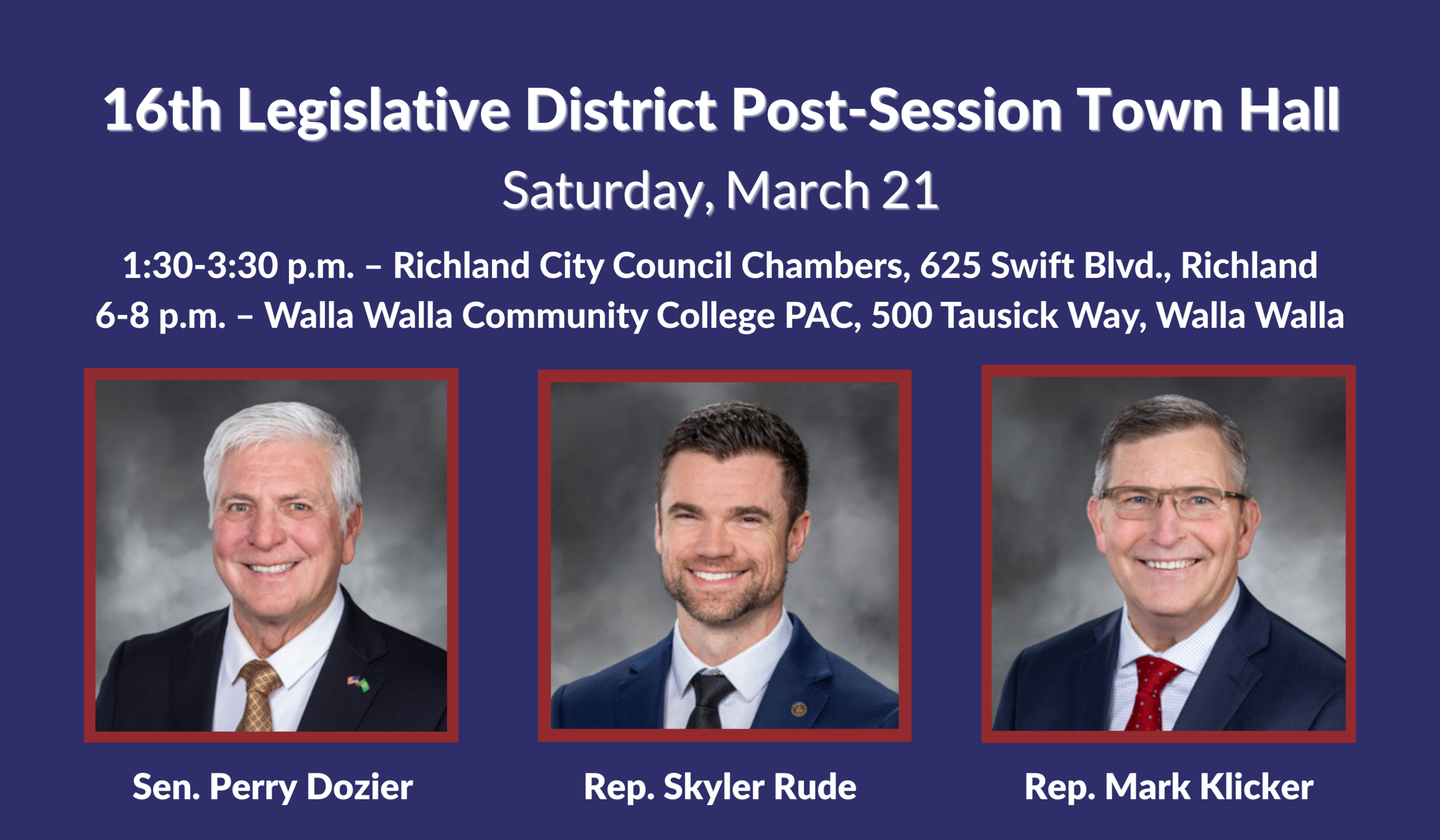
Also, mark your calendar for the pair of post-session town-hall meetings our 16th District delegation has scheduled. I hope you can join us!
Senate’s $80-billion operating budget depends on raiding funds, more tax increases

The new operating budget is labeled “supplemental” because it’s about revisiting the two-year operating budget adopted in 2025 and making adjustments to get through the remainder of this budget cycle — meaning the end of June 2027.

The Senate majority says its plan (Senate Bill 5998) reflects “incredibly difficult decisions in a constrained fiscal environment.”

I’m having trouble seeing how adding $2.3 billion in spending, on top of the $77.9 billion approved less than a year ago, reflects any difficult decisions. And considering a state-record $12.3 billion package of tax increases was also approved in April 2025, how can there be any fiscal constraints?

There is no good reason for state spending to be growing twice as fast as household income in our state. And what the chart below doesn’t show is how the increase in spending on K-12 and higher education has tracked pretty well with the growth of household income — the overspending is happening in non-education areas, and it’s been going on for years regardless of who’s in charge in Washington, D.C.

It also concerns me that the Senate budget relies heavily on what we call “one-time” money to balance. Not only would it drain the state’s reserves and hit the rainy-day fund hard, but it also takes hundreds of millions that should have gone into the capital budget and also raids the Public Works Fund. On top of that, the Senate budget includes more tax increases and assumes the Legislature will adopt a state income tax this year. All of that is irresponsible and unsustainable.

In a statement following the 30-19 party-line vote on the Senate version of the supplemental operating budget, our Republican budget leader refers to this budget “as an $80‑billion house of cards on a shaky foundation of assumptions and short term fixes.”

He’s right — the better approach would be to keep new spending within the available revenue, to avoid new taxes and the use of budget gimmicks. I’m concerned that the Democrats’ approach will simply lead to another budget shortfall next year and a push for another big tax increase. That’s not the way to make living in Washington affordable.

Capital Budget: This was another productive session for our Senate capital-budget team, and we appreciated the unanimous support our work received. Sen. Mark Schoesler of Ritzville and I offer our take on the Senate budget here.

The image below gives a sense of how we worked to make sure the Senate capital budget (Senate Bill 6003) funds infrastructure and other community projects in all four corners of the state, not only in the more populated Puget Sound area.

The task now is to negotiate with the House, which adopted its own capital budget, to produce a final version that will be adopted before the Legislature adjourns. The House version also includes funding to deal with the enormous waste tire pile outside Richland. I’ll wait until then to detail the investments coming to our legislative district and region.


Transportation Budget: This also received unanimous support in the Senate. The fact that the Senate version (Senate Bill 6005) doesn’t rely on taxes and fees is a welcome change from the base transportation budget adopted in 2025. I appreciate that it’s strong on for money for road and bridge preservation, maintenance and facilities.

As with the capital budget, I’ll wait until a compromise is negotiated between the Senate and House before detailing the funding secured for projects in and around our 16th Legislative District.

Encouraging news for Prescott School District is bright spot in budget — but why was bill to protect other districts rejected?

In case you hadn’t heard the great news already — the supplemental operating budgets adopted by the Senate and the House both include money to help put the local Prescott School District back on sound financial footing. It makes me cautiously optimistic that the funding will carry into the final version.

I know the Senate Democrats’ budget leader was aware of the overwhelming community support for Prescott’s Feb. 10 school levy. While I can’t say the “yes” vote of over 86% clinched the budget appropriation, it had to help.

The dollars earmarked for Prescott are not tied to the one-time money being used to balance the supplemental budget. These are unspent funds left from assisting the Marysville School District in 2025.

Prescott needs to present a financial plan capable of convincing the superintendent of public instruction to withdraw his petition to dissolve the district. The budget appropriation will be the anchor of that plan.

Senate Bill 6065 would help Prescott (and potentially other districts) by clarifying the policy that allows school districts to make interfund loans in response to specific financial issues. It passed 49-0 in the Senate and is awaiting a vote by the full House.

Who could be opposed to stronger financial oversight?
Knowing that Olympia’s effort to dissolve the Prescott district originated with financial management by former district employees, I had introduced Senate Bill 6247 to hopefully spare other districts from going through the same ordeal.

My bill would create what amounts to an early-warning system regarding a school district’s finances. Although the Senate passed it unanimously, the education committee in the House made 13 changes before moving it forward to the House Appropriations Committee — which then let the bill die.

I’ve seen a lot of good Senate bills die in this same committee over the years, but it’s very difficult to understand why any legislator would not want to prevent waste, fraud and abuse in our schools — especially the kind that can ruin a district financially.

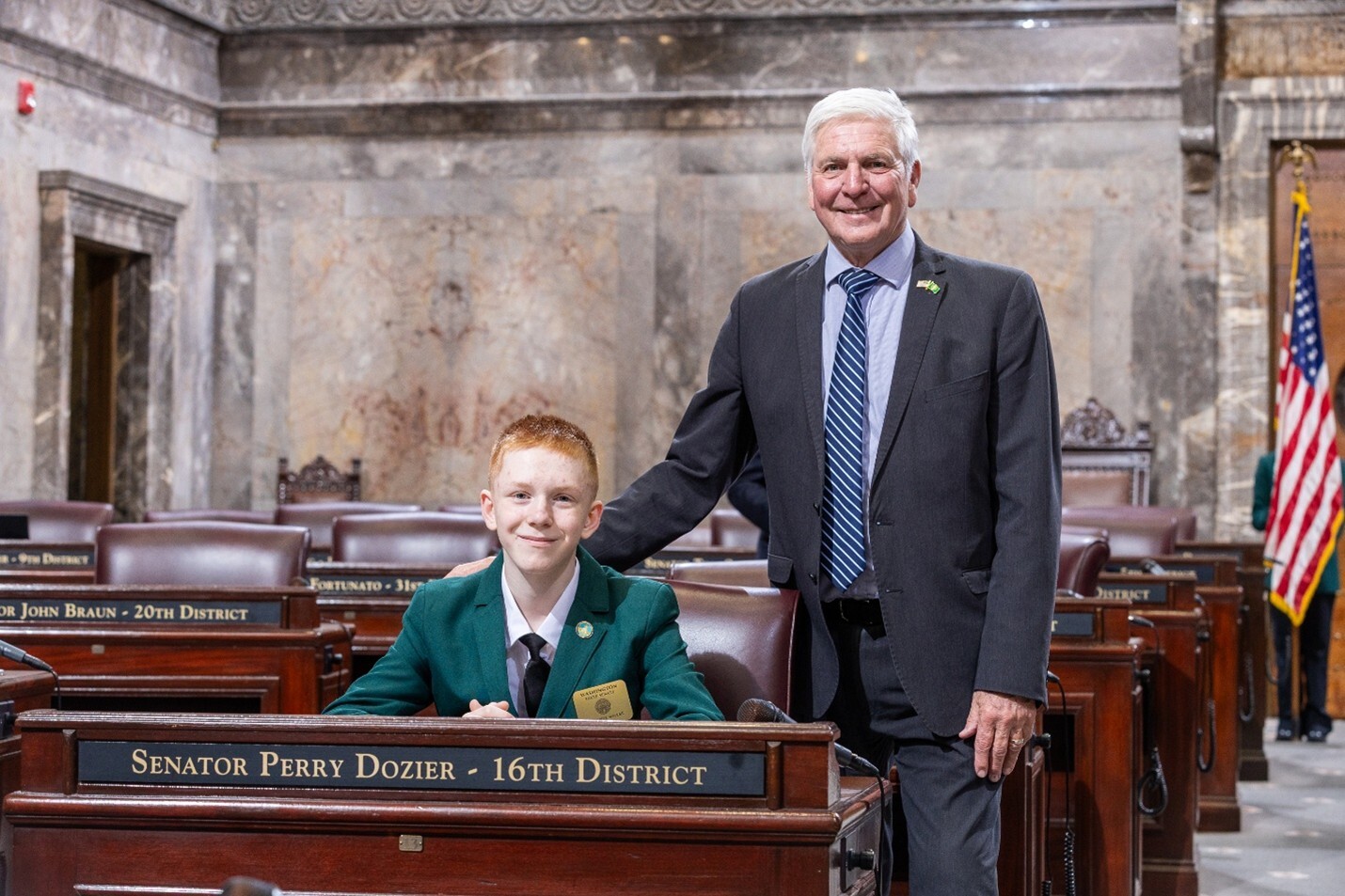
I enjoyed sponsoring Ruwaida El-Atwani as a Senate page recently. She’s a junior at Hanford High School and the 16-year-old daughter of Kadriye and Osman El-Atwani of West Richland.

***

I am working to make living in our state more affordable, make our communities safer, uphold our paramount duty to provide for schools, and hold state government accountable. I’ll work with anyone who shares those goals and wants to find solutions.

Please reach out to my office with your thoughts, ideas and concerns on matters of importance to you. I am here to serve and look forward to hearing from you.

Sincerely,
Perry Dozier
State Senator
16th Legislative District

EMAIL: Perry.Dozier@leg.wa.gov
OLYMPIA PHONE: (360) 786-7630
OLYMPIA OFFICE: 342 Irving R. Newhouse Building
MAILING ADDRESS: P.O. Box 40416, Olympia, WA 98504



Look out for Senate vote on proposed income tax

Feb. 14, 2026

Dear Neighbors,

This year’s 60-day legislative session just passed the halfway mark. The 14 committees in the Senate that consider either policy or budget-related bills are on a break while the 49 members of the Senate debate and vote on legislation that originated in the Senate and came forward from those committees.

Please keep reading for a brief rundown of some of the high-profile bills that either moved through the Senate already or are expected to come before us ahead of the deadline known as the “house of origin” cutoff. That arrives at approximately 5 p.m. Tuesday. I expect the proposed state income tax will be among them.

Legislation related to the budget is exempt from Tuesday’s deadline for voting. We will see it soon enough, however, when the Senate majority proposes its plan to address the $1.5 billion shortfall in the two-year operating budget adopted less than a year ago. I certainly hope it doesn’t involve even more tax increases; either way I’ll focus on the operating budget, and the work I’m doing on the capital budget, in my next report.

income tax hearing

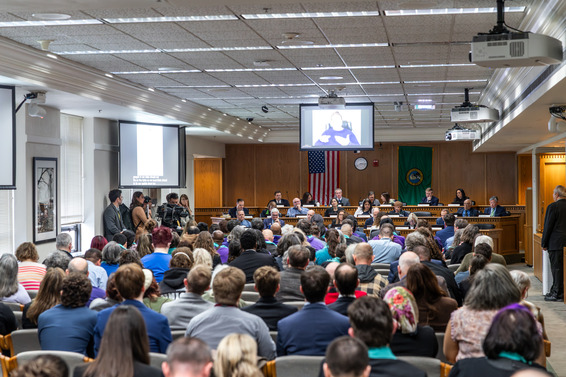
The recent committee hearing on the proposed state income tax, Senate Bill 6346, attracted a capacity crowd to the largest of the Senate hearing rooms. In addition, more than 61,000 people signed in prior to the hearing as opposed to the bill, making it the most unpopular Senate bill on record. Thanks to all of you who took time to register your opinion!

Despite strong opposition, expect Senate vote soon on income tax

The state income-tax proposal from by majority Democrats is not only unlawful and unconstitutional — it’s also very unpopular, because people realize how easily it could be applied universally in our state. I wasn’t surprised at all that a record number of people went online to state their opposition.

Even though this would be the largest tax in state history, at some $3.5 billion annually, the enabling legislation wouldn’t take effect until 2028. For that reason, Senate Bill 6346 is not exempt from this coming Tuesday’s deadline for the Senate to act on Senate bills.

My guess is the income-tax bill will be brought up for vote on Monday. Of the many arguments to make against it, the most compelling is that the bill is misleading to claim this would be a tax on millionaires, no matter what the sponsors say.

SB 6346 is written to impose the tax on everyone, with an easily altered deduction serving as the only protection for Washingtonians with less than $1 million in taxable income.have. Although that deduction is for $1 million, it can be lowered or eliminated in the future with a single, simple-majority vote.

The bill’s prime sponsor basically admitted as much during the Feb. 6 Senate committee hearing, when asked if he believes the tax should be structured to eventually apply to middle-class or working-class families, or permanently limited to “high-income earners.”

His answer made no mention of a permanent limit, and included this instead: “…I suspect that in the future we all want to make sure that our successors will have the flexibility to respond to the challenges that they see in front of them.”

The word “flexibility” means only one thing to me — if it becomes law, a state income tax would eventually come for all of us. I won’t support that, especially when the tax bill doesn’t promise the elimination or significant reduction of any other taxes.

Where’s the priority on affordability?

When this legislative session began several weeks ago, both Republican and Democratic lawmakers talked about the cost of living in our state. Something must have happened, because I can’t figure out what these bills from the majority have to do with making Washington more affordable.

  • Senate Bill 6045 would lead to higher farm-labor costs, which in turn means groceries more expensive. It is on the full Senate’s voting calendar and could come up for a vote anytime between now and the close of business Tuesday.
  • Senate Bill 5973 is the “initiative killer” bill, which would unnecessarily hinder Washingtonians from using their constitutional power of initiative and referendum. It also is awaiting a vote by the full Senate.
  • Senate Bill 5974 would allow an unelected commission to basically fire an elected county sheriff. I believe that authority should belong only to the voters, and they already have the tools to remove an elected official from office. We know because Benton County voters recalled an elected sheriff in 2021. I can only guess at the real reasons behind the bill, because what we were told prior to the vote wasn’t convincing. Even so the bill passed in the Senate on a party-line vote Thursday.
  • Senate Bill 5993 would put a 1% cap on the interest rate that can be applied to medical debt. I understand why the sponsors are pushing such a major change, but it goes too far. If this becomes law it is going to be tough on hospitals, especially in rural Washington, considering all the charity care they already provide.

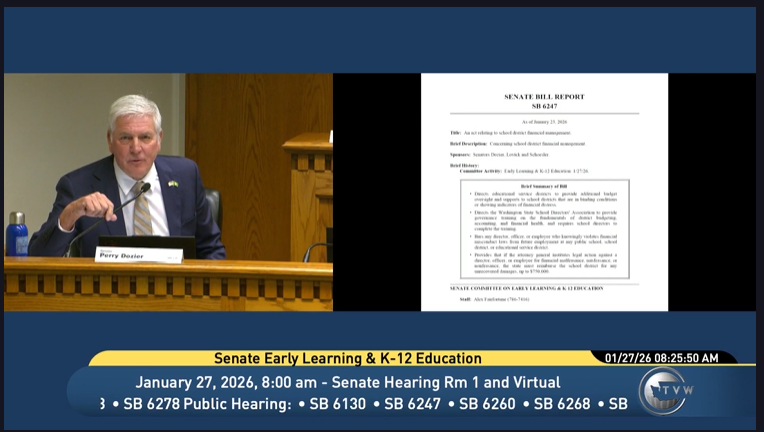
SB 6247 screenshot

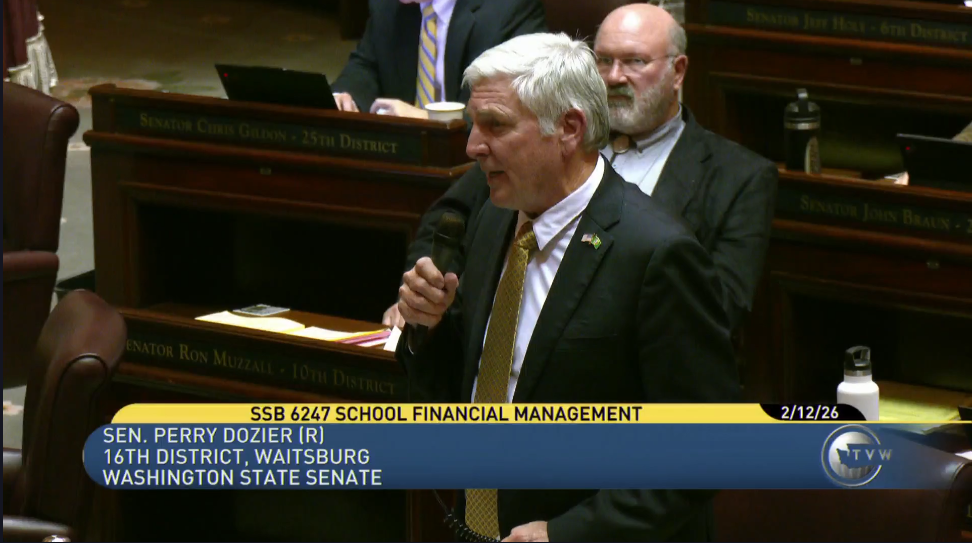
Click here or on the image to view the remarks I made in support of Senate Bill 6247, which is aimed at improving the financial management of our K-12 school districts.

Senate gives unanimous approval to my K-12 education bills

On Thursday the Senate voted 49-0 to pass both of the education bills I filed this session. Each is related to the situation facing the Prescott School District in our 16th Legislative District.

  • Senate Bill 6247 is about creating what amounts to an early-warning system regarding a school district’s finances, so another district doesn’t fall victim to the issues that have put the Prescott district into financial insolvency.
  • Senate Bill 6065 would clarify the policy that allows school districts to make interfund loans in response to specific financial issues. This would help Prescott now but could also benefit other districts in the future.

It was great to learn earlier this week that the Prescott School District’s supplemental EP&O levy was passing easily. As of election night (Tuesday, February 10) the “yes” vote was over 87%.

I am not surprised, not even by the overwhelmingly positive vote. The Prescott community consistently approves school levies, and the voters knew this levy is the most important in the district’s history.

Passing the levy accounts for the first portion of the roughly $1 million in new resources Prescott must identify no later than April 1. These will help create a financial plan capable of convincing the superintendent of public instruction to withdraw his petition to dissolve the district.

The second part is coming from the many months of heroic efforts by the community and the district to raise money, anchored by the sale — also announced this week — of the district’s historic teachers’ cottage.

The third and largest part of the money needed to save Prescott from dissolution will hopefully come from a legislative reappropriation of $640,000. These dollars are unspent funds left from assisting the Marysville School District in 2025. They are contained in the supplemental 2025-27 operating budget submitted by the governor’s office in December.

The tremendous support for the supplemental levy was noticed by the Senate majority’s budget leader. That has me cautiously optimistic that the money for Prescott will be in the Senate supplemental operating budget when it’s made public later this month.

***

I am working to make living in our state more affordable, make our communities safer, uphold our paramount duty to provide for schools, and hold state government accountable. I’ll work with anyone who shares those goals and wants to find solutions.

Please reach out to my office with your thoughts, ideas and concerns on matters of importance to you. I am here to serve and look forward to hearing from you.

Sincerely,

dozier signature

Perry Dozier
State Senator
16th Legislative District


EMAIL: Perry.Dozier@leg.wa.gov
OLYMPIA PHONE: (360) 786-7630
OLYMPIA OFFICE: 342 Irving R. Newhouse Building
MAILING ADDRESS: P.O. Box 40416, Olympia, WA 98504
Initiative to protect girls’ sports is certified; what’s the next step?

Jan. 31, 2026

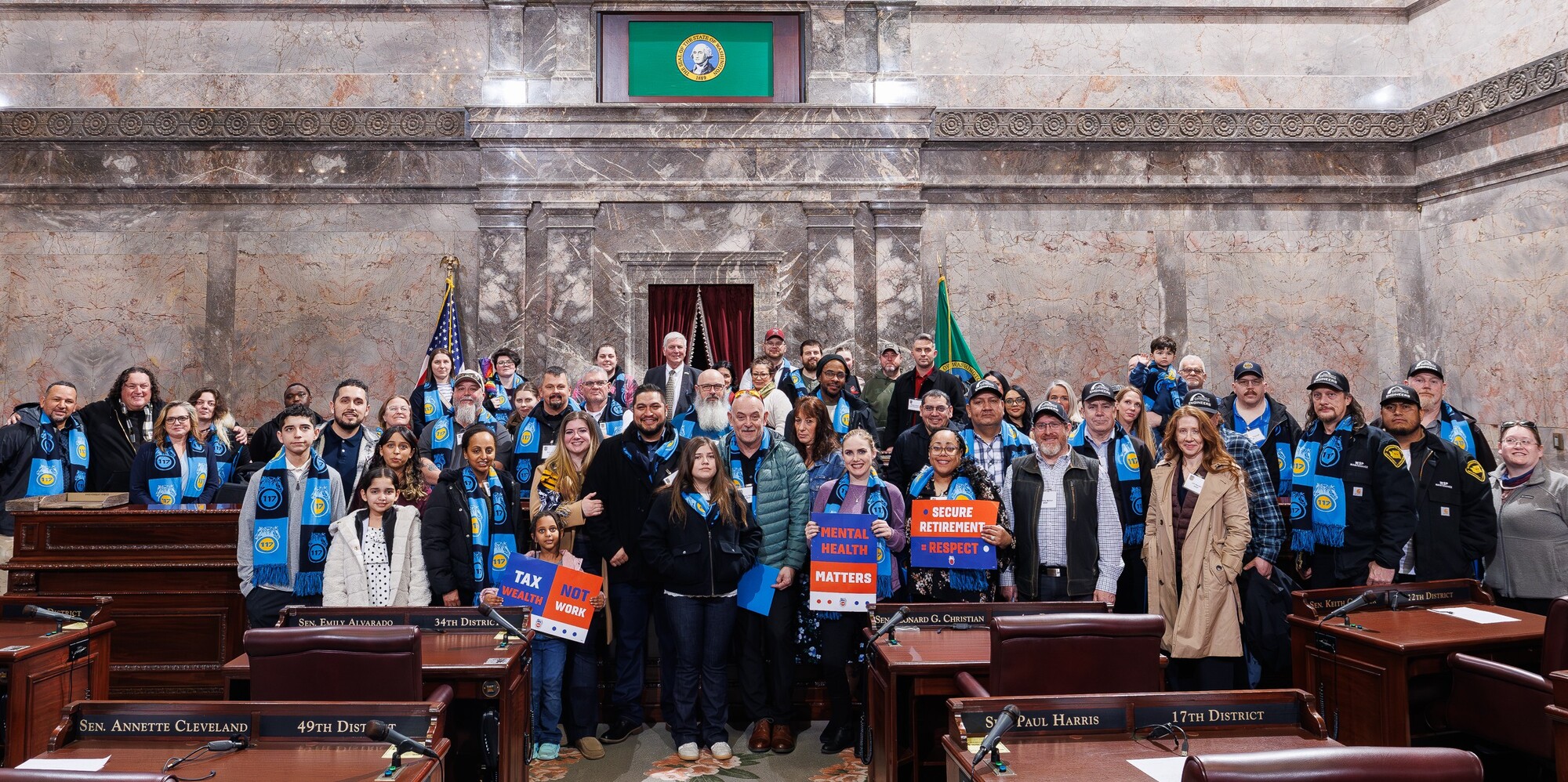
A highlight of each legislative session is the visit by the people who keep the Washington State Penitentiary running — members of Teamsters Local 117. The challenge is finding a good place for a photo! This year we gathered at the front of the Senate chamber, with me in the back where the lieutenant governor usually stands when presiding over the Senate. 

Dear Neighbors,

A bill has to clear many hurdles in Olympia before it can become law. When legislation is introduced, it’s referred to a committee based on the topic — but nothing is for certain after that. Getting a bill through the process isn’t easy, nor should it be.

By the end of next Wednesday we will know which bills have made it past the very first milestone. That’s the deadline for Senate policy committees to act on the bills sent to them. Some will move forward, but more will fall short and be considered “dead.”

One of my bills (SB 5831, having to do with mortgages) has already received approval from our Business, Trade and Economic Development committee. I have about a half-dozen more bills in play, including three before our K-12 education committee. Keep reading for information about the pair related to my work to keep the Prescott School District open.

Legislators have two citizen initiatives to consider,
but we may not get to see them

I reported to you a week ago how a new initiative to restore the parents’ bill of rights regarding our K-12 schools had been certified by the secretary of state’s office. This week a second measure got the green light and has also been filed as legislation.

It’s IL26-638 and is titled “defending equity in interscholastic sports.” The measure basically has to do with who can play girls’ or women’s sports and use a girls’ or women’s locker room. The text is here.

There are two kinds of voter initiatives in Washington. One is “to the people” and goes straight to the general-election ballot. The second is “to the legislature” and comes to us like a bill, except it doesn’t have a Senate or House bill number — and the people of Washington are listed as the sponsor.

We can pass it like any other legislation, as long as no changes are made from what the people submitted. Or, legislators can offer changes in the form of an alternative measure — in which case both the original and the alternative go on the ballot for voters to consider. The third option is to let the initiative go on through to the ballot.

There’s one more wrinkle: Washington’s constitution clearly states initiatives to the legislature are supposed to be considered ahead of all other bills except budget bills. However, the majority Democrats have indicated they won’t touch either initiative — not even a committee hearing. They haven’t explained why, but it’s disappointing.

The people deserve an opportunity to speak to us for or against IL26-638 and the parents’ rights initiative, IL26-001 (the text is here). In place of a public hearing, we’re looking to hold a public listening session and are seeing what’s possible. Stay tuned, because if we can get the logistics worked out that meeting may happen as soon as this coming week. We want your voice to be heard!

My bipartisan bill to improve the financial management of school districts is scheduled for a committee vote next week. I testified in support of SB 6247 on Tuesday during its public hearing.

Education committee to vote on my bills inspired by local school district’s situation

My efforts to improve education policy in our state, based on lessons learned from our local Prescott School District, are moving forward in the Senate committee on K-12 education.

  • Senate Bill 6247 is about creating what amounts to an early-warning system regarding a school district’s finances, so another district doesn’t fall victim to the issues that have put the Prescott district into financial insolvency. It is to come back before the K-12 committee for a vote Wednesday.
  • Senate Bill 6065 would clarify the policy that allows school districts to make interfund loans in response to specific financial issues. This would help Prescott now but could also benefit other districts in the future. it’s scheduled for a K-12 committee vote Tuesday.

For more on SB 6247 see this report in the Walla Walla Union-Bulletin; click here for my assessment (also published in the U-B) of a recent meeting between concerned Prescott residents and our state’s superintendent of public instruction.

No-mask bill passes Senate, but it won’t have intended effect

Our first extended debate in the Senate chamber this session took place Wednesday, on Senate Bill 5855. It would prohibit law-enforcement officers at all levels from wearing certain kinds of face coverings.

I know many people are upset with how the federal government is attempting to enforce immigration-related laws. The widely seen videos of fatal encounters involving protesters and federal officers in Minnesota are disturbing. The circumstances surrounding those deaths should be fully and impartially investigated.

However, there’s a reason the 14th Amendment to the U.S. Constitution is commonly known as the “supremacy clause.” It basically means federal law prevails over state law.

We know there are legislators in Olympia who want to see the Snake River dams taken out but realize they have no authority over those federal facilities. The same goes when it comes to federal law-enforcement officers: lawmakers here can’t tell the feds which laws to enforce, or what to wear when doing their jobs.

That means the real effect of SB 5855 would fall on state and local law-enforcement officers — and during the debate, the bill’s supporters acknowledged there are no reports of state or local officers covering their faces the same way federal officers are.

The bill passed 30-19, but even if the House follows suit, the new law won’t have the intended effect.

While we wait on majority’s income-tax bill, other tax increases are being proposed

Democrat leaders in Olympia have been talking for weeks about their plan to approve a state income tax while we are in session. However, the initial deadline for budget committees to consider legislation is coming up Feb. 9, and no income-tax bill has yet been filed.

In the meantime, other tax proposals are emerging. This week our Senate Republican budget-policy expert assembled a list of the 35-plus tax proposals that are already on the table, in the Senate alone.

Here are some examples that have yet to be in the spotlight (not mentioned are proposed increases in the property tax, a new “jobs” tax and the tax on innovation that targets the tech industry in our state):

  • SB 6280: tax on smoking cessation products (nicotine pouches)
  • SB 6129: tax increase on tobacco/nicotine products (examples; tax increases to $5/pack for cigarettes, from current $3/pack, and $5.50/pack for flavored cigarettes)
  • SB 5762: cellphone tax (doubles the monthly 988 tax per line)
  • SB 5502: bottle tax (10-cent refundable fee on beverage containers)
  • SB 5576: tax on short-term rentals
  • SB 5791: increased business-tax on service providers
  • SB 6228: tax increase on prescription drugs (warehousing/reselling)
  • SB 6231: tax increase for replacing data-center equipment
  • SB 6229: expansion of capital-gains tax

As a member of the Senate Ways and Means Committee I expect many of these will come before our committee for public hearings and votes.The question is, how can our Democratic colleagues say they’re concerned about affordability when proposing so many ways to make living in our state more expensive?

Phoenix Miller is the first of the students I will sponsor as Senate pages this session. He’s the 14-year-old son of Jessica Andrews and Patrick Miller of West Richland, and attends Enterprise Middle School. Thanks, Phoenix — I hope you had a great week with us and learned a lot about state government! 

***

I am working to make living in our state more affordable, make our communities safer, uphold our paramount duty to provide for schools, and hold state government accountable. I’ll work with anyone who shares those goals and wants to find solutions.

Please reach out to my office with your thoughts, ideas and concerns on matters of importance to you. I am here to serve and look forward to hearing from you.

Sincerely,

Perry Dozier
State Senator
16th Legislative District


EMAIL: Perry.Dozier@leg.wa.gov
OLYMPIA PHONE: (360) 786-7630
OLYMPIA OFFICE: 342 Irving R. Newhouse Building
MAILING ADDRESS: P.O. Box 40416, Olympia, WA 98504
 

Prescott situation tests state’s duty to provide for education

elected officials reception

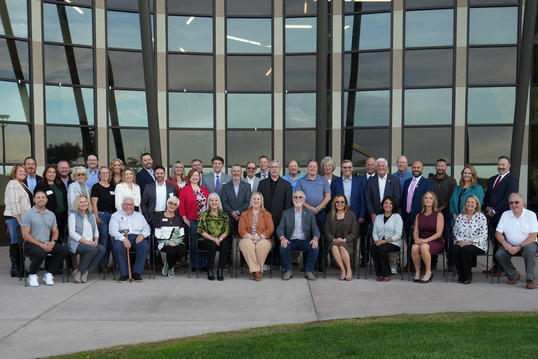
The Elected Officials Reception hosted recently by the Home Builders Association of the Tri-Cities and the Tri-City Regional Chamber of Commerce was a great opportunity to connect with a large number of local business and community leaders. This was at the REACH Museum in Richland — and I count 42 people!

Dear Neighbors,

Article IX of Washington’s constitution is clear: providing for the education of our state’s children is the “paramount duty,” or top priority, of state government. But what does that mean when a school district gets itself into deep financial trouble?

My previous report mentioned how I’m keeping close track of the financial issues facing the Prescott School District. That has included meeting with administrators from the Office of the Superintendent of Public Instruction (OSPI) and more recently speaking up at the latest meeting of the Prescott school board.

Because Prescott is considered financially insolvent, the district’s future hangs in part on this 2012 state law. It is what allowed the state superintendent, former Democrat state representative Chris Reykdal, to convene a four-member Financial Oversight Committee specifically to look into Prescott’s situation.

By law this oversight committee will ultimately recommend one of two options to Superintendent Reykdal: Dissolve the district and force Prescott students to attend school elsewhere, or try saving the district from dissolution by placing it under “enhanced financial monitoring.”

There’s a lot I could say about this, as a proud Prescott alum and a member of both the K-12 education committee and the budget committee in our state Senate. For now let’s look at how OSPI has treated another district with financial issues: Marysville, in Snohomish County.

In June 2024, Superintendent Reykdal appointed a Financial Oversight Committee to assist Marysville in getting on a “path forward to financial stability” after the district failed to come up with a balanced budget for the 2023-24 fiscal year.

Little more than two months later, noting the district also had yet to produce a viable budget for the 2024-25 fiscal year, he placed Marysville under enhanced financial monitoring. This included the appointment of a special administrator to “oversee and carry out the financial conditions imposed on the district.”

What struck me was this part of the letter Superintendent Reykdal sent to the district, because of how it contrasts with what’s happening in Prescott:

“After reviewing, and carefully considering, the messages sent to the FOC, and the public comments at school board meetings, it is clear that the community lacks trust and confidence in school district leadership… I have lost confidence that the district has the decision-making tools or current personnel necessary to fix its financial situation on their own… Despite being faced with significant financial challenges, the district has shown it is unwilling and unable to take appropriate steps or accept responsibility for the current situation. After more than a year of OSPI and NWESD partnering with the district’s executive leadership, financial clarity and progress toward long-term stability has not been achieved by MSD leadership. As a result, I am transitioning decision-making through enhanced financial oversight.”

I don’t sense that the Prescott community has lost trust and confidence in PSD leaders. And has Superintendent Reykdal noticed the heroic efforts being made by the district and the community to raise money?

The former Vader School District in southern Lewis County was dissolved nearly 20 years ago largely because the school building had been condemned as unsafe. Failed efforts to pass a construction bond issue put the district in an insurmountable financial situation. That is not the case in Prescott.

The head of the Marysville School Board has blamed that district’s financial situation on the effects of inadequate state funding of schools, declining student enrollment, inflation and a double levy failure. You don’t hear those excuses from Prescott, as the cause of the financial trouble is much simpler and widely known.

To me the best course would be for the Prescott FOC to recommend against dissolving the district, and for going the financial-oversight route. Superintendent Reykdal should agree and give Prescott the same opportunity Marysville received.

And if those aren’t enough reasons, the latest student assessment scores from Prescott are another reason for Olympia to stand with the community, not against it.

While the learning loss resulting from pandemic-related classroom closures is a reality, Prescott is bucking the trend. The share of district students testing at grade level for math in the 2024-25 student assessments is up 9% from pre-pandemic and compares favorably with other districts in the area.

To me, supporting small, successful districts like Prescott is more in line with our constitutional duty to provide for education than dissolving them. I agree with the view expressed in this open letter to OSPI and the Prescott FOC, from someone identified only as Bob:

“We hope you are for us. The paramount work of the State of Washington is education. Prescott is in the education business. It has helped grow and develop hundreds of students into productive members of society. Keep us open! The financial downfall was at the hands of previous staff. None of them are still at Prescott. But those that are are here because they want to see it continue.”

I could not say it better.

As fallout from new taxes continues, Democrats look at more increases

You can’t make this up: School districts in our state are getting blindsided by the new sales-tax increase approved by Democrats this spring.

To be clear, the news here isn’t that districts are now paying sales tax – they already have been on new construction, for instance. It’s how, in their haste to rake in even more money, our colleagues across the aisle apparently didn’t think about how extending the sales tax to even more things would cut into school budgets.

A report in The Seattle Times this week offers more of the story – and if you read it, ignore the speculation from a Democratic state representative that the tax increase (which he supported) might be illegal as it pertains to schools. He’s wrong.

The sales-tax expansion is estimated to take nearly $4 billion from the economy over four years. It was not even the largest part in the state-record $12.2 billion, six-piece package of partisan tax increases adopted this year. That title goes to the hike in Washington’s business-and-occupation tax, at $5.6 billion.

The collection of tax hikes was cited by a prominent Washington distiller recently in announcing its storefronts in Gig Harbor, Tumwater, and Roslyn will close.

“With the largest tax increase in state history now going into effect, and more already being discussed for next year, we determined that the path to profitability and growth for our spirits business in the current environment is not feasible,” the announcement read.

A Mexican restaurant in Dayton recently closed due to the increasing costs of doing business, the owner told the Dayton Chronicle.

The increases coming from Olympia don’t hit employers only. The state Employment Security Department recently used its authority under Washington law to approve a 22% increase in the rate of the “premium” (another name for tax) that funds the state-run Paid Family and Medical Leave program.

Nearly 72% of the tax will hit employees directly, through their paychecks, with the remainder falling on employers.

Then, because they are already anticipating another budget shortfall in 2026, there’s the new tax Senate Democrats are reportedly floating: another version of a state income tax, this time targeted at high-income households. The concept itself isn’t new, just some of the details.

We saw a similar approach in 2010, through Initiative 1098 – which was rejected by Washington voters by a margin of almost 2-to-1. It also showed up in a handful of unsuccessful Democratic legislation, especially from 2012, when the majority’s chronic overspending had put the state into a shortfall (which is what we’re again facing, going into the 2026 session).

It’s frustrating how Democrats here and elsewhere talk about affordability but consistently approve policies that make the cost of living less affordable.

I was proud this year to support the $ave Washington budget proposed by Senate Republicans. It would, as the name implies, have saved the people of our state from cuts to core services while saving them from all of those tax increases.

Our balanced approach also would have done more to insulate the state budget from any funding changes at the federal level. However, the majority Democrats had their own agenda and rejected our plan.

***

I am working to make living in our state more affordable, make our communities safer, uphold our paramount duty to provide for schools, and hold state government accountable. I’ll work with anyone who shares those goals and wants to find solutions.

Please reach out to my office with your thoughts, ideas and concerns on matters of importance to you. I am here to serve and look forward to hearing from you.

Sincerely,

dozier signature

Perry Dozier
State Senator
16th Legislative District

EMAIL: Perry.Dozier@leg.wa.gov
OLYMPIA PHONE: (360) 786-7630
OLYMPIA OFFICE: 342 Irving R. Newhouse Building
MAILING ADDRESS: P.O. Box 40416, Olympia, WA 98504

What the sales-tax increase means for you

Col Vly Ctr for Rec enhanced

I’m grateful that my fellow legislators have repeatedly backed our 16th District delegation’s requests for millions of dollars in capital-budget funding to help transform the old Kennewick General Hospital into the Columbia Valley Center for Recovery. This project is one of the good things happening in our area; hopefully it will continue on schedule, and the center will open about the time I’m coming home from our 2026 session at the Capitol. In the meantime it’s exciting to see all the local financial support coming in; I was recently honored to join Nancy Roach, secretary of the Benton Franklin Recovery Coalition, and others who spoke at an event where a local family’s $1.1 million donation was announced! More details are in this Tri-City Herald report.

Dear Neighbors,

We have just about reached the middle of what legislators call the “interim” between our annual sessions at the state Capitol. In a matter of days we’ll be closer to the start of the 2026 session, which will fall on Jan. 12, than to the end of this year’s session, which was back on April 27.

That’s why I am already working with the experts on the Senate Republican policy staff to sift through a list of ideas — some of which have come from constituents this month — and decide which may make sense as legislation, versus things that are better handled through direct contact with a state agency.

After we identify the viable candidates, the next step is to do the research and draft the language, and as you can imagine, complex pieces of legislation require more time. So even though it’s still summer, it also isn’t too soon for me to be thinking about the 2026 session!

Huge expansion of sales tax
is coming, but details still aren’t known

The sales-tax expansion approved by our state’s majority Democrats in April reminds me of the famous remark made back in 2010 when the Affordable Care Act, or “Obamacare,” was making its way through Congress. You may remember it — the line about how the bill would need to be passed so people could find out what was in it.

As this column from Senate Republican Leader John Braun points out, we should expect the sales-tax increase will mean higher prices for things like cable/streaming channels, and driver’s-education courses.

Unfortunately, the state Department of Revenue is still working to come up with guidance for the 95,000-odd businesses required to collect the tax starting Oct. 1 Therefore, no one can say for sure what it means for Washington consumers.

This is not an increase in the tax rate employers will pay, it’s an increase in the number of “business activities” that will be considered taxable retail sales in the eyes of the state. But whether you call it an increase or an expansion, it’s expected to bring in another $4 billion over the next four years. That’s money you and I will pay, as these service providers are forced to pass down the increased costs of doing business in Washington.

I voted against this and every other tax and fee increase approved by the majority this year. The “$ave Washington” operating budget proposed by Senate Republicans was balanced without any increases and also wouldn’t have cut anyone off of essential services; unfortunately, the majority exaggerated the size of the budget shortfall (caused by its own overspending) and used that as an excuse for passing the largest package of tax hikes in state history.

For those in agriculture, loss of farms is no mystery

From what I’m hearing, wheat growers in our area are through with harvest. I was happy with the yields at my farm, but the prices we’re seeing are terrible, especially compared to just a few years ago.

I’m always having to explain to legislators from urban and suburban districts how farmers are price takers, not price makers. While our operating costs go up — and fuel costs are a prime example — we can’t just raise our prices accordingly, the way other business sectors can.

For that reason I already knew the answer to the question posed in a headline in The Seattle Times recently: 3,700 WA farms shut down in 5 years. Why?

That 5-year period ran through 2022, and many more farms in our state have gone under since then. Still, I appreciate how the report under that headline calls attention to the variety of pressures faced by people in the agricultural sector, and efforts from within the farming community to increase access to mental-health supports.

While I was also glad to see details about economic factors that affect Washington farmers, like labor costs that run 462% higher than the national average, the word “fuel” appears just once in the newspaper report, in the same sentence as fertilizer, seed and farm chemicals.

There’s no mention of how the state Department of Ecology stuck it to agriculture for years by failing to honor the fuel-surcharge exemption promised in the state’s cap-and-tax law (the “Climate Commitment Act”). I was among the leaders of repeated efforts to hold Ecology accountable, but only this year did we finally make some headway against the Olympia Democrats’ resistance.

Speaking of fuel, the average price of diesel in Washington as of a couple days ago was $5.03 per gallon. In Oregon it was $4.47, or about where our state was a year ago. It’s an average of $3.85 per gallon in Idaho.

Farmers and families in our corner of the state are fortunate to have alternatives to the crazy Washington fuel prices. I feel for the growers farther from the Oregon and Idaho borders, like the Wenatchee area or the Skagit area north of Seattle.

And although it’s good for Washingtonians to be aware of what goes into growing their food, no report on the state of farming can be complete without more detail about the effect of government policies.

Children's Center visit

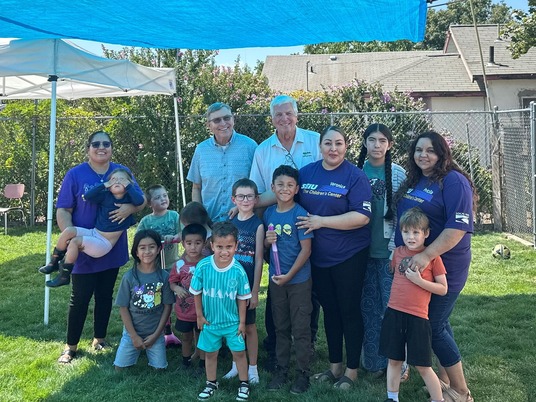
Childcare is an important issue for legislators, and while we may have differences of opinion about how to increase access and control costs, I have to believe any of us would be impressed with what Maria and Veronica are doing at The Children’s Center in Walla Walla. I was particularly taken by how flexible they are in serving families, as that’s a gift for those with unusual work schedules. We need more resources like this, and I appreciate that they invited Rep. Klicker and me to visit!

***

I am working to make living in our state more affordable, make our communities safer, uphold our paramount duty to provide for schools, and hold state government accountable. I’ll work with anyone who shares those goals and wants to find solutions.

Please reach out to my office with your thoughts, ideas and concerns on matters of importance to you. I am here to serve and look forward to hearing from you.

Sincerely,

dozier signature

Perry Dozier
State Senator
16th Legislative District

EMAIL: Perry.Dozier@leg.wa.gov
OLYMPIA PHONE: (360) 786-7630
OLYMPIA OFFICE: 342 Irving R. Newhouse Building
MAILING ADDRESS: P.O. Box 40416, Olympia, WA 98504
Want to feel inspired?

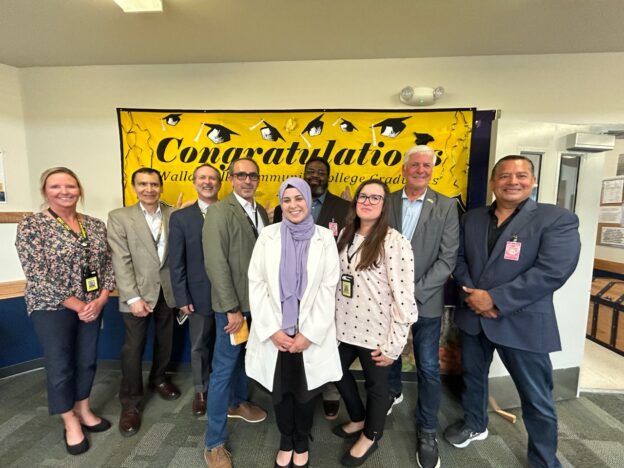
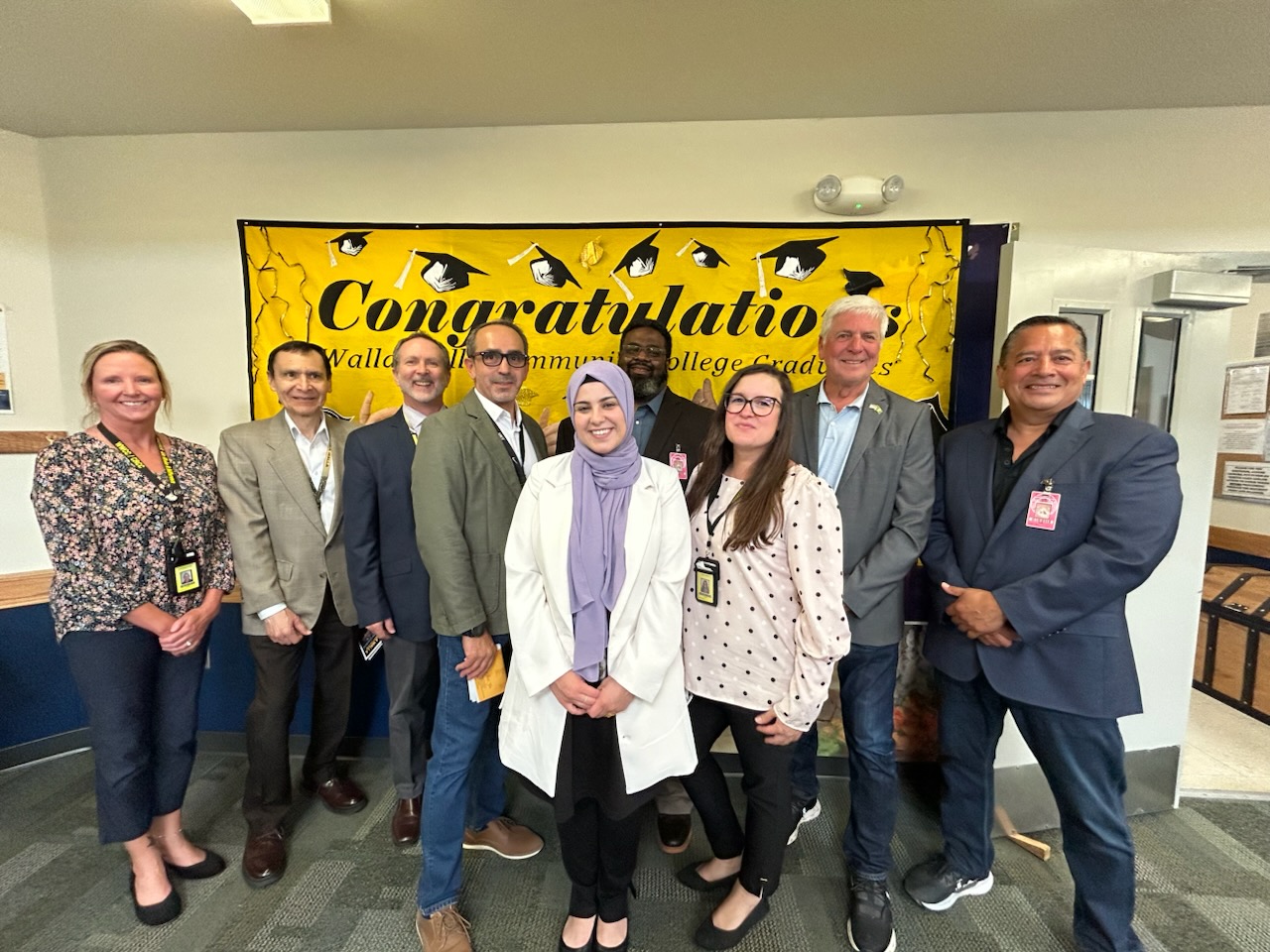
Joining me at the recent graduation ceremony at the state prison in Connell were, from left: Denise Kammers, the Dean of Corrections Education for Walla Walla Community College; Dante Leon, WWCC Vice President of Instruction; Dr. Chad Hickox, WWCC President; Ricardo Chavez, WWCC Director of Adult Basic Education for Corrections Education; Hanan Al-Zubaidy, Associate Director for Corrections Education from the State Board for Community and Technical Colleges (front); Dr. Allen Sutton, WWCC Director of Connection and Belonging (back); Lauren Reed, WWCC Director of Education Operations at CRCC; and state Representative Alex Ybarra, from the neighboring 13th Legislative District.

Good things are happening — people are making their lives better

Dear Neighbor,

It’s easy for state legislators to get caught up in what’s coming out of Olympia or the “other Washington” and miss the positive things that are happening right in front of us. That’s why I’m postponing a report on some of the new laws that just took effect, in favor of sharing some recent experiences that highlight good things happening locally.

The first involves the two state prisons east of the Cascades, which are both in our 16th Legislative District: the Washington State Penitentiary in Walla Walla, and Coyote Ridge Corrections Center in Connell.

Walla Walla Community College has education and training centers at both facilities. Each offers a variety of programs from basic education to college degrees, mostly AAS (Associate of Applied Science).

WWCC President Chad Hickox attended one of the legislative town hall meetings we held after the session, and extended an invitation to attend the upcoming graduation ceremonies at each institution. It wouldn’t have been right to choose one over the other, so I went to both. CRCC’s was on July 17, and the WSP graduation was July 23.

These were specifically for minimum-security students who had completed a program this year: high-school equivalency, automotive mechanics technology, carpentry or business.

I appreciated meeting the graduates, their families, and the staff, and enjoyed hearing their stories. While I’m a firm believer in holding people accountable when they are convicted of crimes, and generally skeptical about the re-entry policies favored by the majority side, I also have respect for people who are making an effort to change their lives instead of just doing their time and falling back into the same old lifestyle when they return to their communities.

An example of this self-improvement was the young man at Coyote Ridge who graduated in auto mechanics and had been resourceful enough to obtain a grant to get tools that he’ll be able to use when he gets out in a matter of months. You can’t help but cheer for him, or for the young man at WSP whose criminal troubles began after dropping out of high school but now wants to build on the degree he earned through WWCC by attending Eastern Washington University.

Someone expressed interest in starting a non-profit that could help support inmates after their release, to get them off to a better start on the outside. And when I met a graduate at WSP who had been in correctional facilities since he was a youth, I took the opportunity to ask what he thinks of the “JR-to-25” policy that basically keeps offenders in state-run juvenile facilities for several years after they turn 18, even though that has led to overcrowding and other safety and security concerns.

And let me tell you, as a member of the Senate committee on K-12 education, seeing guys in their 40s and 50s getting their high-school equivalency certificates was a stark reminder of what “basic” education means – and how we have work to do to address chronic absenteeism in our schools and increase the graduation rate.

Of course, there were unavoidable reminders at WSP that we were inside a correctional facility. Still, the ceremonies there and at CRCC did a great job of celebrating the accomplishments of these men in preparing for another chapter of their lives. It was moving to hear them talk about their perseverance, and see those smiles as they took part in the traditional tassel-flipping at the end. It was as uplifting and full of hope as any graduation I’ve attended.

That made the note my office received on July 24 from the WSP director of education all the more special. It included this about the reaction of the graduates:

“Many of them expressed varying levels of disbelief that a government official actually showed up…they are accustomed to hearing that people “might” come, and often see that fail to materialize…so, it had a positive impact and I thought he should know that. We appreciate his support and hope that he felt even a portion of the inspiration from this event, that we feel on a daily basis in our quest to change lives for our students and the communities that they eventually become a part of.”

I certainly did feel inspired, and that brings me to the visit I recently made to Hope Street House, a “sober living” home for women in Walla Walla. It’s been in the news over the years, like when the lease was signed with St. Paul’s Episcopal Church and when its first resident was accepted in 2021; my visit late this past month happened because some of the residents had invited me when we met at the Capitol during this year’s session.

If you like stories about people who have struggled but are getting their lives together, it would be hard to do better than my experience at Hope Street. It’s a great facility and a wonderful asset to the community. I’m grateful to Chloey for asking if I would visit, because you never know when I’ll have an opportunity in Olympia to be an advocate for resources like this and the good works of the people who make them possible.

With that in mind, if you know of more inspirational things happening in our area — especially examples of people working to make their lives better — please let me know!

Drought conditions = higher fire risk, at a bad time

According to this drought monitor map, most of the 16th Legislative District is experiencing a moderate drought — with the remainder being one step better (“abnormally dry”) or worse (severe drought) on the scale.

It’s worse still to the east of us, with parts of Whitman, Asotin and Garfield counties considered to be in extreme drought. That’s as bad as it gets, and can affect crop yields and cause toxic algae blooms.

According to drought.gov, we had the third-driest June on record since 1895 — which probably has something to with how Washington had the seventh-driest January since that same year.

This is happening as many of us are harvesting wheat, and as farmers and firefighters know, the conditions increase the risk of wildfire. I’m aware of several wheat fields catching fire, one of them about three miles from our house earlier this week – and a farmstead was also lost. Let’s hope we get through harvest and the rest of the heat of summer without losing more crops or equipment. Farming is enough of a challenge as it is!

***

I am working to make living in our state more affordable, make our communities safer, uphold our paramount duty to provide for schools, and hold state government accountable. I’ll work with anyone who shares those goals and wants to find solutions.

Please reach out to my office with your thoughts, ideas and concerns on matters of importance to you. I am here to serve and look forward to hearing from you.

Sincerely,


Perry Dozier
State Senator
16th Legislative District

EMAIL: Perry.Dozier@leg.wa.gov
OLYMPIA PHONE: (360) 786-7630
OLYMPIA OFFICE: 342 Irving R. Newhouse Building
MAILING ADDRESS: P.O. Box 40416, Olympia, WA 98504


Dozier applauds latest sign of support for Snake River dams

WAITSBURG… As ordered by President Donald Trump in mid-June, efforts to revisit the plan for operating the four lower Snake River dams have now been halted. This week the U.S. Army Corps of Engineers and the U.S. Bureau of Reclamation withdrew their intent to prepare a supplemental environmental impact statement, effectively ending any federal-agency conversation that could lead to breaching the dams.

Sen. Perry Dozier, R-Waitsburg, serves Washington’s 16th Legislative District, which includes approximately 60 nautical miles of the Snake between Lyons Ferry and its confluence with the Columbia River at Burbank – and two of the federal dams. He reacted to the latest sign of support for the dams with this statement:

President Trump’s executive order leads off with what the dams mean for energy affordability and generating capacity, but it then goes on to recognize the other benefits they provide, from shipping channels and irrigation water for agriculture to recreational opportunities. I appreciate that his administration sees the big picture – and would simply go a step farther by pointing out how the ability to move commodities by barge doesn’t just save a lot of wear and tear on our roads, it also reduces carbon emissions.

“As for salmon, the combination of the executive order and the follow-through from the lead federal agencies puts us where we were when the environmental impact statement for the Columbia River system became final in 2020, during the first Trump administration. It found ‘man and nature can exist in productive harmony,’ meaning no one has to choose between dams and salmon – we can have both.

“With dam breaching off the table, I’d like to see the majority Democrats in our Legislature join our side of the aisle to do what we can to address the real threats to the Snake River salmon runs, like the predation in the lower Columbia by birds and marine mammals. It’s also frustrating that the majority didn’t do more to support the bills I proposed this year to promote the success of long-term salmon recovery efforts, encourage more salmon recovery projects and review our state’s riparian programs.

“Unfortunately, our Democratic colleagues may still be catching up with the idea that the dams are here to stay. Instead of working with me on habitat improvements, they’re continuing to pour millions of taxpayer dollars into a study of what would happen with the hauling of freight and goods if the dams were breached. I can answer that right now: More traffic congestion, more road repairs and more carbon into the air. We should pull the plug on that study and put those dollars toward real priorities.”

In addition to his leadership on salmon-friendly legislation, Dozier’s experience on salmon issues includes work on the Walla Walla 2050 Plan, eight years on the Snake River Salmon Recovery Board and eight years on the Walla Walla Watershed Partnership Board.


Senate unanimously approves capital budget ‘for the entire state’

The Senate today unanimously approved its version of the 2025-27 state capital budget, with the Republicans who helped develop the spending plan praising it for addressing needs throughout Washington.

“What we have is a capital budget for the entire state,” said 9th District Sen. Mark Schoesler, R-Ritzville, the lead Republican for the Senate capital budget. “We looked at this budget and saw fewer resources, so we made tougher decisions every step of the way, working on priorities that made both our side and our Democrat counterparts happy.

“This budget also leaves healthier reserves than we often have going into the second year of a biennium. When we come back next year, we can address unforeseen problems with those reserves.”

Schoesler’s full remarks prior to today’s vote may be viewed here.

“I’m really pleased with how well the Senate capital budget addresses needs throughout Washington,” said Sen. Perry Dozier, R-Waitsburg. He became assistant Republican leader on the capital-budget team this year, bringing government-budgeting experience from two terms as a Walla Walla County commissioner.

“We all made sure there is a lot of support for K-12 education, which is our state’s paramount duty, but this particular budget is also good for things like water projects, housing and fish hatcheries. That makes sense, if you look at the mix of backgrounds and priorities of the four senators who crafted it. I’m also glad we made progress on addressing some long-standing concerns about support for public-works projects.

“The capital budget has a reputation for being the most bipartisan of the three state budgets, and now I know why. We placed a lot of trust in one another in the course of developing this – each of us tried to be responsive to what the others brought to the table. That shows through in the budget itself and today’s unanimous vote.”

The Senate capital budget has a total price tag of $7.3 billion, with an ending-fund balance of $222 million.

It features $1 billion for K-12 education and early-learning projects, including $563 million for the School Construction Assistance Program. There is $201 million for Small District and Tribal School Modernization construction and planning grants, which will fund 40 additional small-school construction projects. Another $143 million is provided for additional school seismic-safety grants, plus $12 million for the new school security and preparedness infrastructure grants program.

The Senate capital budget spends $770 million on a variety of housing programs.

Schoesler and Dozier, both farmers, noted the state’s fairs benefit from this budget, which allocates a record $12 million for competitive grants to agricultural fairs for access- and safety-improvement projects.

The Senate capital budget also provides plenty of money for water-related needs on both sides of the Cascades, with robust funding for eastern Washington water-infrastructure programs. Those appropriations include $69 million for the Columbia River Water Supply Development Program, of which $44 million goes to the Odessa Groundwater Replacement Program, plus $53 million for the Yakima River Basin Water Supply Program and $13 million for the Yakima-Tieton Canal to start fixing damage to a wildfire.

In western Washington, $80 million is provided to fully fund the Chehalis River Basin Strategy, which includes flood control and salmon recovery.

There is also $85 million in the two-year plan for 15 fish hatcheries statewide – another record.

A total of $1.2 billion is allocated for projects at Washington’s four-year universities and other higher-education institutions. They include:

  • University of Washington: $40.8 million for Anderson Hall renovation.
  • Washington State University: $25 million for the Sciences Building, plus money for preventive facility maintenance and building-system repairs.
  • Central Washington University: $12 million for the emergency backup power system, $11 million for the university’s Humanities and Social Science Complex, and $10 million for an expansion of CWU’s aviation-degree program.
  • Eastern Washington University: $10 million for the dental-therapy lab, as well as funding for facility-preservation projects.
  • The state’s community and technical college system receives $400 million for various projects.

Once the House of Representatives passes its capital budget, budget writers from the Senate and House will meet as a “conference committee” to hammer out a compromise capital budget for both chambers to consider.

The 2025 legislative session is scheduled to end April 27.

Watch out! Majority wants to raise your property taxes

Dear Neighbor,

A year ago, the only tax increase Democrats were pushing would have tripled the limit on the growth of property-tax rates. Because that bill stood alone, the news media focused on it — which helped to fuel the public outrage that eventually forced Democrats to drop the idea.

This year our Democratic colleagues are pushing a truckload of tax hikes. The news media seem to be distracted by some that aren’t as familiar, like the so-called “wealth” tax. The new efforts to raise your property taxes seem to be flying below their radar, and the public’s, even though we’re talking about $16 BILLION over the next 10 years!

Fortunately, reports like this and social media are helping to get the word out. That’s why the Senate Democrats’ property-tax bill (SB 5798) attracted a record amount of online opposition prior to the public hearing.

Property taxes = housing taxes

It’s easy to overlook how a property-tax hike affects rent prices — but because it would, we really should view these as housing taxes. I’ve also focused my new video report on the Democrats’ housing taxes, and hope you can take a few minutes to watch it (see below — and keep reading for how the public will be shut out of the budgeting process).

Governor Ferguson hasn’t come out against the proposed housing-tax increases, although he should. Those are regressive taxes, and he told reporters this week that our state’s tax code is too regressive already. I will oppose any effort to lift or get rid of the 1% cap on annual property-tax rate increases, because local governments already have the power to go above 1%. It just means asking permission from the affected property owners, at the ballot.

The governor did vow to veto any budget that relies heavily on the wealth tax. He had warned the Senate and House Democrats about that months ago, and they did it anyway.

He also provided what amounts to a checklist for budget writers: protect the state’s rainy-day fund, minimize new spending, maximize savings, and so on. I would expect the Democrats will take the governor’s guidance to heart, if they don’t want a budget veto — but then again, they apparently failed to heed the warnings Governor Ferguson had sent about the wealth tax.

Click here or on the image to view my report.

Goodbye, transparency; public to be shut out

There is more than enough time for Democrats to do all the necessary budget revisions out in the open. We do it all the time on other legislation, when differences between the Senate and House positions need to be settled.

Our Democratic colleagues have chosen to shut the public out by invoking the rule that basically lets selected legislators go behind closed doors to cut a deal. In this case, the operating-budget leaders from each chamber — four Democrats — will meet out of public view over the next few weeks and decide how to allocate nearly $80 BILLION in taxpayer dollars.

They will emerge with a new deal that won’t go through the public-hearing process, and can’t be amended. All we’ll be allowed to do is vote yes or no.

This unnecessary lack of transparency certainly won’t increase the public’s trust in government. If there’s a saving grace to all this, it’s that Democrats can’t vote secretly on whatever tax increases they end up pushing as funding for their final budget.

Capital-budget vote coming Saturday

The Senate will adopt its version of the capital budget tomorrow, during another one of our Saturday sessions. This is the budget that funds the construction and maintenance of state buildings, public-school matching grants, higher-education facilities, public lands, parks, water infrastructure and other assets.

Once the House follows suit, the task of reconciling differences between the two versions will begin, to produce a final budget.

While the work of settling differences between versions of the operating budget is moving into the proverbial back room, I can assure you that won’t happen with the capital budget. More details to come!

***

I am working to make living in our state more affordable, make our communities safer, uphold our paramount duty to provide for schools, and hold state government accountable. I’ll work with anyone who shares those goals and wants to find solutions.

Please reach out to my office with your thoughts, ideas and concerns on matters of importance to you. I am here to serve and look forward to hearing from you.

Sincerely,

Perry Dozier
State Senator
16th Legislative District