


Author Archives: ericcampbell

Why are former Washington governors criticizing Olympia?

Dear Neighbors,

As a longtime Waitsburg-area resident I’m very familiar with the Touchet River and how it’s changed over the years due to strong spring flows that have taken out vegetation and ruined fish habitat.

Fortunately, the updates made to the state’s capital budget this year included adding another $500,000 for a conservation project already in the works at river mile 42. This additional funding allowed for a re-engineering and expansion of the project, which includes the installation of large wooden structures to stabilize the riverbank, slow the water flow, create pools and more.

Now that the water level in the Touchet is at its lowest, the conservation work is underway. I visited there yesterday to talk with the fish biologists and engineers about how it’s going — the answer being so far, so good.

While this is encouraging, there’s also a downside: despite my efforts in Olympia, the state hasn’t made any provision for doing maintenance on projects like this once the initial work is done.

I introduced Senate Bill 5475 during our 2025 legislative session. It would have taken just 1% of the total funds provided for salmon-recovery projects and set that aside in a specific account for long-term ongoing maintenance of those projects.

The Senate Local Government Committee held a public hearing but didn’t bring the bill up for a vote, and didn’t take any action this year. This was disappointing because I know salmon recovery matters to some on the majority side of the Senate, especially those in rural western Washington.

I want the work being done at Mile 42 of the Touchet to last, so I’ll plan to bring this idea forward again when we get to the Capitol for the 2027 session.
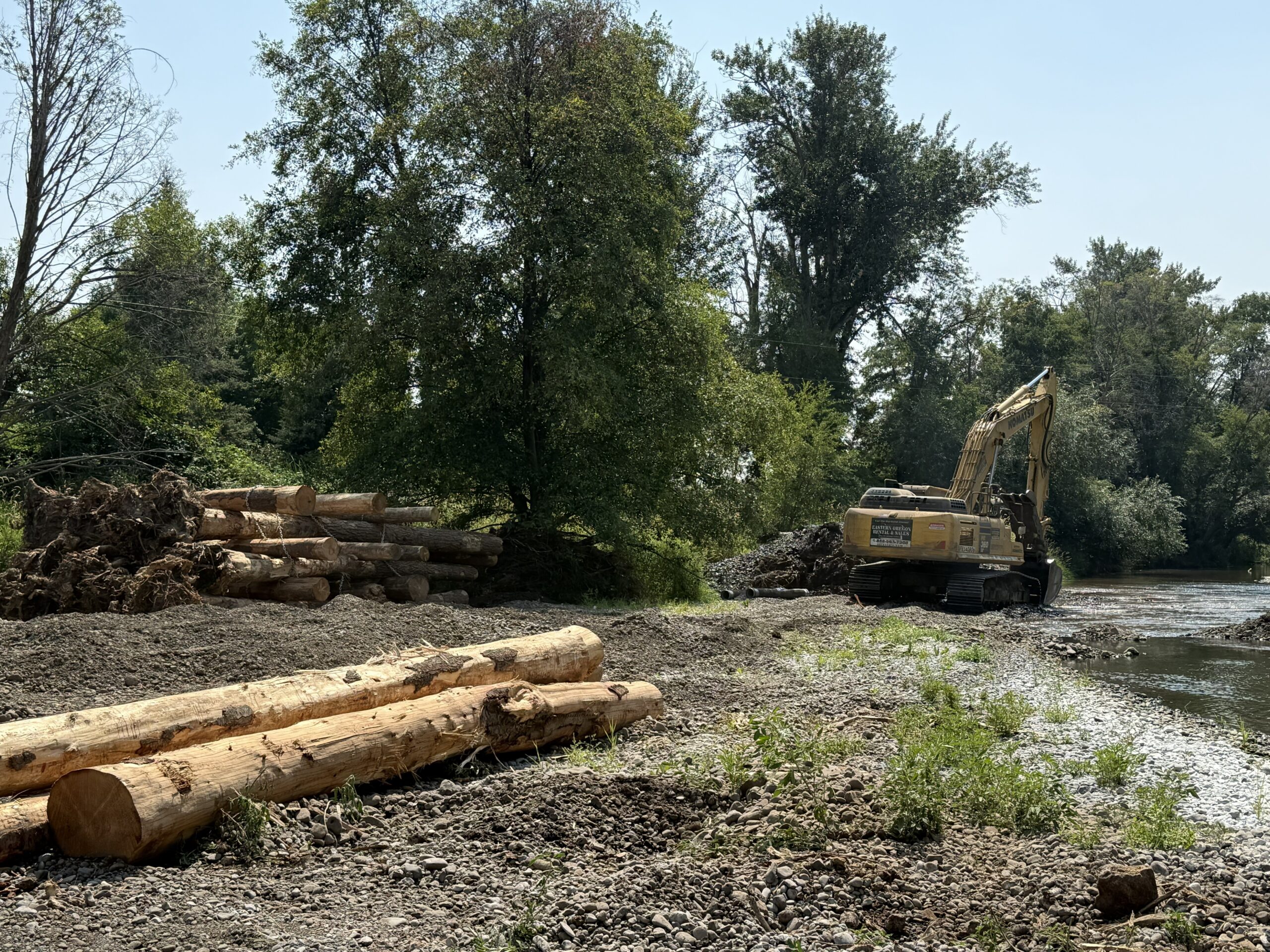
Legislators understand the value of preservation and maintenance when it comes to our state’s roads and bridges. Salmon-recovery projects like the one shown here on the Touchet River deserve the same support. In fact, the legislation I proposed would put more emphasis on salmon-recovery projects that include a plan for maintenance or otherwise ensuring the long-term success of the work.

Why are former governors criticizing Olympia?

My summary of the 2026 legislative session, after it wrapped up in mid-March, included this about the updated state operating budget: “Once again, rather than control spending, the majority Democrats chose to support billions in additional spending through a combination of fund raids and more taxes.”

Several weeks later, former Gov. Christine Gregoire (who finished her second term at the start of 2013) said this when asked about the state’s level of spending: “I left office with a budget of $33 billion and the budget today is $80 billion. I think that’s a little bit too much growth. And you know, we find ourselves at the end of every legislative session now in the hole and projected to be in the hole. I would suggest to you we don’t have an income problem, we have a spending problem.”

In an interview earlier this month former Gov. Gary Locke, whose two terms preceded Gregoire’s, also didn’t hold back. Olympia has failed to show budget discipline in the last several years, he said, pointing to the use of “one-time” money — like the billions taken from the oldest of the pension funds for law-enforcement officers and firefighters — to support permanent, ongoing programs.

This criticism means something for two reasons. First, it’s coming from a majority of our state’s former chief executives, who have plenty of experience with the state budget. Second, it’s aimed at the legislators from their own party who have nearly doubled state spending since regaining full control over the state budget in 2018.

As our Senate Republican operating-budget leader points out here, the concern about taxes and spending and their effect on the cost of living in Washington is also coming from a prominent person outside government — the chief executive officer of the Seattle Kraken hockey club.

Governor Ferguson, who signed off on the updated budget, knows there is a problem. In early June his budget director basically confirmed another multibillion-dollar shortfall is coming in 2027, and warned state agencies to keep that in mind as they submit their annual spending requests later this summer.

The question is, will the majority Democrats in our Legislature take any of this criticism to heart and work to get their spending under control? I hope so, but recent history goes against it.
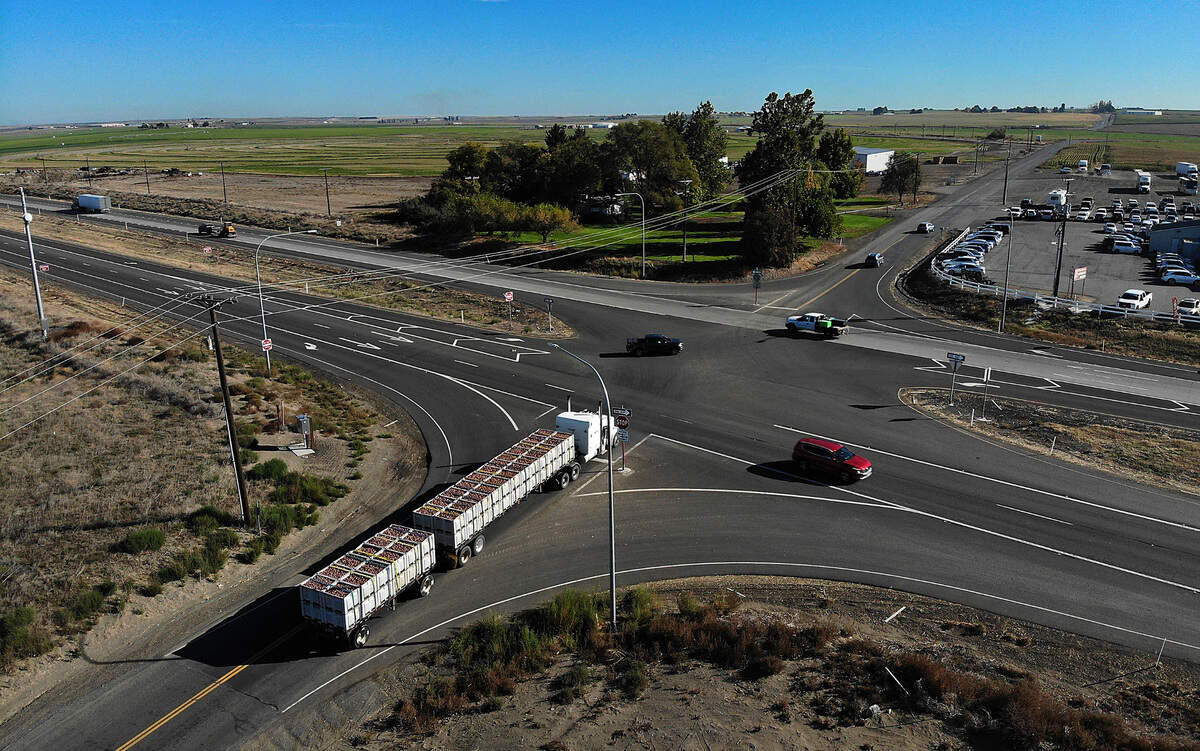
This stretch of U.S. Highway 395 north of Pasco has been the scene of several fatal collisions in recent years. In an effort to slow traffic and save lives I co-sponsored legislation to temporarily designate “crash prevention zones” on two highways in our area: one on a nine-mile section of U.S. 395 and two along U.S. 12. The bill, SB 6066, received overwhelming passage this year and took effect in mid-June. This past month I joined other local lawmakers and staff from the Washington State Department of Transportation for a visit of all three locations, to discuss what might be next after the CPZs expire at the end of 2028.

Bipartisan support for ‘Parent to Parent’ program

Most of the legislation passed in Olympia is passed with bipartisan votes, so it stands to reason that Republican and Democratic lawmakers can also find common ground on things when we’re in between sessions.

A good example is the program called “Parent to Parent” within the Developmental Disabilities Administration wing of the state Department of Social and Health Services.

It connects parents of children with developmental disabilities or special health-care needs, the idea being that experienced parents can assist those who aren’t and could use some help navigating through the available resources. (This link goes to the local P2P website; state-level information is here.)

I mentioned above how state agencies are being told to watch their spending requests, because another budget shortfall is on the way. That reportedly cast some doubt on P2P’s future, and once word got around, it didn’t take long for several dozen legislators to get a bipartisan letter of support to the governor and the secretary of DSHS.

The fact that there are more than 50 P2P coordinators statewide and 49 legislative districts tells me there’s a good chance every member of the Legislature has constituents participating in this program in some fashion. We’ll be watching to see how DSHS responds.

***

I am working to make living in our state more affordable, make our communities safer, uphold our paramount duty to provide for schools, and hold state government accountable. I’ll work with anyone who shares those goals and wants to find solutions.

Please reach out to my office with your thoughts, ideas and concerns on matters of importance to you. I am here to serve and look forward to hearing from you.

Sincerely,


Perry Dozier
State Senator
16th Legislative District

EMAIL: Perry.Dozier@leg.wa.gov
OLYMPIA PHONE: (360) 786-7630
OLYMPIA OFFICE: 342 Irving R. Newhouse Building
MAILING ADDRESS: P.O. Box 40416, Olympia, WA 98504



E-Newsletter: My visit with Governor Ferguson takes an agricultural turn

June 26, 2026

Dear Neighbors,

When Governor Ferguson’s office phoned early this month to ask if I could meet him in Kennewick on June 11, I said sure. His assistant didn’t volunteer why, but I figured the governor had a good enough reason, so we simply agreed on a time and place.

On June 9 the governor announced that he and our state’s superintendent of public instruction want to see a ban on cellphones in our K-12 classrooms. Well, that was a clue. I’ve served on the Senate Early Learning and K-12 Committee since day one as a senator, and any policy proposal involving classrooms statewide would likely need to clear our committee first.

Keep reading for more about how that played out. To me, the real value of the meeting was that it allowed me to have a candid conversation with the governor about several concerns facing Washington’s agricultural sector.

I started by pointing out how, according to the U.S. Department of Agriculture (as reported in The Capital Press), the returns to Washington farmers sank from plus-$2.8 billion in 2021 to an estimated minus-$396 million just three years later. This put us dead last in the nation while farmers in Oregon, Idaho and California continued to prosper.

The issues I brought to the governor’s attention included the overtime policy that is unpopular with both farmers and workers, and how the inflated fuel prices in our state are especially hard on agriculture.

While the governor listened cordially, the way he pushed back on my fuel-cost argument tells me the Department of Ecology and the climate activists have likely painted a very different picture for him about what the Climate Commitment Act is costing both families and farmers.

I also know he has blamed the Iran conflict — and by extension the Trump administration — for the recent climb in fuel prices. But Washington’s prices were much higher than the national average before that conflict began, and they’ll be much higher than the national average when it’s over.

Since our meeting I’ve sent the governor the results of Ecology’s May 13 auction of carbon “allowances” so he can see for himself why I say the CCA is responsible for adding 55 cents to the price of gasoline in our state and 66 cents to the cost of diesel.

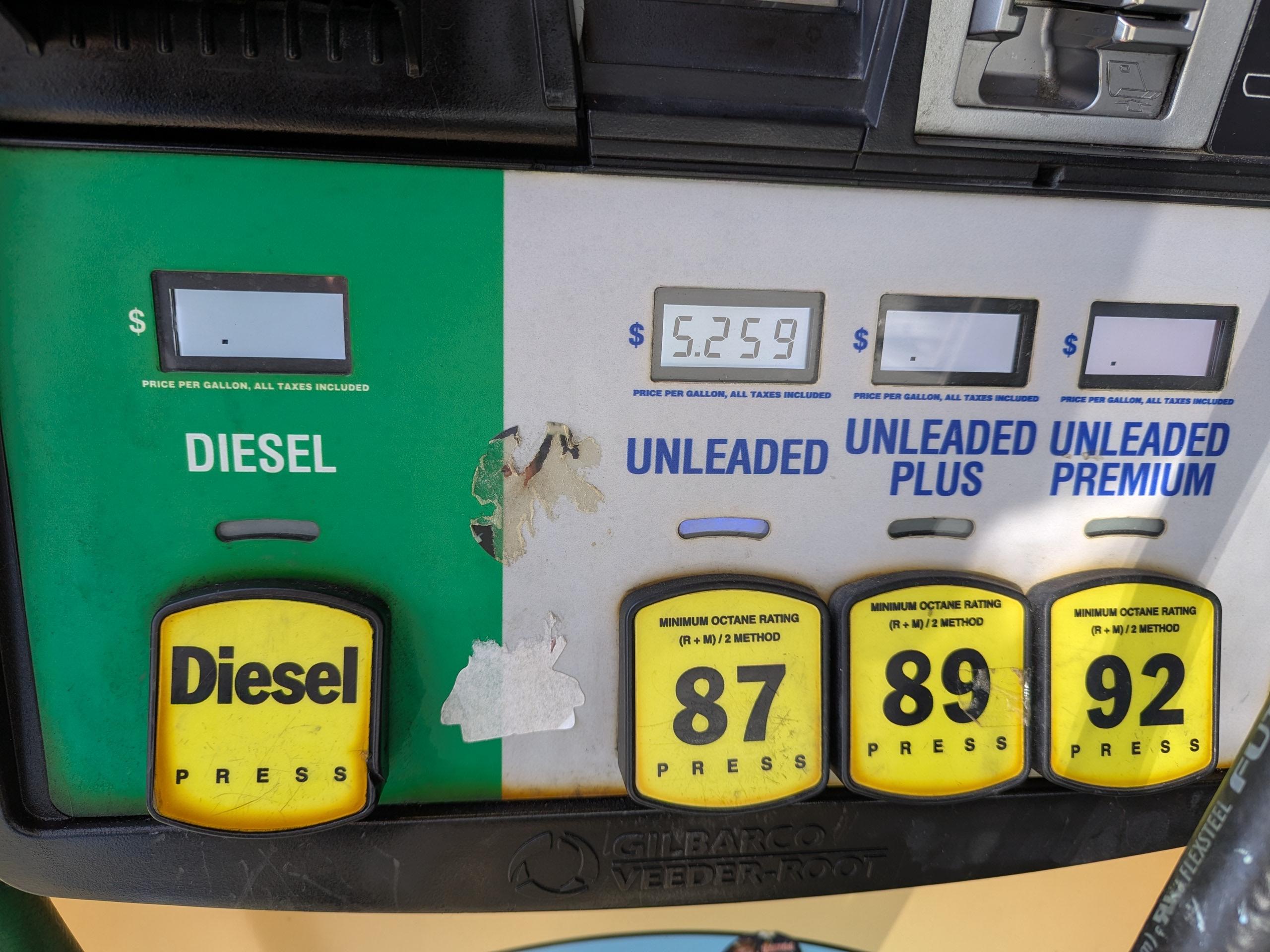
This hidden gas tax is why Washington is consistently ranked #2 or #3 in the nation for highest gas prices — a dubious distinction I would rather not have. One day recently I went from seeing diesel for $4.40 per gallon in Idaho to $5.99 in Colfax, $6.99 in Dayton and $6.29 in Waitsburg.

This is why the CCA is bad for agriculture, and why Republicans have asked the governor to suspend the law. I hope he gives it new consideration in light of the information and views I shared since our meeting in Kennewick.

The average price of unleaded in our state, according to aaa.com, is $5.27 per gallon. It’s $6.16 for diesel. The state gas tax will go up 2% on July 1 — and every July 1 thereafter — because of legislation passed by majority Democrats in 2025. That was on top of a 6-cent hike in the gas tax and 9-cent jump in the tax on diesel, which took effect a year ago.

Governor is two years late in wanting cellphones out of classrooms

As I figured, the invitation to meet with Governor Ferguson in Kennewick early this month had to do with his interest in banning cellphones in classrooms.

Although the governor is free to come up with a policy proposal, the executive branch isn’t allowed to file legislation. That right belongs only to senators and representatives, and to the people through their power of initiative.

It shouldn’t be a problem for the governor to find someone to put a cellphone-ban bill in the hopper on his behalf (such measures are called “request legislation”). My question is, where was he the past two years?

I was a co-sponsor of bipartisan legislation that would restrict mobile phone usage by public school students. It was on the table in both chambers for the 2025 and 2026 legislative sessions, as House Bill 1122 and Senate Bill 5346.

The bills were referred to the respective K-12 committees — but didn’t move an inch after that, in either session. One of my Republican colleagues on the House committee did his best to convince the chairwoman to at least hold a hearing on the bill, to no avail.

One of the frustrating things about Olympia is how potentially meaningful policy discussions get sidelined for no apparent reason. Is a cellphone ban going to be more acceptable in 2027 than it would have been either of the past two years?

I’m curious to see whether and how the content of the governor’s request legislation differs from the bill I sponsored, and whether the committee chairs will give it the consideration our bill didn’t receive.

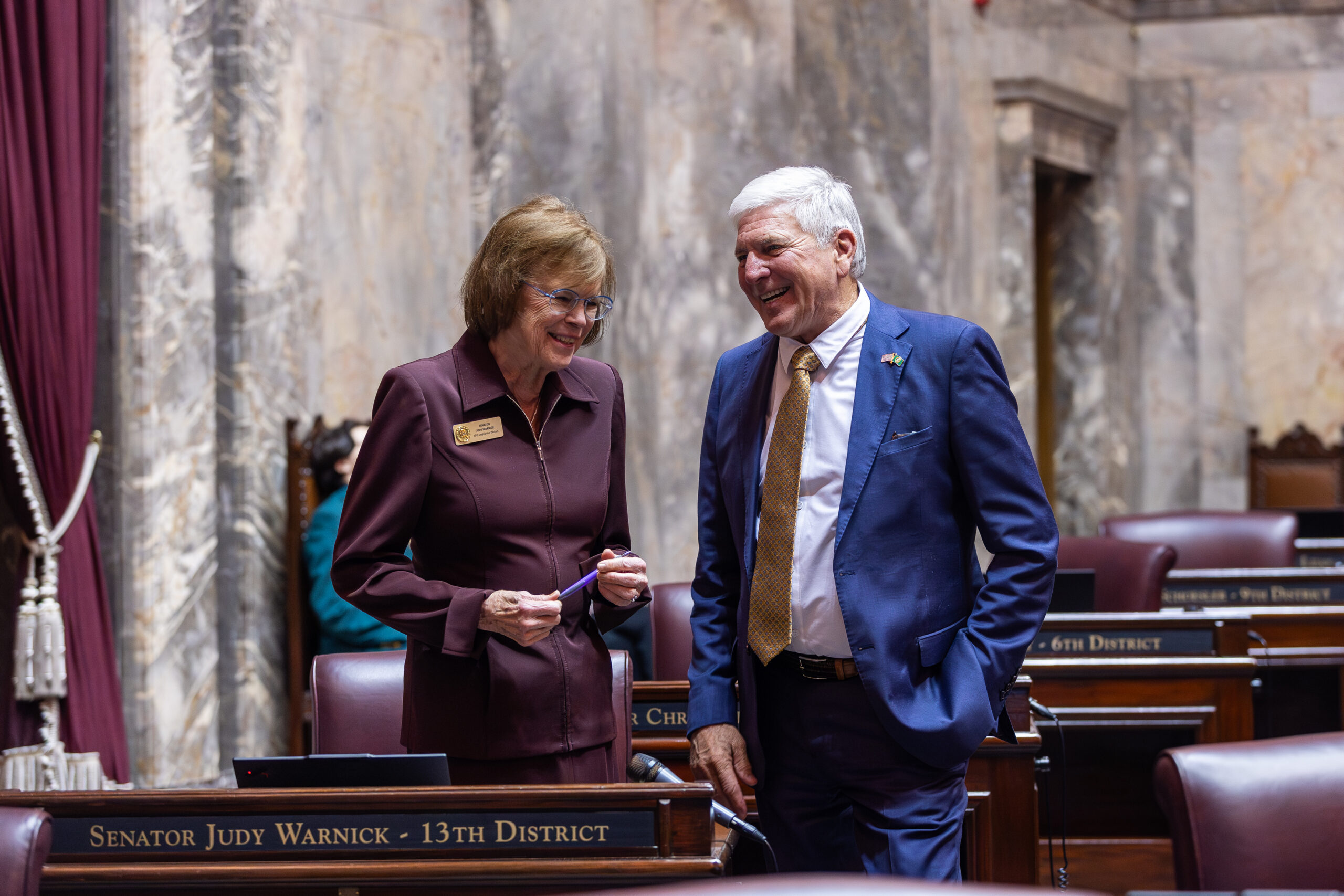
Sen. Judy Warnick of Moses Lake has decided not to seek re-election after serving the neighboring 13th Legislative District as a representative, then senator, for 20 years. She’s been a wonderful colleague who shares my concern for how high fuel prices are affecting agriculture; read her recent statement on the issue here.

From the interim calendar: budget, education, water, ag

Anyone involved in farming or ranching knows the list of chores never really ends. But neither do the duties of a state legislator. Even though we’re not in session at the state Capitol, I’m still engaged during these “interim” months on issues that matter to our legislative district and this part of the state.

The second of state government’s quarterly revenue forecasts for 2026 was released earlier today. As a member of the Senate Ways and Means Committee I was particularly interested in what it means for the state’s financial picture, and whether the budget that takes effect July 1 will remain in balance for the foreseeable future. Read the assessment from our Senate Republican budget leader here. The governor’s budget office recently warned state agencies to prepare for spending reductions, as it anticipates a third budget shortfall in as many years.

Speaking of that budget — it contains the cost-of-living allowance for retired teachers and other public employees who receive their pensions through Plan 1. This was approved unanimously through my Senate Bill 5862.

I received a nice letter from Marilyn with the Walla Walla-Columbia School Retirees Association, which mentioned the COLA and my role — but what stood out was her report that WWC Unit 31 members have volunteered a total of 5,688 hours in our community during this past 2025-2026 school year!

My visits around our region recently include:

  • Attending and speaking at the Prescott 8th Grade Promotion on the afternoon of June 12. Many years ago I was one of those Prescott 8th-graders, so this was a very enjoyable and uplifting experience.
  • Meeting at the Port of Walla Walla with two representatives from the Department of Ecology to discuss water issues related to the Walla Walla Water 2050 water management plan. I’ll go into more detail about this another time, but there’s been a serious disconnect between what local Ecology officials have told me compared to what I’m hearing from the agency headquarters in Olympia.
  • Speaking at the Washington Association of Maintenance and Operations Administrators (WAMOA) conference June 17 in Othello. As a farmer and a licensed commercial pilot I appreciate the importance of maintaining facilities, and was glad to share that with the attendees, along with information about funding for school infrastructure.
  • Visiting Monday evening with members of the Washington Potato and Onion Association who were in Walla Walla for their annual conference.
  • Participating in a Wednesday discussion about higher education with members of the Tri-City Regional Chamber of Commerce. We heard from the chancellor and presidents of WSU, Columbia Basin College and Heritage University.

Traveling around our district and visiting with the people I serve is one of the most productive things I get to do as a senator. I learn how government is or isn’t working for them, and how it can do better. If you’d like to get on my calendar this interim, contact me using the information below and let’s see what can be arranged!

E-News: Why doesn’t Washington have cheaper fuel like Oregon and Idaho?

Dear Neighbors,

Three years ago, just in time for the summer driving season, our state’s average gas price became the highest in the nation, at $4.89 for a gallon of regular. The cause seemed apparent: Washington’s cap-and-tax law — passed two years earlier, and officially known as the Climate Commitment Act — had taken full effect.

I’ll bet Washington hasn’t dropped below #3 since then on the list of worst gas prices. California typically is #1. When I checked the aaa.com website on gas prices before sending this report, our state was #2 with an average of $5.65 for regular and 97 cents more for a gallon of diesel. (Hawaii, where most everything is most expensive because of shipping costs, is sometimes #2 but is third behind our state right now.)

Can Olympia do something to give us relief from high fuel prices? Yes, but “can” is not the same as “will.”

Legislators could suspend the state portion of the gas tax (55.4 cents), but that would cut directly into money for highway projects and the Washington State Patrol.

Road and bridge projects wouldn’t be affected if lawmakers instead suspended either or both of the climate policies that function like a hidden gas tax: the Climate Commitment Act, and the “low-carbon” fuel standard (requiring state retailers to offer a different and more expensive formulation of fuel).

Suspending these at the legislative level would require a special session in Olympia, however. The simpler alternative would be for Governor Ferguson to suspend the CCA after declaring an energy emergency.

My colleague on the Senate Ways and Means Committee, Sen. Chris Gildon of Puyallup, asked the governor to do just that, in a May 20 letter. The answer came from a Ferguson spokesperson: if you want lower gas prices, talk to President Trump.

I know the governor has been consistently critical of the president, but this one won’t stick. The average gas price in our state was $4.35 per gallon two days before the Iran conflict began, and now the national average is $4.22 — while, to say it again, we’re at $5.65.

International events aren’t responsible for the fact that gas is generally 40-50 cents less per gallon across the Oregon border (and the savings is about twice that in Idaho). It’s because of state-level climate policies that have yet to show any measurable improvement in air quality.

Senator Gildon had this reaction to the comments that came out of the governor’s office — starting with how Washington families deserve an honest discussion about why they continue to pay some of the highest gasoline prices in America. I agree, because the real reasons originated in Olympia.

At last, southeast Washington’s newest facility for treating behavioral health and substance abuse is ready to open! It was an honor to take part in the ribbon-cutting ceremony for the Columbia Valley Center for Recovery, and say a few words about this important accomplishment. As I understand it the center is awaiting one last approval from the state Department of Health, then it can begin serving people. Congratulations to those who worked hard for years to get to this point — and I’m pleased that our 16th District legislative delegation also had a role, working with our colleagues from adjacent districts to secure a total of nearly $19.6 million for the project over the past several years. That support came from the state’s capital budget, which I know well as a member of the Senate capital-budget team. This new resource, which was once Kennewick General Hospital, is a great example of how public dollars collected at the state level are put to good use at the community level.

Anti-sheriff law put on hold — and rightfully so

I remember when Benton County voters recalled their sheriff. That wasn’t decades ago — it was 2021. The reason doesn’t matter as much as the fact that the people had the final say.

Supporters of the controversial Senate Bill 5974 didn’t just propose “modernizing” the law as it pertains to the qualifications of candidates for sheriff. They also drifted over into telling sheriffs, police chiefs, town marshals, law-enforcement volunteers and others what their duties are and aren’t.

Even more concerning to me, as a former elected county official (Walla Walla County commissioner, 2008-16), was how the law singled out sheriffs for the potential of decertification by an unelected state commission headquartered in King County.

Decertification is a backhanded way of forcing a sheriff out of office — a responsibility that should belong only to the voters. Benton County is proof that the process works.

Many sheriffs testified against the bill in committee; after it was passed, several filed a lawsuit on the grounds that the Legislature was overstepping its constitutional authority. A Thurston County judge granted a preliminary injunction, which puts the law on hold so that the lawsuit may continue.

Another example of the good things happening in our legislative district is the work being done by Mirror Ministries to serve victims and survivors of sex trafficking. I recently had the privilege of visiting their facilities in the Tri-Cities, including Esther’s Home. Go online (which is where I found this photo) to learn more about them!

Congratulations to area schools on winning statewide recognition

I’ve served on the Early Learning and K-12 Education Committee since becoming a senator. It’s important to me because providing for education is state government’s most important duty, under the Washington constitution.

Recently I learned seven schools in our 16th Legislative District had been honored by state government’s educational sector for their performance during the 2023-24 and 2024-25 school years: Prospect Point Elementary (Walla Walla Public Schools); Waitsburg High (Waitsburg SD); Columbia Elementary (Columbia SD): Tapteal Elementary (Richland SD): Prescott High (Prescott SD); and a pair from the Pasco SD, Barbara McClintock STEM Elementary and Ray Reynolds Middle School.

This came from the Washington School Recognition Program, established in 2010 by the Legislature. The program’s goal is to highlight schools that demonstrate exceptional progress in certain categories (details on those are here).

Speaking of Prescott, I visited the school on May 27 — as did the state superintendent of public instruction. You may remember how he had called for the dissolution of the Prescott district, due to a budget deficit left by previous administrators, but had to reverse that after the people of Prescott and Vista Hermosa organized and raised the funds needed to put the district back on stable financial footing (click here for the Walla Walla Union-Bulletin report).

Hopefully the state superintendent came away from his visit with a new perspective about small rural schools. As a Prescott alumnus, I know what the school means to the community — and am very glad that when I speak at the upcoming 8th-grade graduation, it won’t be the district’s last one!

***

I am working to make living in our state more affordable, make our communities safer, uphold our paramount duty to provide for schools, and hold state government accountable. I’ll work with anyone who shares those goals and wants to find solutions.

If you see me out and about in our 16th District, say hello – because I’m your senator all the time, not just when we’re in session in Olympia. Please reach out to my office with your thoughts, ideas and concerns on matters of importance to you. I am here to serve and look forward to hearing from you.

Sincerely,


Perry Dozier
State Senator
16th Legislative District


EMAIL: Perry.Dozier@leg.wa.gov
OLYMPIA PHONE: (360) 786-7630
OLYMPIA OFFICE: 342 Irving R. Newhouse Building
MAILING ADDRESS: P.O. Box 40416, Olympia, WA 98504


Dozier gives credit to community after state drops effort to close Prescott School District

WAITSBURG… Sen. Perry Dozier today said he is elated that the Prescott School District is no longer facing dissolution and is on a clear path to get out of a financial hole caused by years of undisclosed mismanagement.

A petition to dissolve the district had been filed Jan. 12 by Superintendent of Public Instruction Chris Reykdal, at the recommendation of a financial oversight committee he had assigned to assess the district’s viability. In a letter today to Educational Service District 123, which includes Prescott, Reykdal announced he had followed the oversight committee’s advice and rescinded the petition because Prescott has produced the necessary financial plan before the April 1 deadline that had been set in January.

Dozier, state senator for the 16th Legislative District since 2021, is a proud graduate of the Prescott school system, which serves families from the Prescott area and the Vista Hermosa community. During the just-concluded 2026 legislative session he led the successful effort to secure a budget appropriation of approximately $630,000 that will anchor Prescott’s plan for financial recovery.

The law created by the unanimous passage of Senate Bill 6065, which Dozier introduced, also will give Prescott a tool it needs to get back on solid financial footing.

The Waitsburg Republican offered these comments in response to the announcement from Olympia:

“I’m elated that the district will get to continue doing what it does so well, which is to serve the children of Prescott and Vista Hermosa and their families while acting as the hub of the area. They didn’t deserve all the concern and frustration this caused, especially after the dissolution petition was filed.

“There’s a long list of people who had a hand in getting to today’s good news, but the credit belongs first and foremost to the residents of Prescott and Vista Hermosa. Their heroic efforts to rise up and overcome a situation that wasn’t their fault made for a story that was very persuasive in Olympia, especially with my colleagues on the Senate education and budget committees. I was able to convey to them the injustice of what was happening to the district, but the clincher was the 87% ‘yes’ vote for the February special levy. That backed up everything I was saying at the Capitol about how Prescott values education and stands behind its schools.

“While I agree with Superintendent Reykdal that there is still work to do – and to me that includes accountability for the people who caused this crisis by failing to act like responsible public servants – let’s take a moment and celebrate this huge accomplishment.”


Legislative session was ‘historic’ but not for the right reasons

Dear Neighbors,

This year’s legislative session is over, and I’m glad it ended on schedule. Had we been forced into overtime there’s no telling how many more harmful bills might have been passed.

Governor Ferguson called the session “historic,” and on that we agree. His definition is different than mine, however. He wholeheartedly supports the new state income tax, while I see its passage as the worst thing to happen at the Capitol in decades — and that’s before you get to the other bad bills that our Democratic colleagues pushed through.

To help put the 2026 session in perspective, keep reading for a list of the tax bills that passed in support of yet another irresponsible state operating budget, along with examples of both good and bad bills that passed. But ahead of that is an update on one of the responsibilities that consumed a great deal of my time this session: the capital budget.

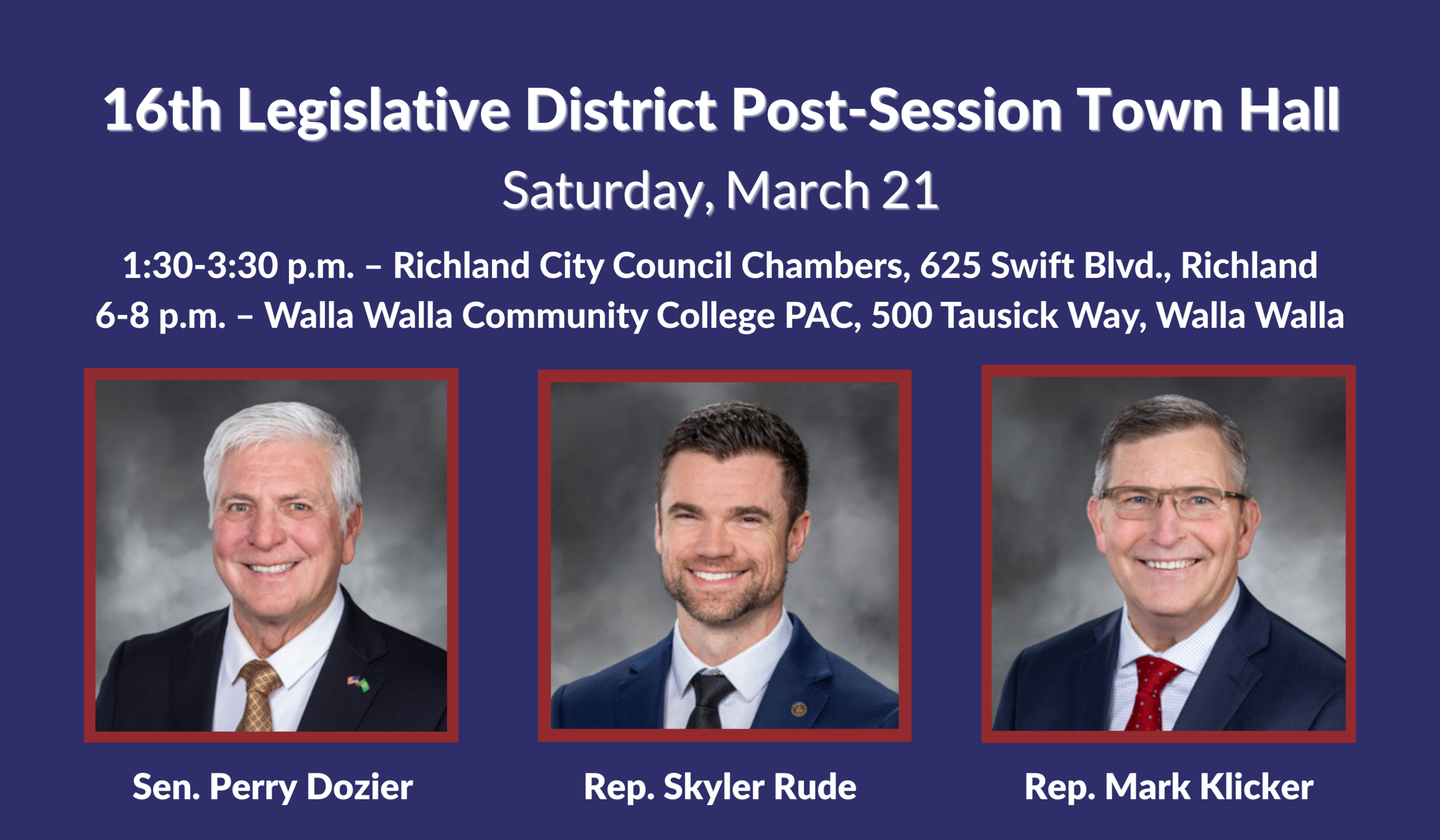
It’s great to be back home in the 16th District. If you see me out and about, say hello – because I’m your senator all the time, not just when we’re in session in Olympia. Also, this Saturday I’ll be co-hosting town hall meetings in Richland and Walla Walla with my “seatmates” from the House of Representatives. I hope you can join us!

Updated capital budget to make visible improvements in our district, region

Although the capital budget is the smallest of the three state budgets, it’s also the best example of how legislators work across party lines to do good things in our state. Proof of that is found in the money allocated to deal with the piles of waste tires in our state, starting with the eyesore outside of Richland.

It’s common for lawmakers to talk about the capital budget in terms of the projects designated for their respective districts, but Sen. Mark Schoesler, of the neighboring 9th District, and I also like to group the projects a little differently, as we explained in this press release following the adoption of the final, negotiated version. That’s because the needs of small school districts, agriculture and so on tend to cut across district lines.

Operating budget means more tax increases — which I didn’t support

A year ago, facing a shortfall of about $7 billion over four years, I supported a budget proposal that balanced without raising taxes and without cutting anyone off state-funded services, yet still allowed for about a 5% increase in spending. Unfortunately, the special interests have more influence in Olympia than the average taxpayer, and Democrats instead went with a state-record $12.3 billion in new or higher taxes, at both the state and local levels, and a big spending increase to go with it.

This year the budget was short again – by an estimated $1.5 billion, in spite of all those tax hikes in 2025. Once again, rather than control spending, the majority Democrats chose to support billions in additional spending through a combination of fund raids and more taxes. I didn’t support any of these:

  • SB 5949 (Sen. June Robinson, D-Everett): Insurance-carrier tax
  • SB 6228 (Sen. Noel Frame, D-Seattle): Will increase health-care costs by raising cost of doing business for many pharmacies
  • SB 6231 (Sen. Frame): Increases costs for replacing data-center equipment
  • SB 6248 (Sen. Derek Stanford, D-Bothell): Travel-insurance tax
  • SB 6346 (Sen. Jamie Pedersen, D-Seattle): Imposes a state income tax
  • HB 1796 (Rep. Lisa Callan, D-Issaquah): School-construction debt
  • HB 1983 (Rep. Steve Tharinger, D-Port Townsend): Redefines “timberland” for real estate excise tax purposes
  • HB 2034 (Rep. Timm Ormsby, D-Spokane): Raids the oldest of the Law Enforcement Officers and Fire Fighters retirement plans (LEOFF Plan 1)
  • HB 2089 (Rep. Shaun Scott, D-Seattle): Tax on loan interest
  • HB 2248 (Rep. Osman Salahuddin, D-Redmond): Corporate filings
  • HB 2385 (Rep. Nicole Macri, D-Seattle): Tax to expand Medicaid access
  • HB 2442 (Rep. April Berg, D-Mill Creek): Local-government tax authority
  • HB 2487 (Rep. Macri): Tax on insurance carriers
  • HB 2521 (Rep. Ormsby): Firearms background-check fees
  • HB 2681 (Rep. Ormsby): Cannabis-license fees

Also, it’s important to know the budget appropriation I secured to help protect the Prescott School District from being dissolved involves money left from funding that went to another school district in 2025. Being unspent dollars, they are not dependent on any of the tax increases or budget gimmicks that went into balancing the final version of the supplemental operating budget, which was adopted on the session’s final day.

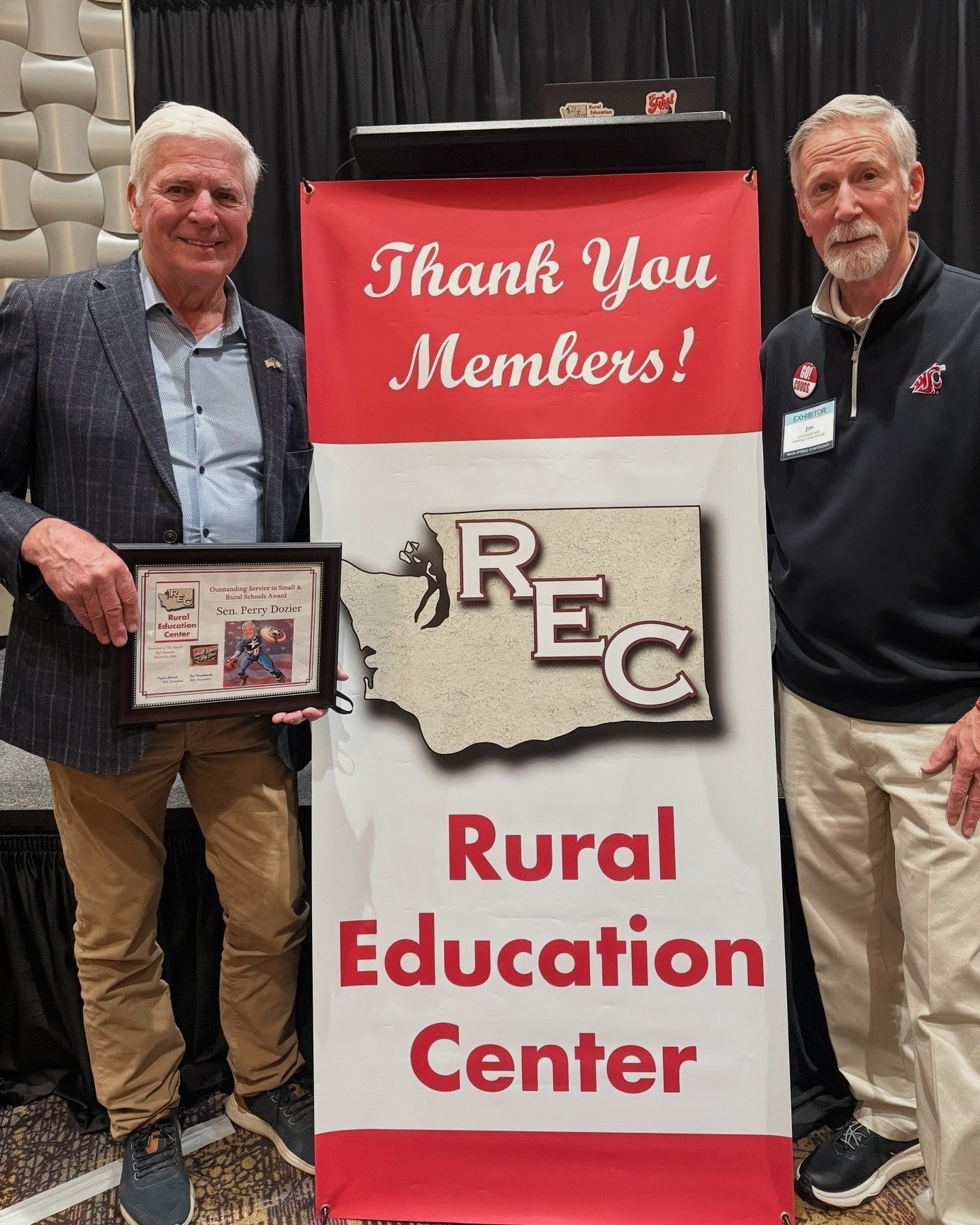
My efforts this session to help small school districts apparently got the attention of the Washington Association of School Administrators – because next thing you know, I was invited to WASA’s recent spring conference for small school leaders to receive the “Outstanding Service to Small & Rural Schools” award. Speaking of small school districts, let me give a shout-out to the College Place and Kiona-Benton districts, which were just honored with the inaugural State Superintendent’s Award for Educational Excellence!

2026 session: The good…

More than 1,200 bills were on the table for consideration this year, between the Senate and House – although to be clear, many of those were carried over from the 2025 session.  Of those, 276 were passed by both chambers – around 22%.

Two of the bills I introduced will become law: SB 5862, which treats members of the state’s pre-1977 retirement plans fairly by granting them a cost-of-living increase, and SB 6065, which has to do with school-district finances and will apply immediately in our region to help the Prescott School District regain financial solvency.

Of the bills I co-sponsored, 14 will become law – and six have already been signed by the governor. Click here for that list.

Here are more of the bills that passed which I didn’t sponsor but supported when they came to the Senate floor for votes.

  • SB 5124 (Sen. Ron Muzzall, R-Oak Harbor): Improves patient access to post-acute care by establishing network adequacy standards for nursing homes and inpatient rehabilitation centers with Medicaid contracts.
  • SB 5552 (Sen. Jeff Wilson, R-Longview): Requires the State Building Code Council to perform rulemaking applicable to kit homes by March 31, 2027.
  • SB 5827 (Sen. Chris Gildon, R-Puyallup): Allows service members, before retirement or prior to discharge, to apply for tentative civil service employment opportunities using a “pre-discharge certification” to be eligible for hire.
  • SB 5841 (Sen. Matt Boehnke, R-Kennewick): Streamlines the college financial aid process by making it easier for the Washington Student Achievement Council to view students’ progress. Requires schools to inform students about the Washington Opportunity Scholarship.
  • SB 5880 (Sen. Keith Wagoner, R-Sedro-Woolley): Expands toxicology testing by accredited labs to help manage the backlog.
  • SB 5886 (Sen. Boehnke): Protects a person’s personality rights without consent. This includes name, voice, signature, photograph or likeness, without written or oral, express or implied consent. Expands this protection to forged digital likeness.
  • SB 5977 (Sen. Nikki Torres, R-Pasco): Directs the Department of Children, Youth and Families to issue a report when a child near-fatality review is conducted and to post that report to the same webpage as fatality review reports.
  • SB 6076 (Sen. Keith Goehner, R-Dryden): Streamlines consumer-owned utility procurement requirements for clean energy generation, energy storage, transmission, and distribution projects.
  • SB 6087 (Sen. John Braun, R-Centralia): Provides limited liability to religious organizations for giving donations of children’s items to families in need.
  • SB 6149 (Sen. Jeff Wilson): Amends the definition of “rural county” for public facility funding purposes. Basically, this brings Cowlitz County back under the definition so they can still receive rural county economic development support.
  • SB 6268 (Sen. Paul Harris, R-Vancouver): Would require OSPI to maintain an online record of all financial decisions issued in response to special education community complaints in the prior 20 years.

…and the bad

Here are some of the notable bills that were approved by a majority of legislators – but not me:

  • SB 5855 (Sen. Javier Valdez, D-Seattle): Prohibits local, state, and federal law-enforcement officers from wearing masks while interacting with the public, with certain exceptions.
  • SB 5892 (Sen. Marcus Riccelli, D-Spokane): Prohibits county elections offices from publishing voter-registration records; must only divulge to Secretary of State. Now punishable by Class C felony.
  • SB 5925 (Sen. Drew Hansen, D-Bainbridge Island): Large expansion of state attorney general’s power to demand documents from businesses, law-enforcement agencies, school districts, other entities covered by laws related to wage laws, jail standards, and Keep Washington Working Act compliance.
  • SB 5917 (Sen. Jessica Bateman, D-Olympia): Bill allows distribution of state-purchased stockpile of chemical-abortion drugs (mifepristone and misoprostol) free of charge.
  • SB 5974 (Sen. John Lovick, D-Mill Creek): Anti-sheriff. Would allow the state Criminal Justice Training Commission, an unelected board appointed by the governor, to decertify sheriffs, which has the effect of removing them from office. This goes against the principle of local control and may also put sheriffs in a conflicting position while enforcing state law. However, they are also sworn to uphold the Washington State Constitution and the United States Constitution, both of which preempt state law.
  • SB 6081 (Sen. Jamie Pedersen, D-Seattle): involves privacy, including the unauthorized disclosure of sex-designation information and historic sex-designation changes in official government records.
  • SB 6182 (Sen. Bateman): Tax on insurance plans to make up for $8 million cut in funding to Planned Parenthood made by Democrats in 2025. All health insurance plans must pay 82 cents for every covered life the first year and 16.5 cents each year per covered life thereafter.
  • SB 6246 (Sen. Vandana Slatter, D-Bellevue): Would add additional regulatory requirements to “Emissions-intensive, trade-exposed” (EITE) facilities that have been required to lower their emissions on a schedule set by the Climate Commitment Act.
  • SB 6346 (Sen. Pedersen): Income Tax. Levies a 9.9% tax on income over $1 million per year — with the deduction contained in just one sentence, making it easily lowered by legislators in future years. Hits small businesses, penalizes married couples, projected to raise $3.2 billion per year. This was rushed through the Legislature in just 43 days. Intentionally blocks the people’s constitutional right to challenge the tax through a referendum.


Legislature unanimously approves supplemental capital budget

OLYMPIA… The Legislature tonight unanimously passed the 2025-27 state supplemental capital budget  following an agreement earlier this week by Senate and House negotiators on a final budget plan.  The Senate voted 49-0 to pass the budget after the House approved it 96-0.

Two eastern Washington Republican senators who helped develop the spending plan applauded it for addressing needs on both sides of the Cascades.

“This capital budget passed by the Legislature is truly a bipartisan package that takes a statewide approach in addressing needs,” said 9th District Sen. Mark Schoesler, R-Ritzville, the lead Republican for the Senate capital budget. “This budget does a very good job for several areas, from K-12 and higher education to water infrastructure, agriculture, housing and flood response.”

“I’m pleased that this budget provides strong funding for water-infrastructure projects on both sides of Washington. The House capital budget had no water projects, so it’s good that we preserved the water projects that were in the Senate capital budget. The final capital budget also funds many small-school modernization projects throughout our state. During negotiations with the House, we insisted on these small-school projects in the budget,” added Schoesler, who commended the Senate capital budget team on developing a solid and prudent budget, especially his Democratic counterpart, Sen. Yasmin Trudeau, D-Tacoma.

“This budget is an example of making a good thing better. It builds on the very solid capital budget approved in 2025 by accommodating the unforeseen needs that we knew would emerge in the months since then,” said 16th District Sen. Perry Dozier, who is in his second year as assistant Republican leader on the capital budget. “As our bipartisan Senate team negotiated this final version with the House, we held firm to our positions on critical areas like water infrastructure and support for small school districts – and to me that had a lot to do with the unanimous vote in the Senate today.

“Although people understandably think of construction when it comes to the capital budget, the natural-resources part is also important. That’s where the water projects come in, and this year I’m very pleased that the House agreed with allocating $3.2 million toward the problem of waste tires. Being able to respond to community needs like dealing with that massive tire pile outside Richland is why working on this budget is one of the most uplifting things I get to do as a lawmaker,” added Dozier, R-Waitsburg.

The supplemental capital budget (Senate Bill 6003) totals $889 million. It follows up the $7.5 billion 2025-27 state capital budget enacted last year. The new budget addresses a wide range of needs throughout Washington, with funding for projects related to K-12 and higher education, water infrastructure, flood responses, housing and clean energy.

The revised capital budget provides over $71 million for the Small District and State-Tribal Education Compact (STEC) Schools Modernization Program. The budget also includes:

  • $21.2 million for the school construction assistance program (SCAP).
  • $13.9 million in new spending for school seismic safety grants.
  • $5.4 million for projects for distressed schools.
  • $3.78 million for a SCAP enhancement program pilot project.
  • $2.5 million for Healthy Kids-Healthy Schools to fund grants to support lead remediation.
  • $430,000 for school seismic-safety site class assessments.

Four-year universities and other higher-education institutions benefit from the capital budget. Several Washington State University projects receive funding:

  • Preserving and improving campus facilities ($6 million).
  • Cooling and electrical upgrades to Ensminger Pavilion ($1.5 million).
  • Spokane Team Health Education Building renovation ($7 million).
  • WSU Creamery lighting and equipment replacement ($1 million).
  • Virtual fencing grants to enhance climate resiliency ($500,000).

Central Washington University receives money for its electrical feeder line to support the growth of campus and geothermal energy. Capital budget funding goes to Eastern Washington University for projects to preserve and improve campus facilities, as well as to Western Washington University for preventative maintenance for building-system repairs and for projects to preserve and improve campus facilities.

In addition, several campuses in the state’s community and technical college system receive funding for projects, including:

  • Cascadia College – CC5 Gateway Building.
  • Lower Columbia College – David Story Field improvements.
  • Spokane Community College – renovation of the east wing of its Main Building.

Schoesler and Dozier, both farmers, noted the updated capital budget funds agricultural projects, including:

  • $10 million for cost-share agreements with dairy-farm owners for anaerobic digester development and maintenance projects.
  • $4.6 million for grants to farmers to buy climate-smart agricultural equipment to reduce on-farm carbon emissions and increase carbon sequestration.
  • $2.2 million for the design of a new Washington State Department of Agriculture Plant Services Lab at Washington State University’s Prosser campus.
  • $400,000 for WSU’s soil health research infrastructure, specifically its long-term agroecological research and extension sites (LTARE).

The supplemental capital budget funds water-infrastructure projects on both sides of the Cascades. Those appropriations include $8.977 million for several water-conservation projects across the state, including:

  • Kennewick Irrigation District main canal lining.
  • Kittitas Reclamation District South.
  • Mill Creek passage, Walla Walla – 3rd to Colville.
  • Roza Canal floor replacement.
  • Roza Canal sealing project.
  • Touchet River mile 42.
  • Waynita Creek restoration.
  • Water system efficiency leak detection and repairs.

About $16.1 million is allocated for many local water-infrastructure projects in both western and eastern Washington, including the Chehalis River irrigation project, Othello water supply, Scatter Creek irrigation and pipeline projects, Skagit District 15 irrigation project and Skookumchuck River irrigation fish screen and water conservation projects.

The supplemental capital budget provides funding for disaster and response to the December 2025 floods, including:

  • $3.1 million for grants to counties for the removal of debris in rivers and other waterways.
  • $2 million for grants to six counties (King, Lewis, Pierce, Skagit, Snohomish and Whatcom) to evaluate the counties’ risks and needs for flood response, preparedness and prevention.

The capital budget provides money for law-enforcement projects, including:

  • Over $1 million for Pasco Regional Police Academy improvements.
  • $350,000 for the Washington State Criminal Justice Training Commission’s Burien Campus indoor shooting range.
  • $252,000 for the Criminal Justice Training Commission’s ADA upgrades at the Burien Campus.

The natural resources section of the updated capital budget includes:

  • $3.5 million for small, family-forest landowners to replace and remove stream-crossing structures, such as culverts, to improve fish passage for salmon, trout and other fish.
  • $3.2 million to address tire-pile prevention and cleanup, including removing the Twin Bridges Road tire-pile site near Richland.
  • $630,000 for a new welcome center and stormwater drainage improvements at Millersylvania State Park.

The supplemental capital budget spends $200 million for housing and homelessness, with $123.3 million allocated from the Housing Trust Fund for housing projects in both western and eastern Washington.

Over $30 million in funding is provided for about 120 new local and community projects.

The 2026 legislative session is scheduled to end tonight.

Senate passes three budgets, and one has big problems

Dear Neighbors,

There are now less than 10 days left for legislators to wrap up their work at the Capitol. The time remaining in this session will be devoted to debating and voting in the Senate chamber, while some of us put in extra hours negotiating final versions of the three budgets (operating, capital, transportation) — including a lot of hours this Sunday, when we’re not scheduled to be on the “floor” voting.

We have through Friday to complete our work on bills passed over to us by the House of Representatives. Then the focus narrows to two things: acting on bills that are labeled “necessary to implement the budget” and deciding whether to accept changes made to Senate bills by the House.

Yesterday the Senate Ways and Means Committee, which handles the operating and capital budgets, met for what is likely the final time this session. Nearly 60 bills were on our committee’s agenda, and it makes sense that most were House bills, most also come with a price tag — at a time when the Legislature already has a $1.5 billion budget gap to fill.

This is important because, in spite of all the talk we heard about affordability when lawmakers arrived at the Capitol, this session is reaching deeper into the pockets of people across our state. The operating budget approved by the Senate majority on Friday is a prime example. Please keep reading for more about that budget and the other two spending plans adopted by the Senate.

Also, mark your calendar for the pair of post-session town-hall meetings our 16th District delegation has scheduled. I hope you can join us!

Senate’s $80-billion operating budget depends on raiding funds, more tax increases

The new operating budget is labeled “supplemental” because it’s about revisiting the two-year operating budget adopted in 2025 and making adjustments to get through the remainder of this budget cycle — meaning the end of June 2027.

The Senate majority says its plan (Senate Bill 5998) reflects “incredibly difficult decisions in a constrained fiscal environment.”

I’m having trouble seeing how adding $2.3 billion in spending, on top of the $77.9 billion approved less than a year ago, reflects any difficult decisions. And considering a state-record $12.3 billion package of tax increases was also approved in April 2025, how can there be any fiscal constraints?

There is no good reason for state spending to be growing twice as fast as household income in our state. And what the chart below doesn’t show is how the increase in spending on K-12 and higher education has tracked pretty well with the growth of household income — the overspending is happening in non-education areas, and it’s been going on for years regardless of who’s in charge in Washington, D.C.

It also concerns me that the Senate budget relies heavily on what we call “one-time” money to balance. Not only would it drain the state’s reserves and hit the rainy-day fund hard, but it also takes hundreds of millions that should have gone into the capital budget and also raids the Public Works Fund. On top of that, the Senate budget includes more tax increases and assumes the Legislature will adopt a state income tax this year. All of that is irresponsible and unsustainable.

In a statement following the 30-19 party-line vote on the Senate version of the supplemental operating budget, our Republican budget leader refers to this budget “as an $80‑billion house of cards on a shaky foundation of assumptions and short term fixes.”

He’s right — the better approach would be to keep new spending within the available revenue, to avoid new taxes and the use of budget gimmicks. I’m concerned that the Democrats’ approach will simply lead to another budget shortfall next year and a push for another big tax increase. That’s not the way to make living in Washington affordable.

Capital Budget: This was another productive session for our Senate capital-budget team, and we appreciated the unanimous support our work received. Sen. Mark Schoesler of Ritzville and I offer our take on the Senate budget here.

The image below gives a sense of how we worked to make sure the Senate capital budget (Senate Bill 6003) funds infrastructure and other community projects in all four corners of the state, not only in the more populated Puget Sound area.

The task now is to negotiate with the House, which adopted its own capital budget, to produce a final version that will be adopted before the Legislature adjourns. The House version also includes funding to deal with the enormous waste tire pile outside Richland. I’ll wait until then to detail the investments coming to our legislative district and region.


Transportation Budget: This also received unanimous support in the Senate. The fact that the Senate version (Senate Bill 6005) doesn’t rely on taxes and fees is a welcome change from the base transportation budget adopted in 2025. I appreciate that it’s strong on for money for road and bridge preservation, maintenance and facilities.

As with the capital budget, I’ll wait until a compromise is negotiated between the Senate and House before detailing the funding secured for projects in and around our 16th Legislative District.

Encouraging news for Prescott School District is bright spot in budget — but why was bill to protect other districts rejected?

In case you hadn’t heard the great news already — the supplemental operating budgets adopted by the Senate and the House both include money to help put the local Prescott School District back on sound financial footing. It makes me cautiously optimistic that the funding will carry into the final version.

I know the Senate Democrats’ budget leader was aware of the overwhelming community support for Prescott’s Feb. 10 school levy. While I can’t say the “yes” vote of over 86% clinched the budget appropriation, it had to help.

The dollars earmarked for Prescott are not tied to the one-time money being used to balance the supplemental budget. These are unspent funds left from assisting the Marysville School District in 2025.

Prescott needs to present a financial plan capable of convincing the superintendent of public instruction to withdraw his petition to dissolve the district. The budget appropriation will be the anchor of that plan.

Senate Bill 6065 would help Prescott (and potentially other districts) by clarifying the policy that allows school districts to make interfund loans in response to specific financial issues. It passed 49-0 in the Senate and is awaiting a vote by the full House.

Who could be opposed to stronger financial oversight?
Knowing that Olympia’s effort to dissolve the Prescott district originated with financial management by former district employees, I had introduced Senate Bill 6247 to hopefully spare other districts from going through the same ordeal.

My bill would create what amounts to an early-warning system regarding a school district’s finances. Although the Senate passed it unanimously, the education committee in the House made 13 changes before moving it forward to the House Appropriations Committee — which then let the bill die.

I’ve seen a lot of good Senate bills die in this same committee over the years, but it’s very difficult to understand why any legislator would not want to prevent waste, fraud and abuse in our schools — especially the kind that can ruin a district financially.

I enjoyed sponsoring Ruwaida El-Atwani as a Senate page recently. She’s a junior at Hanford High School and the 16-year-old daughter of Kadriye and Osman El-Atwani of West Richland.

***

I am working to make living in our state more affordable, make our communities safer, uphold our paramount duty to provide for schools, and hold state government accountable. I’ll work with anyone who shares those goals and wants to find solutions.

Please reach out to my office with your thoughts, ideas and concerns on matters of importance to you. I am here to serve and look forward to hearing from you.

Sincerely,

Perry Dozier
State Senator
16th Legislative District

EMAIL: Perry.Dozier@leg.wa.gov
OLYMPIA PHONE: (360) 786-7630
OLYMPIA OFFICE: 342 Irving R. Newhouse Building
MAILING ADDRESS: P.O. Box 40416, Olympia, WA 98504


Senate unanimously approves supplemental capital budget

The Senate today unanimously passed its version of the 2025-27 state supplemental capital budget. Republicans who helped develop the spending plan applauded it for addressing needs across Washington.

“Our supplemental budget complements the two-year capital budget enacted by the Legislature last year by spending money in a responsible manner while addressing important needs throughout the entire state,” said 9th District Sen. Mark Schoesler, R-Ritzville, the lead Republican for the Senate capital budget. “Working with our Democrat counterparts, we identified priorities and worked together to create a budget that is both effective and prudent. Our budget does a very good job for several areas, from K-12 and higher education to water infrastructure, housing and flood response.”

Schoesler’s floor speech on the capital budget prior to the Senate’s vote may be viewed here.

“I’m pleased with how this will get the most from the available dollars and make sure priorities are being addressed,” said 16th District Sen. Perry Dozier, R-Waitsburg, who is in his second year on the capital-budget team and has a solid budgeting background from eight years as a Walla Walla County commissioner.

“The conservative approach we took in budgeting a year ago gave us more flexibility when it came to doing good things now. The item I’m happiest about is the funding to deal with the Richland tire pile – it’s also in the House capital budget so I’m feeling positive about getting that cleanup going. Some of the other standouts in what we passed today include the added support for construction projects at small schools around our state, and a long list of water improvements, many of which are on our side of the Cascades. And like last year, I’m grateful to be a part of this team, for the bipartisanship that produced this budget, and the unanimous support it received today.”

The Senate supplemental capital budget (Senate Bill 6003) totals $723 million. It follows up the $7.5 billion 2025-27 state capital budget enacted last year. The new budget addresses a wide range of needs throughout Washington, with funding for projects related to K-12 and higher education, water infrastructure, flood responses, housing and clean energy.

The Senate capital budget provides over $71 million for the Small District and State-Tribal Education Compact Schools (STEC) Modernization Program. The budget also includes $3.7 million for projects for distressed schools, $5 million in new spending for school seismic-safety grants, $1.5 million for Healthy Kids-Healthy Schools to fund grants to support lead remediation and $430,000 for school seismic-safety site class assessments.

Several four-year universities and other higher-education institutions benefit from the capital budget. Several Washington State University projects receive funding:

  • Preserving and improving campus facilities.
  • Cooling and electrical upgrades to Ensminger Pavilion.
  • Spokane Team Health Education Building renovation.
  • WSU Creamery lighting and equipment replacement.

Central Washington University receives money for its electrical feeder line to support the growth of campus and geothermal energy. Capital budget funding goes to Eastern Washington University for projects to preserve and improve campus facilities, as well as to Western Washington University for preventative maintenance for building-system repairs and for projects to preserve and improve campus facilities.

In addition, several campuses in the state’s community and technical college system receive funding for projects, including:

  • Cascadia College – CC5 Gateway Building.
  • Lower Columbia College – David Story Field improvements.
  • Spokane Community College – renovation of the east wing of its Main Building.

Schoesler and Dozier, both farmers, noted the Senate capital budget funds agricultural projects, including:

  • $10 million for cost-share agreements with dairy-farm owners for anaerobic digester development and maintenance projects.
  • $4.6 million for grants to farmers to buy climate-smart agricultural equipment to reduce on-farm carbon emissions and increase carbon sequestration.
  • $2.2 million for the design of a new Washington State Department of Agriculture Plant Services Lab at Washington State University’s Prosser campus.
  • $400,000 for WSU’s soil health research infrastructure, specifically its long-term agroecological research and extension sites (LTARE).

The Senate supplemental capital budget funds water-infrastructure projects on both sides of the Cascades. Those appropriations include $12.2 million for several water-conservation projects across the state, including:

  • Kennewick Irrigation District main canal lining.
  • Kittitas Reclamation District South.
  • Mill Creek passage, Walla Walla – 3rd to Colville.
  • Roza Canal floor replacement.
  • Roza Canal sealing project.
  • Touchet River mile 42.
  • Waynita Creek restoration.

A total of $7.9 million is allocated for many local water-infrastructure projects in both western and eastern Washington, including the Chehalis River irrigation project, Othello water supply, Scatter Creek irrigation and pipeline projects, Skagit District 15 irrigation project and Skookumchuck River irrigation fish screen and water conservation projects.

More than $25 million is provided in the Senate capital budget for response to the December 2025 floods, including:

  • $8.6 million for recovery support, including rental assistance and home repair and replacement for individuals recovering from the floods.
  • $3.945 million for grants to counties for the removal of debris in rivers and other waterways.
  • $2 million for grants to six counties (King, Lewis, Pierce, Skagit, Snohomish and Whatcom) to evaluate the counties’ risks and needs for flood response, preparedness and prevention.

The Senate capital budget provides money for law-enforcement projects, including:

  • Over $1 million for Pasco Regional Police Academy improvements.
  • $350,000 for the Washington State Criminal Justice Training Commission’s Burien Campus indoor shooting range.
  • $252,000 for the Criminal Justice Training Commission’s ADA upgrades at the Burien Campus.

The natural resources section of the Senate’s supplemental capital budget includes:

  • $4.2 million for small, family-forest landowners to replace and remove stream-crossing structures, such as culverts, to improve fish passage for salmon, trout and other fish.
  • $3.2 million to address tire-pile prevention and cleanup, including removing the Twin Bridges Road tire-pile site near Richland.
  • $630,000 for a new welcome center and stormwater drainage improvements at Millersylvania State Park.

The Senate supplemental capital budget spends $150 million for housing and homelessness, with $128.3 million allocated from the Housing Trust Fund for housing projects in both western and eastern Washington.

Once the House of Representatives passes its capital budget, budget writers from the Senate and House are expected to meet as a “conference committee” to develop a compromise budget for both chambers to consider.

The 2026 legislative session is scheduled to end March 12.