



June 26, 2026
Dear Neighbors,
When Governor Ferguson’s office phoned early this month to ask if I could meet him in Kennewick on June 11, I said sure. His assistant didn’t volunteer why, but I figured the governor had a good enough reason, so we simply agreed on a time and place.
On June 9 the governor announced that he and our state’s superintendent of public instruction want to see a ban on cellphones in our K-12 classrooms. Well, that was a clue. I’ve served on the Senate Early Learning and K-12 Committee since day one as a senator, and any policy proposal involving classrooms statewide would likely need to clear our committee first.
Keep reading for more about how that played out. To me, the real value of the meeting was that it allowed me to have a candid conversation with the governor about several concerns facing Washington’s agricultural sector.
I started by pointing out how, according to the U.S. Department of Agriculture (as reported in The Capital Press), the returns to Washington farmers sank from plus-$2.8 billion in 2021 to an estimated minus-$396 million just three years later. This put us dead last in the nation while farmers in Oregon, Idaho and California continued to prosper.
The issues I brought to the governor’s attention included the overtime policy that is unpopular with both farmers and workers, and how the inflated fuel prices in our state are especially hard on agriculture.
While the governor listened cordially, the way he pushed back on my fuel-cost argument tells me the Department of Ecology and the climate activists have likely painted a very different picture for him about what the Climate Commitment Act is costing both families and farmers.
I also know he has blamed the Iran conflict — and by extension the Trump administration — for the recent climb in fuel prices. But Washington’s prices were much higher than the national average before that conflict began, and they’ll be much higher than the national average when it’s over.
Since our meeting I’ve sent the governor the results of Ecology’s May 13 auction of carbon “allowances” so he can see for himself why I say the CCA is responsible for adding 55 cents to the price of gasoline in our state and 66 cents to the cost of diesel.
This hidden gas tax is why Washington is consistently ranked #2 or #3 in the nation for highest gas prices — a dubious distinction I would rather not have. One day recently I went from seeing diesel for $4.40 per gallon in Idaho to $5.99 in Colfax, $6.99 in Dayton and $6.29 in Waitsburg.
This is why the CCA is bad for agriculture, and why Republicans have asked the governor to suspend the law. I hope he gives it new consideration in light of the information and views I shared since our meeting in Kennewick.
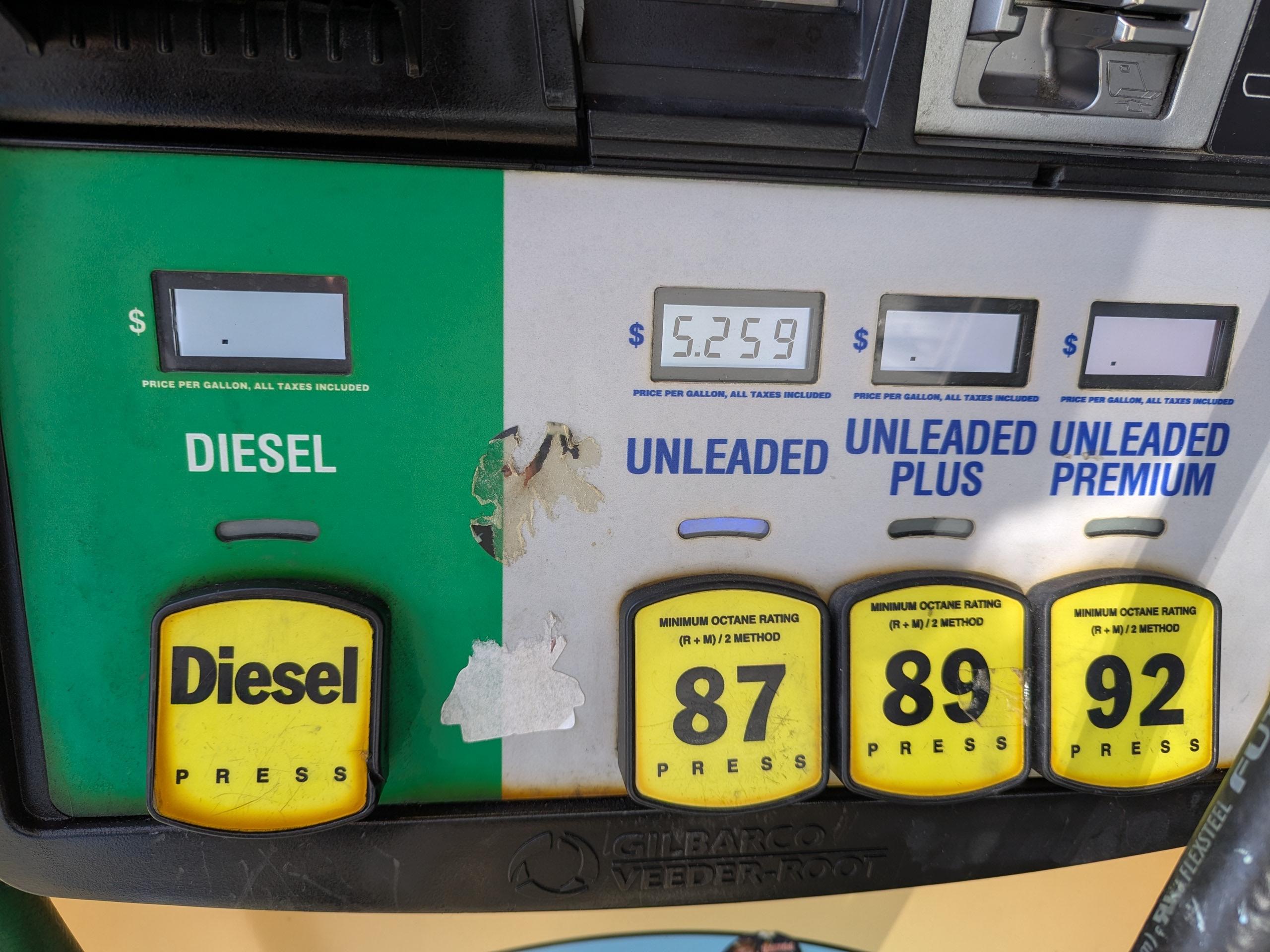 The average price of unleaded in our state, according to aaa.com, is $5.27 per gallon. It’s $6.16 for diesel. The state gas tax will go up 2% on July 1 — and every July 1 thereafter — because of legislation passed by majority Democrats in 2025. That was on top of a 6-cent hike in the gas tax and 9-cent jump in the tax on diesel, which took effect a year ago.
Governor is two years late in wanting cellphones out of classrooms
As I figured, the invitation to meet with Governor Ferguson in Kennewick early this month had to do with his interest in banning cellphones in classrooms.
Although the governor is free to come up with a policy proposal, the executive branch isn’t allowed to file legislation. That right belongs only to senators and representatives, and to the people through their power of initiative.
It shouldn’t be a problem for the governor to find someone to put a cellphone-ban bill in the hopper on his behalf (such measures are called “request legislation”). My question is, where was he the past two years?
I was a co-sponsor of bipartisan legislation that would restrict mobile phone usage by public school students. It was on the table in both chambers for the 2025 and 2026 legislative sessions, as House Bill 1122 and Senate Bill 5346.
The bills were referred to the respective K-12 committees — but didn’t move an inch after that, in either session. One of my Republican colleagues on the House committee did his best to convince the chairwoman to at least hold a hearing on the bill, to no avail.
One of the frustrating things about Olympia is how potentially meaningful policy discussions get sidelined for no apparent reason. Is a cellphone ban going to be more acceptable in 2027 than it would have been either of the past two years?
I’m curious to see whether and how the content of the governor’s request legislation differs from the bill I sponsored, and whether the committee chairs will give it the consideration our bill didn’t receive.
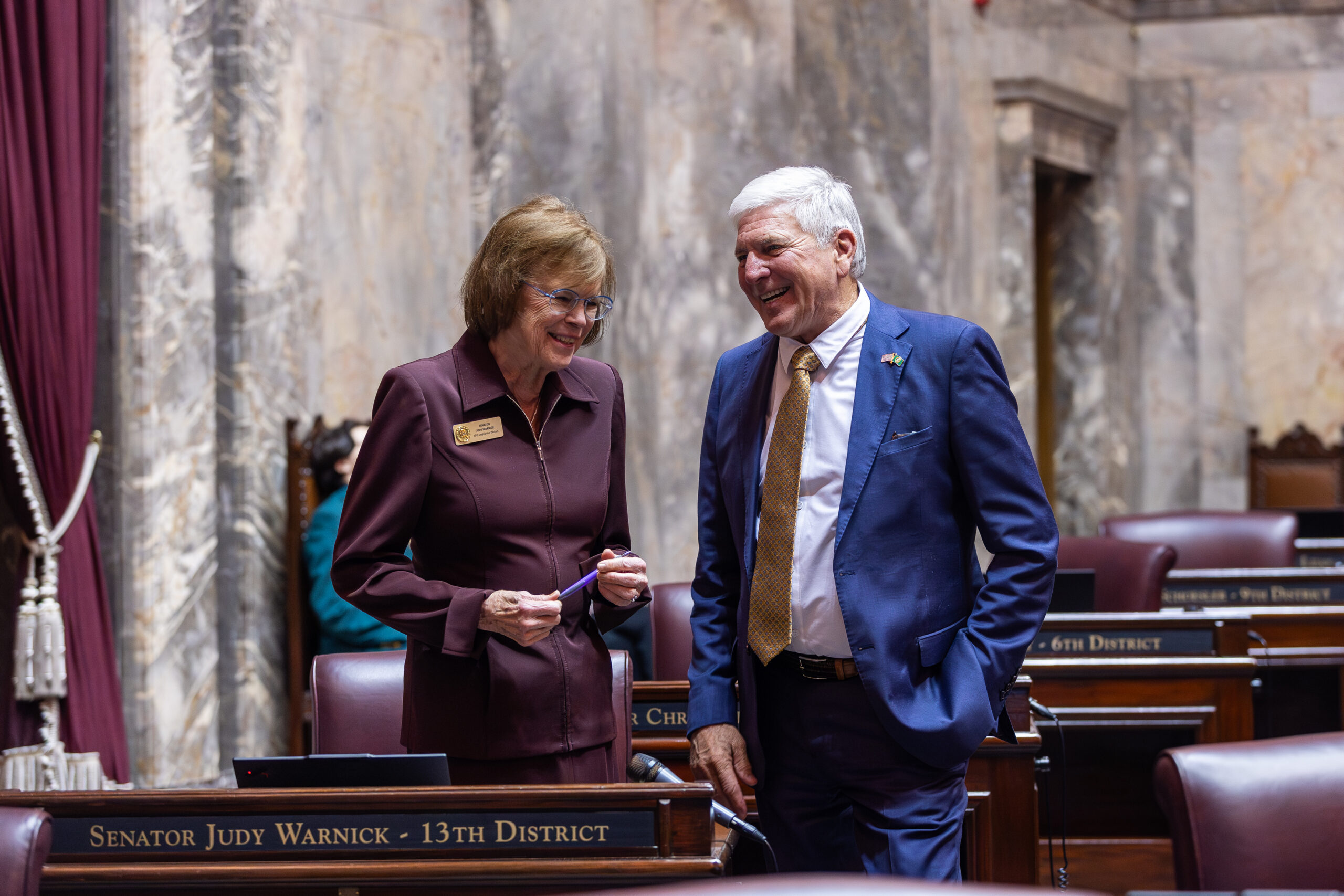 Sen. Judy Warnick of Moses Lake has decided not to seek re-election after serving the neighboring 13th Legislative District as a representative, then senator, for 20 years. She’s been a wonderful colleague who shares my concern for how high fuel prices are affecting agriculture; read her recent statement on the issue here.
From the interim calendar: budget, education, water, ag
Anyone involved in farming or ranching knows the list of chores never really ends. But neither do the duties of a state legislator. Even though we’re not in session at the state Capitol, I’m still engaged during these “interim” months on issues that matter to our legislative district and this part of the state.
The second of state government’s quarterly revenue forecasts for 2026 was released earlier today. As a member of the Senate Ways and Means Committee I was particularly interested in what it means for the state’s financial picture, and whether the budget that takes effect July 1 will remain in balance for the foreseeable future. Read the assessment from our Senate Republican budget leader here. The governor’s budget office recently warned state agencies to prepare for spending reductions, as it anticipates a third budget shortfall in as many years.
Speaking of that budget — it contains the cost-of-living allowance for retired teachers and other public employees who receive their pensions through Plan 1. This was approved unanimously through my Senate Bill 5862.
I received a nice letter from Marilyn with the Walla Walla-Columbia School Retirees Association, which mentioned the COLA and my role — but what stood out was her report that WWC Unit 31 members have volunteered a total of 5,688 hours in our community during this past 2025-2026 school year!
My visits around our region recently include:
- Attending and speaking at the Prescott 8th Grade Promotion on the afternoon of June 12. Many years ago I was one of those Prescott 8th-graders, so this was a very enjoyable and uplifting experience.
- Meeting at the Port of Walla Walla with two representatives from the Department of Ecology to discuss water issues related to the Walla Walla Water 2050 water management plan. I’ll go into more detail about this another time, but there’s been a serious disconnect between what local Ecology officials have told me compared to what I’m hearing from the agency headquarters in Olympia.
- Speaking at the Washington Association of Maintenance and Operations Administrators (WAMOA) conference June 17 in Othello. As a farmer and a licensed commercial pilot I appreciate the importance of maintaining facilities, and was glad to share that with the attendees, along with information about funding for school infrastructure.
- Visiting Monday evening with members of the Washington Potato and Onion Association who were in Walla Walla for their annual conference.
- Participating in a Wednesday discussion about higher education with members of the Tri-City Regional Chamber of Commerce. We heard from the chancellor and presidents of WSU, Columbia Basin College and Heritage University.
Traveling around our district and visiting with the people I serve is one of the most productive things I get to do as a senator. I learn how government is or isn’t working for them, and how it can do better. If you’d like to get on my calendar this interim, contact me using the information below and let’s see what can be arranged!