



Feb. 14, 2026
Dear Neighbors,
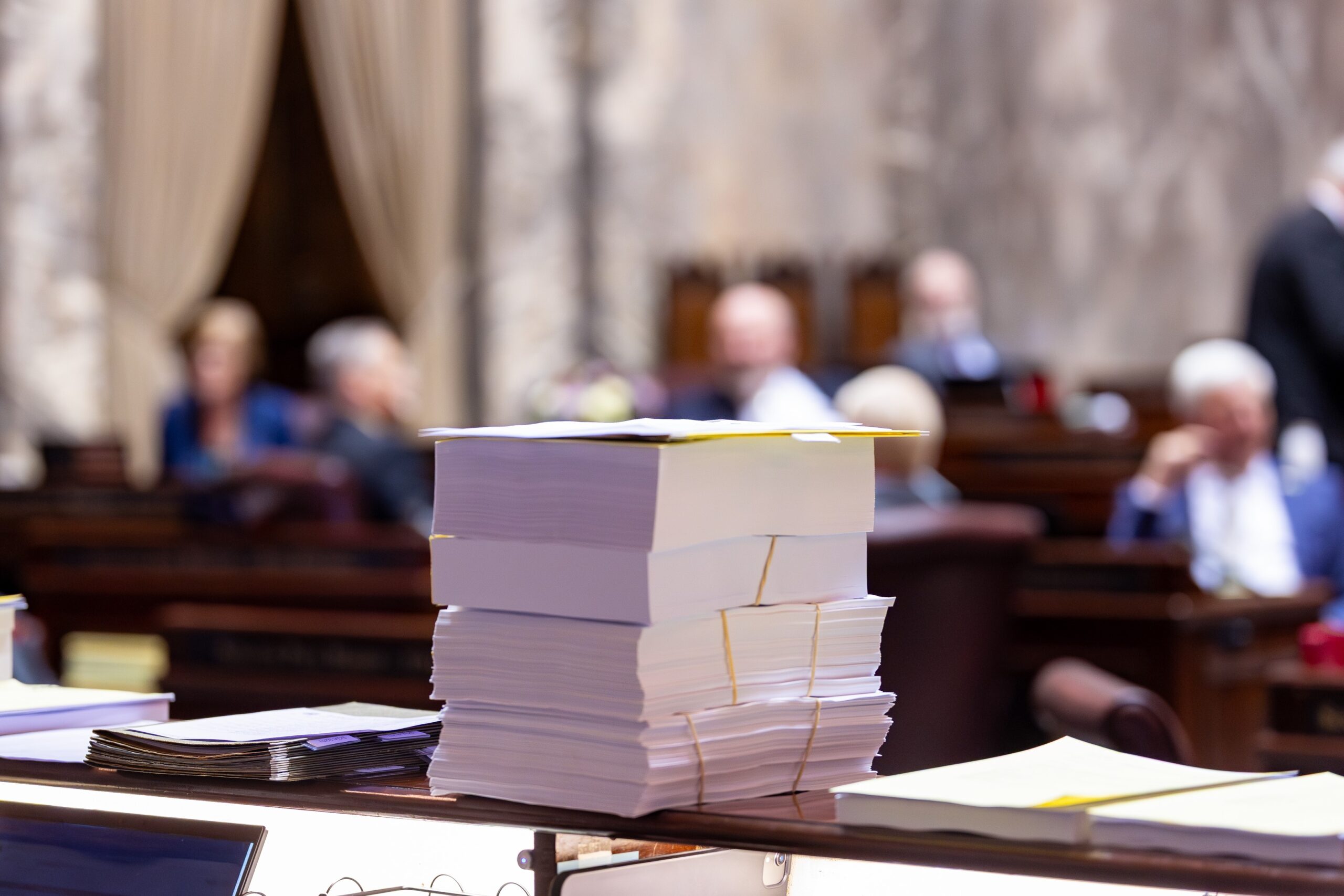
This year’s 60-day legislative session just passed the halfway mark. The 14 committees in the Senate that consider either policy or budget-related bills are on a break while the 49 members of the Senate debate and vote on legislation that originated in the Senate and came forward from those committees.
Please keep reading for a brief rundown of some of the high-profile bills that either moved through the Senate already or are expected to come before us ahead of the deadline known as the “house of origin” cutoff. That arrives at approximately 5 p.m. Tuesday. I expect the proposed state income tax will be among them.
Legislation related to the budget is exempt from Tuesday’s deadline for voting. We will see it soon enough, however, when the Senate majority proposes its plan to address the $1.5 billion shortfall in the two-year operating budget adopted less than a year ago. I certainly hope it doesn’t involve even more tax increases; either way I’ll focus on the operating budget, and the work I’m doing on the capital budget, in my next report.
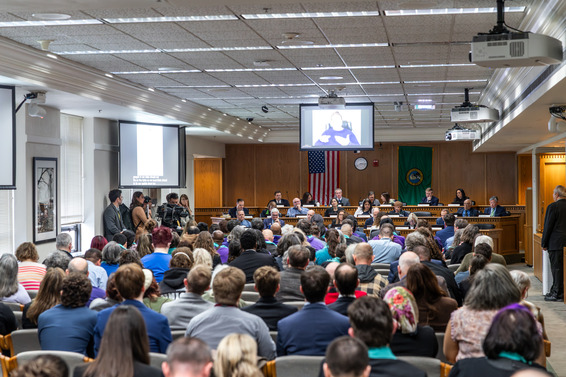
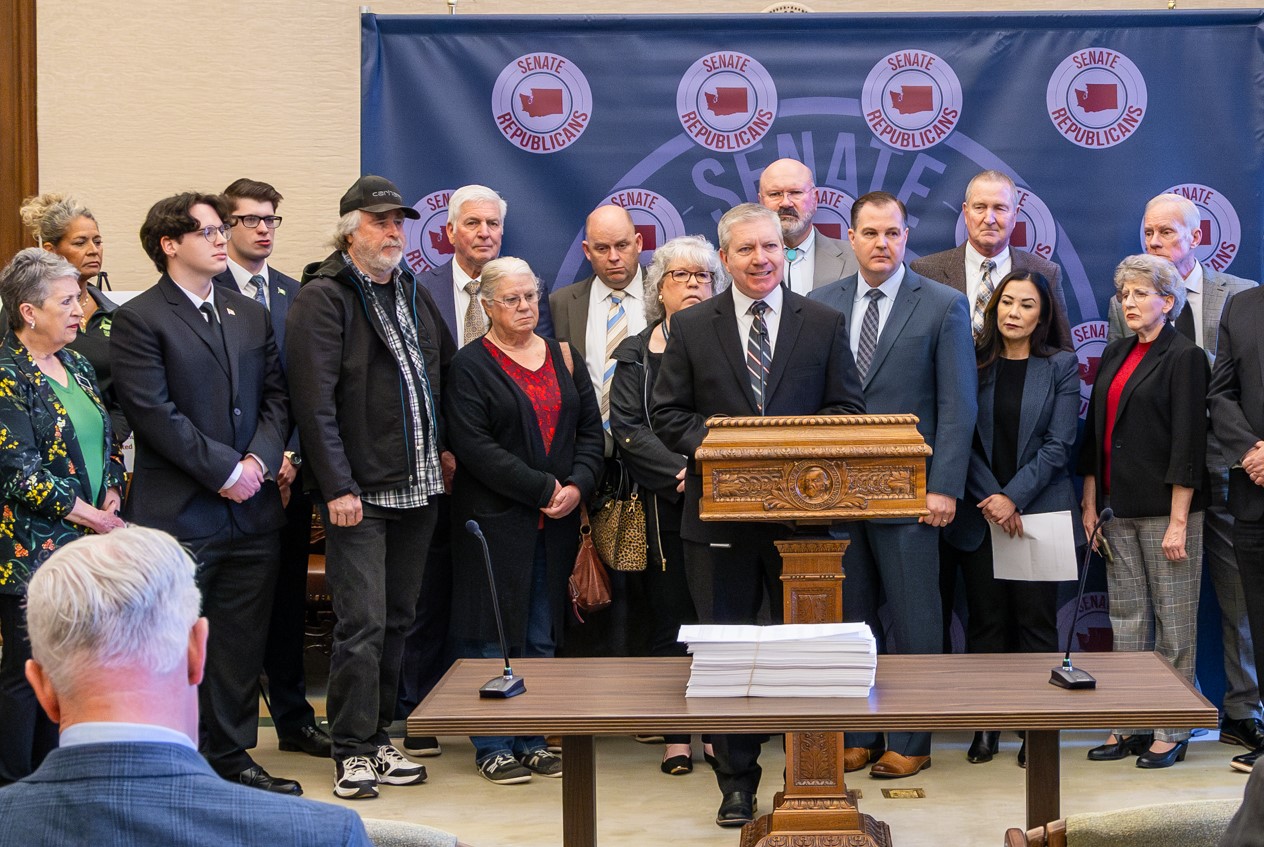
The recent committee hearing on the proposed state income tax, Senate Bill 6346, attracted a capacity crowd to the largest of the Senate hearing rooms. In addition, more than 61,000 people signed in prior to the hearing as opposed to the bill, making it the most unpopular Senate bill on record. Thanks to all of you who took time to register your opinion!
Despite strong opposition, expect Senate vote soon on income tax
The state income-tax proposal from by majority Democrats is not only unlawful and unconstitutional — it’s also very unpopular, because people realize how easily it could be applied universally in our state. I wasn’t surprised at all that a record number of people went online to state their opposition.
Even though this would be the largest tax in state history, at some $3.5 billion annually, the enabling legislation wouldn’t take effect until 2028. For that reason, Senate Bill 6346 is not exempt from this coming Tuesday’s deadline for the Senate to act on Senate bills.
My guess is the income-tax bill will be brought up for vote on Monday. Of the many arguments to make against it, the most compelling is that the bill is misleading to claim this would be a tax on millionaires, no matter what the sponsors say.
SB 6346 is written to impose the tax on everyone, with an easily altered deduction serving as the only protection for Washingtonians with less than $1 million in taxable income.have. Although that deduction is for $1 million, it can be lowered or eliminated in the future with a single, simple-majority vote.
The bill’s prime sponsor basically admitted as much during the Feb. 6 Senate committee hearing, when asked if he believes the tax should be structured to eventually apply to middle-class or working-class families, or permanently limited to “high-income earners.”
His answer made no mention of a permanent limit, and included this instead: “…I suspect that in the future we all want to make sure that our successors will have the flexibility to respond to the challenges that they see in front of them.”
The word “flexibility” means only one thing to me — if it becomes law, a state income tax would eventually come for all of us. I won’t support that, especially when the tax bill doesn’t promise the elimination or significant reduction of any other taxes.
Where’s the priority on affordability?
When this legislative session began several weeks ago, both Republican and Democratic lawmakers talked about the cost of living in our state. Something must have happened, because I can’t figure out what these bills from the majority have to do with making Washington more affordable.
- Senate Bill 6045 would lead to higher farm-labor costs, which in turn means groceries more expensive. It is on the full Senate’s voting calendar and could come up for a vote anytime between now and the close of business Tuesday.
- Senate Bill 5973 is the “initiative killer” bill, which would unnecessarily hinder Washingtonians from using their constitutional power of initiative and referendum. It also is awaiting a vote by the full Senate.
- Senate Bill 5974 would allow an unelected commission to basically fire an elected county sheriff. I believe that authority should belong only to the voters, and they already have the tools to remove an elected official from office. We know because Benton County voters recalled an elected sheriff in 2021. I can only guess at the real reasons behind the bill, because what we were told prior to the vote wasn’t convincing. Even so the bill passed in the Senate on a party-line vote Thursday.
- Senate Bill 5993 would put a 1% cap on the interest rate that can be applied to medical debt. I understand why the sponsors are pushing such a major change, but it goes too far. If this becomes law it is going to be tough on hospitals, especially in rural Washington, considering all the charity care they already provide.
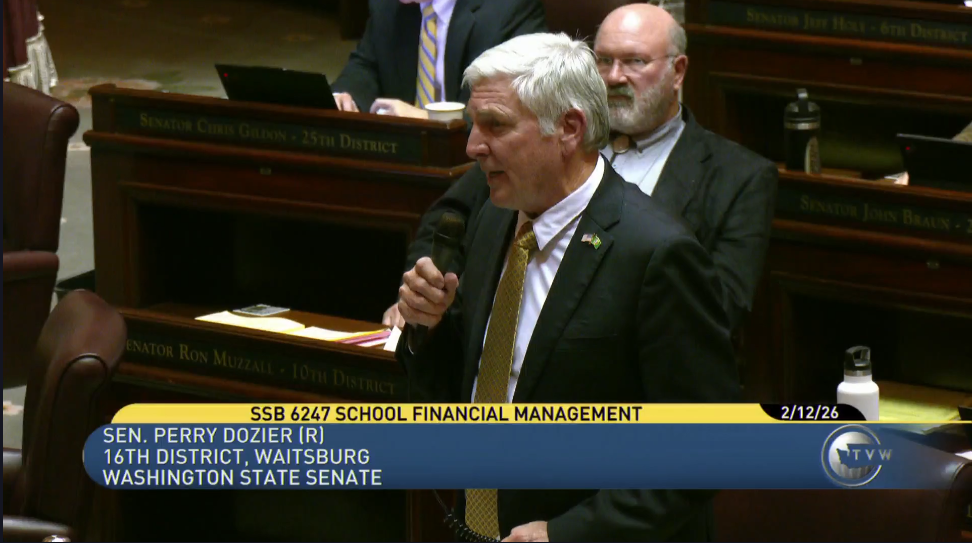
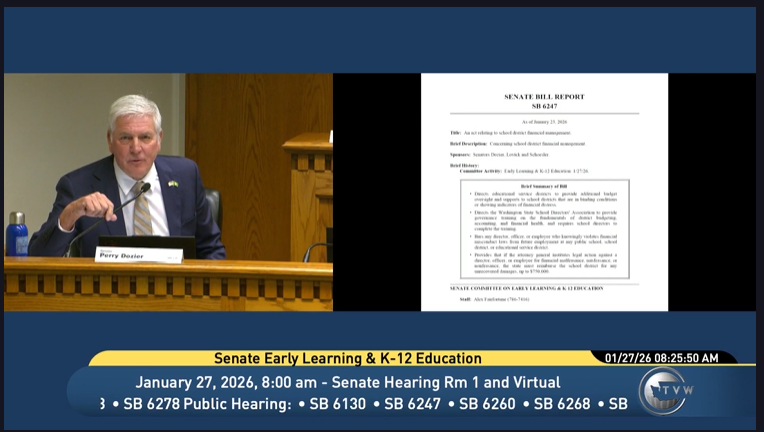
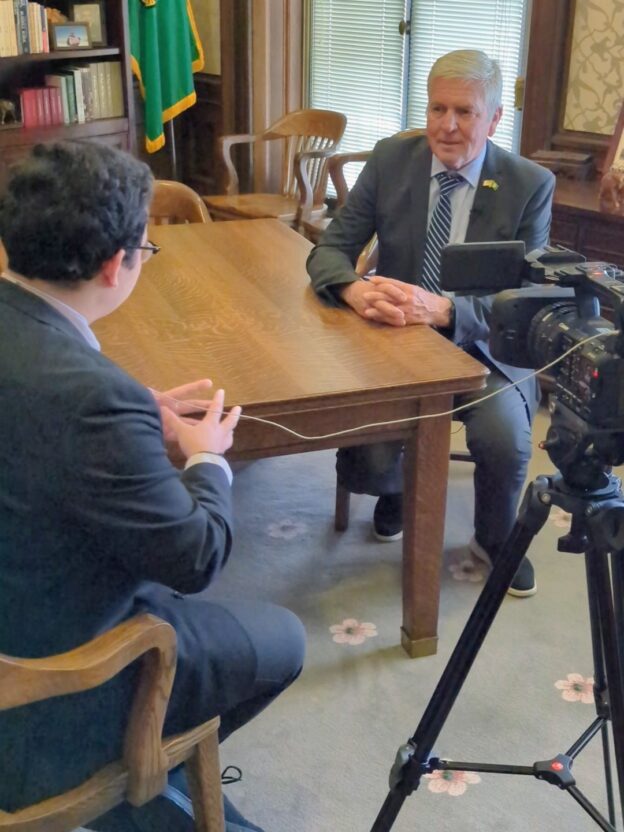
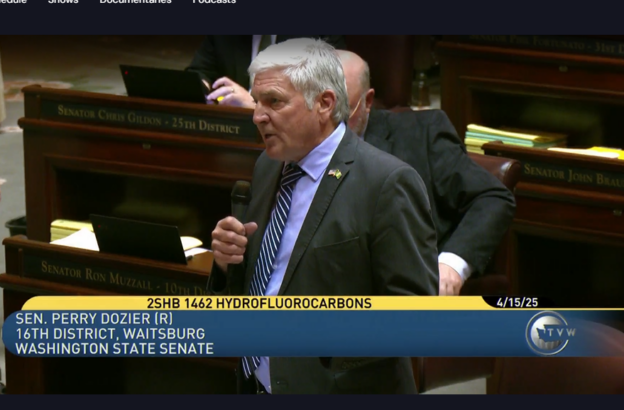
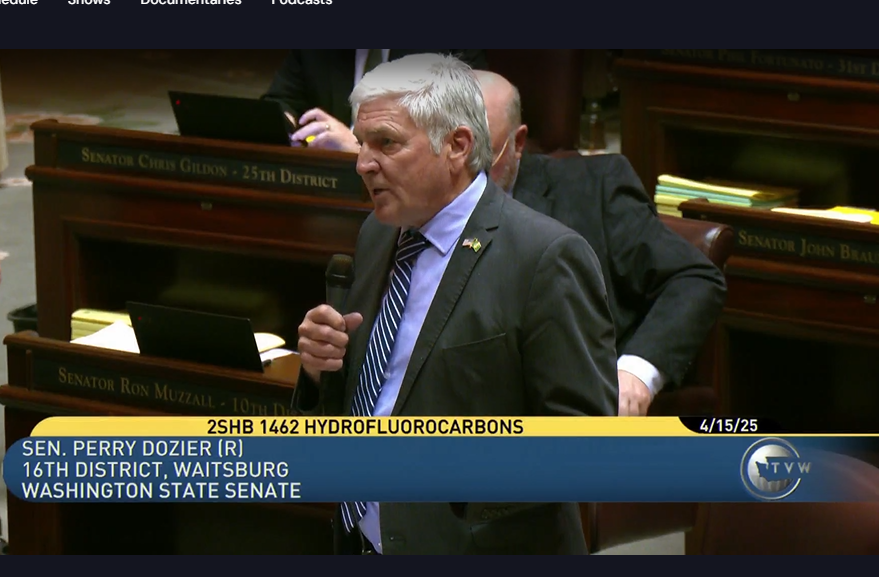
Click here or on the image to view the remarks I made in support of Senate Bill 6247, which is aimed at improving the financial management of our K-12 school districts.
Senate gives unanimous approval to my K-12 education bills
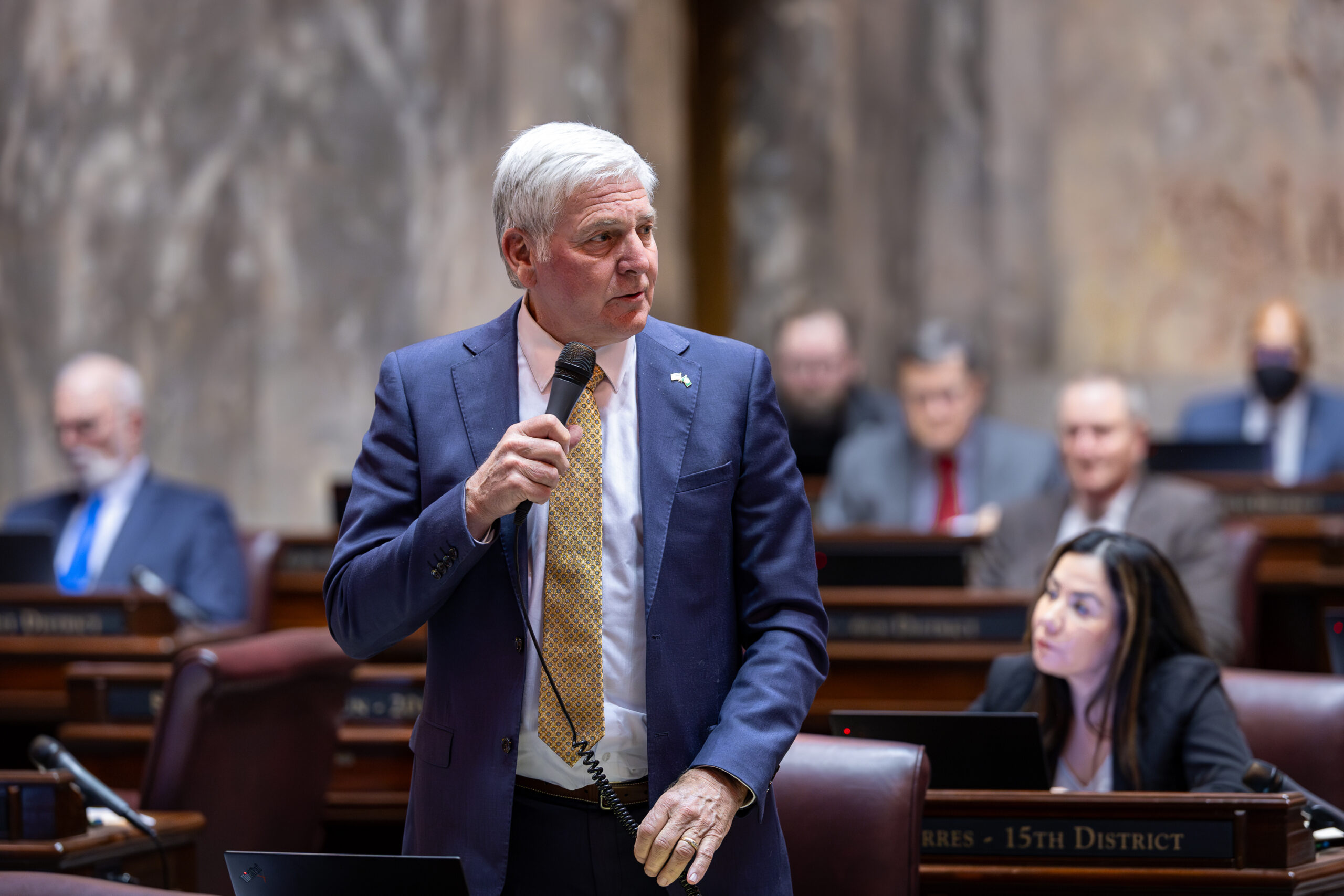
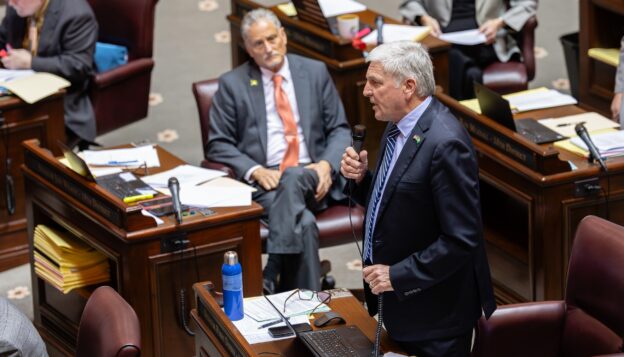
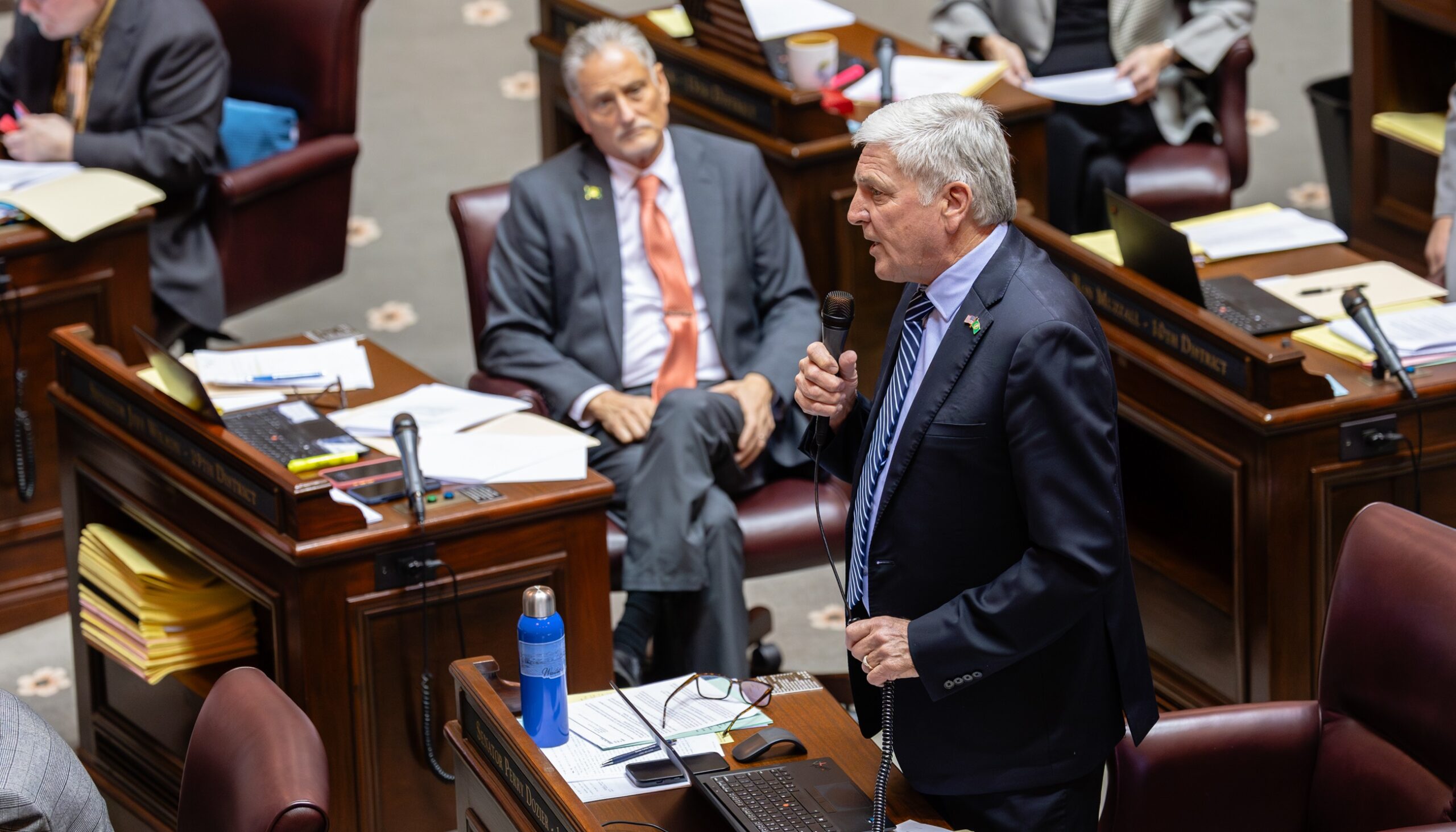
On Thursday the Senate voted 49-0 to pass both of the education bills I filed this session. Each is related to the situation facing the Prescott School District in our 16th Legislative District.
- Senate Bill 6247 is about creating what amounts to an early-warning system regarding a school district’s finances, so another district doesn’t fall victim to the issues that have put the Prescott district into financial insolvency.
- Senate Bill 6065 would clarify the policy that allows school districts to make interfund loans in response to specific financial issues. This would help Prescott now but could also benefit other districts in the future.
It was great to learn earlier this week that the Prescott School District’s supplemental EP&O levy was passing easily. As of election night (Tuesday, February 10) the “yes” vote was over 87%.
I am not surprised, not even by the overwhelmingly positive vote. The Prescott community consistently approves school levies, and the voters knew this levy is the most important in the district’s history.
Passing the levy accounts for the first portion of the roughly $1 million in new resources Prescott must identify no later than April 1. These will help create a financial plan capable of convincing the superintendent of public instruction to withdraw his petition to dissolve the district.
The second part is coming from the many months of heroic efforts by the community and the district to raise money, anchored by the sale — also announced this week — of the district’s historic teachers’ cottage.
The third and largest part of the money needed to save Prescott from dissolution will hopefully come from a legislative reappropriation of $640,000. These dollars are unspent funds left from assisting the Marysville School District in 2025. They are contained in the supplemental 2025-27 operating budget submitted by the governor’s office in December.
The tremendous support for the supplemental levy was noticed by the Senate majority’s budget leader. That has me cautiously optimistic that the money for Prescott will be in the Senate supplemental operating budget when it’s made public later this month.
***
I am working to make living in our state more affordable, make our communities safer, uphold our paramount duty to provide for schools, and hold state government accountable. I’ll work with anyone who shares those goals and wants to find solutions.
Please reach out to my office with your thoughts, ideas and concerns on matters of importance to you. I am here to serve and look forward to hearing from you.
Sincerely,
Perry Dozier
State Senator
16th Legislative District
EMAIL: Perry.Dozier@leg.wa.gov
OLYMPIA PHONE: (360) 786-7630
OLYMPIA OFFICE: 342 Irving R. Newhouse Building
MAILING ADDRESS: P.O. Box 40416, Olympia, WA 98504