


Tag Archives: transportation funding

E-News: Why doesn’t Washington have cheaper fuel like Oregon and Idaho?

Dear Neighbors,

Three years ago, just in time for the summer driving season, our state’s average gas price became the highest in the nation, at $4.89 for a gallon of regular. The cause seemed apparent: Washington’s cap-and-tax law — passed two years earlier, and officially known as the Climate Commitment Act — had taken full effect.

I’ll bet Washington hasn’t dropped below #3 since then on the list of worst gas prices. California typically is #1. When I checked the aaa.com website on gas prices before sending this report, our state was #2 with an average of $5.65 for regular and 97 cents more for a gallon of diesel. (Hawaii, where most everything is most expensive because of shipping costs, is sometimes #2 but is third behind our state right now.)

Can Olympia do something to give us relief from high fuel prices? Yes, but “can” is not the same as “will.”

Legislators could suspend the state portion of the gas tax (55.4 cents), but that would cut directly into money for highway projects and the Washington State Patrol.

Road and bridge projects wouldn’t be affected if lawmakers instead suspended either or both of the climate policies that function like a hidden gas tax: the Climate Commitment Act, and the “low-carbon” fuel standard (requiring state retailers to offer a different and more expensive formulation of fuel).

Suspending these at the legislative level would require a special session in Olympia, however. The simpler alternative would be for Governor Ferguson to suspend the CCA after declaring an energy emergency.

My colleague on the Senate Ways and Means Committee, Sen. Chris Gildon of Puyallup, asked the governor to do just that, in a May 20 letter. The answer came from a Ferguson spokesperson: if you want lower gas prices, talk to President Trump.

I know the governor has been consistently critical of the president, but this one won’t stick. The average gas price in our state was $4.35 per gallon two days before the Iran conflict began, and now the national average is $4.22 — while, to say it again, we’re at $5.65.

International events aren’t responsible for the fact that gas is generally 40-50 cents less per gallon across the Oregon border (and the savings is about twice that in Idaho). It’s because of state-level climate policies that have yet to show any measurable improvement in air quality.

Senator Gildon had this reaction to the comments that came out of the governor’s office — starting with how Washington families deserve an honest discussion about why they continue to pay some of the highest gasoline prices in America. I agree, because the real reasons originated in Olympia.

At last, southeast Washington’s newest facility for treating behavioral health and substance abuse is ready to open! It was an honor to take part in the ribbon-cutting ceremony for the Columbia Valley Center for Recovery, and say a few words about this important accomplishment. As I understand it the center is awaiting one last approval from the state Department of Health, then it can begin serving people. Congratulations to those who worked hard for years to get to this point — and I’m pleased that our 16th District legislative delegation also had a role, working with our colleagues from adjacent districts to secure a total of nearly $19.6 million for the project over the past several years. That support came from the state’s capital budget, which I know well as a member of the Senate capital-budget team. This new resource, which was once Kennewick General Hospital, is a great example of how public dollars collected at the state level are put to good use at the community level.

Anti-sheriff law put on hold — and rightfully so

I remember when Benton County voters recalled their sheriff. That wasn’t decades ago — it was 2021. The reason doesn’t matter as much as the fact that the people had the final say.

Supporters of the controversial Senate Bill 5974 didn’t just propose “modernizing” the law as it pertains to the qualifications of candidates for sheriff. They also drifted over into telling sheriffs, police chiefs, town marshals, law-enforcement volunteers and others what their duties are and aren’t.

Even more concerning to me, as a former elected county official (Walla Walla County commissioner, 2008-16), was how the law singled out sheriffs for the potential of decertification by an unelected state commission headquartered in King County.

Decertification is a backhanded way of forcing a sheriff out of office — a responsibility that should belong only to the voters. Benton County is proof that the process works.

Many sheriffs testified against the bill in committee; after it was passed, several filed a lawsuit on the grounds that the Legislature was overstepping its constitutional authority. A Thurston County judge granted a preliminary injunction, which puts the law on hold so that the lawsuit may continue.

Another example of the good things happening in our legislative district is the work being done by Mirror Ministries to serve victims and survivors of sex trafficking. I recently had the privilege of visiting their facilities in the Tri-Cities, including Esther’s Home. Go online (which is where I found this photo) to learn more about them!

Congratulations to area schools on winning statewide recognition

I’ve served on the Early Learning and K-12 Education Committee since becoming a senator. It’s important to me because providing for education is state government’s most important duty, under the Washington constitution.

Recently I learned seven schools in our 16th Legislative District had been honored by state government’s educational sector for their performance during the 2023-24 and 2024-25 school years: Prospect Point Elementary (Walla Walla Public Schools); Waitsburg High (Waitsburg SD); Columbia Elementary (Columbia SD): Tapteal Elementary (Richland SD): Prescott High (Prescott SD); and a pair from the Pasco SD, Barbara McClintock STEM Elementary and Ray Reynolds Middle School.

This came from the Washington School Recognition Program, established in 2010 by the Legislature. The program’s goal is to highlight schools that demonstrate exceptional progress in certain categories (details on those are here).

Speaking of Prescott, I visited the school on May 27 — as did the state superintendent of public instruction. You may remember how he had called for the dissolution of the Prescott district, due to a budget deficit left by previous administrators, but had to reverse that after the people of Prescott and Vista Hermosa organized and raised the funds needed to put the district back on stable financial footing (click here for the Walla Walla Union-Bulletin report).

Hopefully the state superintendent came away from his visit with a new perspective about small rural schools. As a Prescott alumnus, I know what the school means to the community — and am very glad that when I speak at the upcoming 8th-grade graduation, it won’t be the district’s last one!

***

I am working to make living in our state more affordable, make our communities safer, uphold our paramount duty to provide for schools, and hold state government accountable. I’ll work with anyone who shares those goals and wants to find solutions.

If you see me out and about in our 16th District, say hello – because I’m your senator all the time, not just when we’re in session in Olympia. Please reach out to my office with your thoughts, ideas and concerns on matters of importance to you. I am here to serve and look forward to hearing from you.

Sincerely,


Perry Dozier
State Senator
16th Legislative District


EMAIL: Perry.Dozier@leg.wa.gov
OLYMPIA PHONE: (360) 786-7630
OLYMPIA OFFICE: 342 Irving R. Newhouse Building
MAILING ADDRESS: P.O. Box 40416, Olympia, WA 98504


Legislature adjourns; here’s a snapshot of what happened

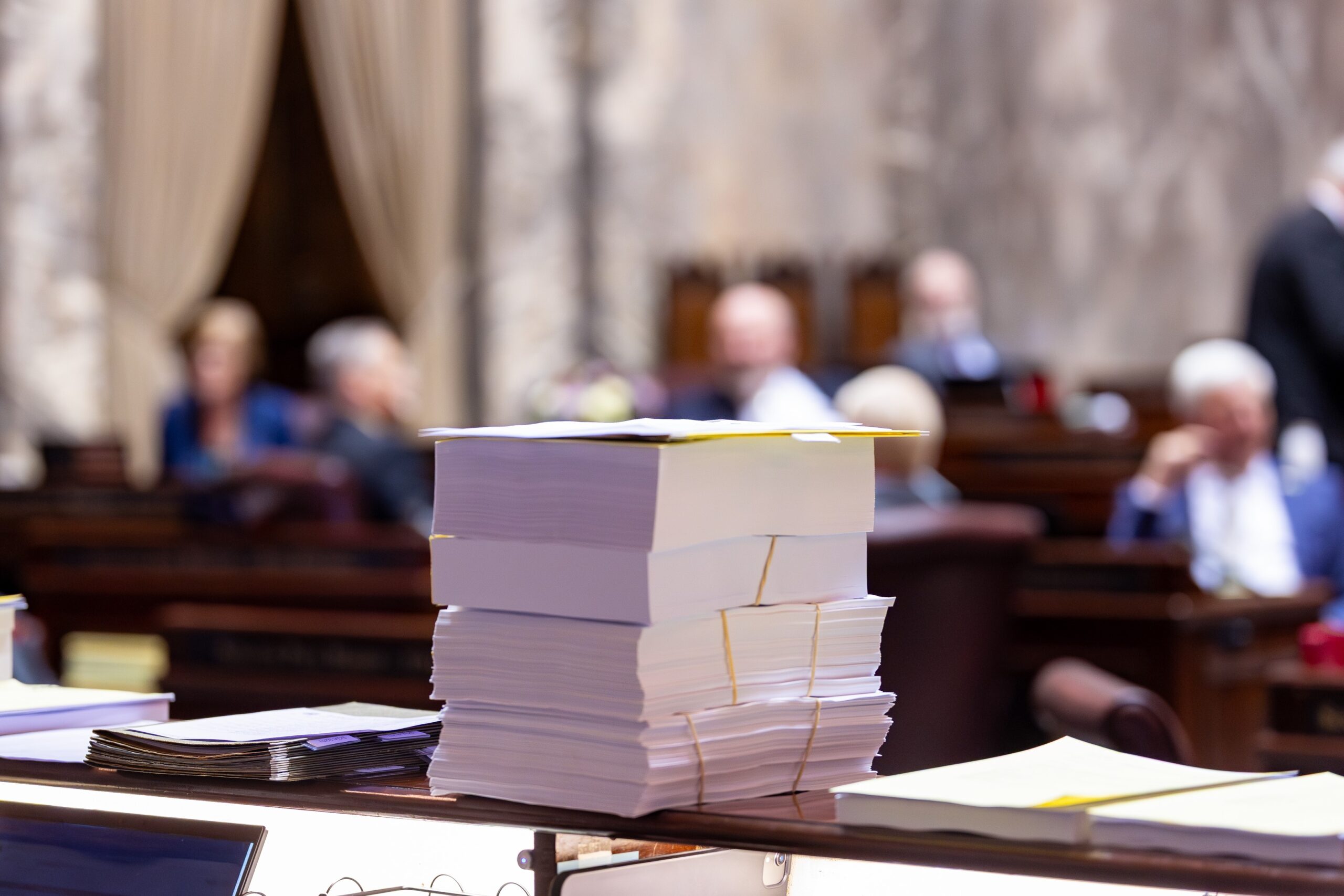
It’s normal for the new state budgets to be adopted on the final day of our regular legislative session, and this year was no different. This is how the operating budget looked as it sat on the “bar” at the front of the Senate chamber on Sunday. The stack contains the budget adopted by the Senate on March 29, the version approved by the House on March 31 and the compromise between the two chambers, which few people saw until Saturday morning — which is a concern all by itself.

Dear Neighbor,

It was a very challenging legislative session that wrapped up this past Sunday, on schedule. The session felt longer than 105 days because of all the time we spent opposing the bad policies and harmful decisions the Democrat majority seemed determined to bring before us.

As we came into this session back on January 13, we knew that we were facing a multibillion-dollar budget shortfall and that the majority would use this as an opportunity to go on a tax-raising spree. Their first attempt at an operating-budget proposal did just that – it would have increased taxes in our state by $21 billion!

The Democrats’ agenda also continued to lean away from freedom and the free market with controversial legislation that would undermine your rights as a parent, cripple small business, worsen the education gap and limit your Second Amendment rights.

It didn’t have to be this way

We could have had a budget with zero new taxes. That’s right: the operating budget Senate Republicans proposed (Senate Bill 5810) proved we could have funded the priorities Washingtonians share — with no new taxes or fees and no cuts to services!

No one should be fooled by claims that higher taxes were inevitable because of the state’s budget shortfall. To be clear, the shortfall was never as large as Democrats claimed it was; we heard $12 billion, $15 billion, even $18 billion, but according to our non-partisan budget staff — people who don’t have a political agenda – it topped out at about $7.5 billion. That’s a lot less than the size of the Democrats’ tax package. What was clearly evident is this shortfall was the result of the majority’s reckless and uncontrolled overspending for too many years.

On Sunday, only Democrats voted for their budget. Republicans wouldn’t pile all those taxes and fees on the people of our state.

Defending the people we serve

Our no-new-taxes ‘$ave Washington” budget is an example of how Republicans offered ideas that are better for our state but don’t have the votes to get them all to the governor’s desk. For that reason, our victories this session were more about the bad legislation we derailed so it wouldn’t have lasting effects on the people we serve.

The following is a list of just some of the positive things we accomplished:

Public safety

  • Created a grant program to help law enforcement agencies hire more officers; a bill I’ve sponsored finally found enough traction this year, thanks to a push from our new governor.
  • Stopped included legislation that would have reduced penalties for sex offenders and allowed violent felons to seek early release.
  • Prevented the state from having the power to decertify county sheriffs elected by the people.

Affordability

  • Stopped the pay-per-mile tax
  • Successfully fought off another attempt to increase property taxes by lifting or eliminating the 1% cap on the annual growth of property-tax rates.
  • Made it easier to build more housing through zoning reform.

Better for education and children

  • Kept the majority from lifting the 10-year-old cap on college tuition growth
  • Ended some of the unnecessary regulation that makes childcare even harder to afford.
  • Protected new mothers receiving Medicaid by preserving 12 months of postpartum maternity care.
  • Prevented children from being exposed to a harmful, inappropriate far-left agenda in school.

Bonus: We stopped the “initiative-killer bill” which would have put unreasonable requirements on people gathering signatures on initiative petitions.

Majority balances budget
on backs of working families

There’s much to be said about both budgets, and because the final operating budget was negotiated in secret by a handful of Democrats and wasn’t seen by anyone else until Saturday, we’re still learning what all is in it. So for now, here’ s a quick summary:

  • Watch for your property taxes to go up, because school districts are now authorized to pursue bigger local levies. Funding our K-12 schools is the paramount duty of state government, and Democrats shouldn’t be pushing more of that responsibility down to the district level, but they are.In its way, this is even worse than the straight-up property-tax increase they pushed, then abandoned — because it also sets the state up for another education-funding lawsuit (like the landmark McCleary decision of 2012) that could mean even more tax increases down the road.
  • The expanded sales tax on services ($2.6 billion) — which applies to cable and streaming TV, for instance — and the increase in the business tax (nearly $6 billion) will eventually end up at the consumer level, one way or another.
  • As Republicans predicted, the income tax on capital gains is already going up, after just two years’ of collections. The death tax is also going up, with the increase being retroactive to the start of this year!
  • One of the tax bills in the Democrats’ package would slap a business tax on self-storage rental companies, and more… which again, will trickle down to consumers. It’s like they looked under about every rock they could turn over in search of more money.
  • In all, the tax package means a $9.6 billion increase in state-level taxes, which becomes $12.5 billion when the property-tax increase and the local effect of the sales-tax increase are factored in.
  • On top of all these taxes, the majority doubled childcare co-pays and tripled the per-bed license fee for nursing homes.They also raised the cost of hunting and fishing licenses by 38%, and added 50% to the cost of the annual Discover Pass. The bizarre thing is that the Democrats expect the higher fees will reduce sales, so are they just — as the saying goes — taxing behavior they want to discourage? Do they want fewer people to visit state parks and use boat launches?

Governor Ferguson said late in the session that he didn’t want to see tax increases that hit working families. If he backs that up by using his veto pen on the higher property and sales taxes in this new budget, there’s a chance legislators could be called back for a “special” session of the Legislature. We’ll have until May 20 to find out.

Higher taxes on gas, diesel coming

The new transportation budget for 2025-27 provides funding to keep important projects going in the face of higher labor and material costs.

While those projects include ongoing improvements to U.S. Highway 12 in our district, I could not vote for the budget because of the fuel-tax increases and weight-fee increases tied to it.

Although it’s been nearly a decade since the state portion of the gas tax went up, and another six cents per gallon may not sound like much, the tax on diesel will go up twice as much: six cents more now, then another 3-cent increase each of the next two years.

It isn’t clear why diesel is getting hit harder, unless the environmental activists on the Democratic side of the aisle had a role, but another 12 cents per gallon will obviously add to the cost of anything hauled by big trucks.

To be fair, though, the gas tax does pay for highway projects. It’s projected that by 2028, two of Jay Inslee’s favorite laws — the Climate Commitment Act and the low-carbon fuel standard — will add 30-plus cents to fuel costs all by themselves, and those don’t pay for projects to make our roads safer.

Capital budget brings variety
of investments to 16th District

The third of the three budgets adopted Sunday is the budget that funds school construction, community projects and much more: the capital budget. The broader details are in the news release Sen. Mark Schoesler and I issued that day.

Here’s a summary of the local projects funded in the new capital budget:

  • Columbia Basin College – $54.5 million to replace the Performing Arts Building. The “P Building,” dates to 1971 and is home to the college’s School of Arts, Humanities and Communication.
  • Kahlotus and Prescott school districts – $6 million to each district for modernization projects.
  • Walla Walla environmental cleanup – $3.5 million from the Model Toxics Control Account for monitoring/cleanup of soil contamination underneath the Chevron station downtown.
  • Walla Walla Water 2050 plan – $2.4 million toward this water-management plan.
  • Walla Walla County courthouse – $2 million for historic preservation.
  • Franklin County Fire District 2 – $1 million to complete the Kahlotus station.
  • Lions Park Community Center, College Place — $1 million toward the ongoing project to renovate the park and build a new community center. It’s the second straight time this project has received capital-budget support.
  • Mid-Columbia Children’s Museum — $1 million
  • Port of Walla Walla – $773,000 for Tri-Cities Intermodal cargo handling.
  • Christian Aid Center – $160,000 for Walla Walla rescue mission.

The capital budget, like the operating and transportation budgets, will go into effect July 1. Most of the other bills passed this session will take effect July 27, which is 90 days from the end of the session.

***

SAVE THE DATE — Saturday, May 31
16th District town hall meetings

***

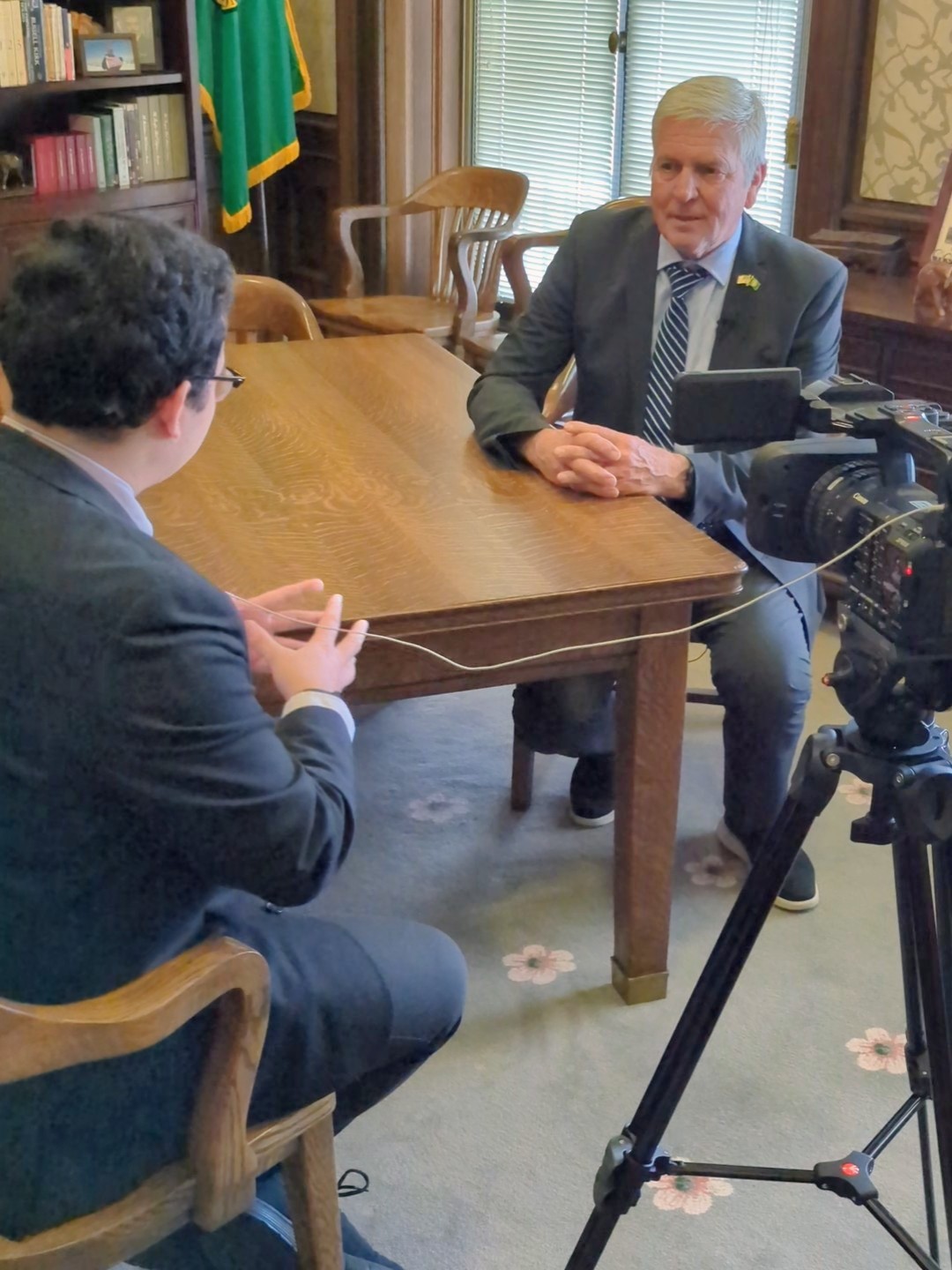
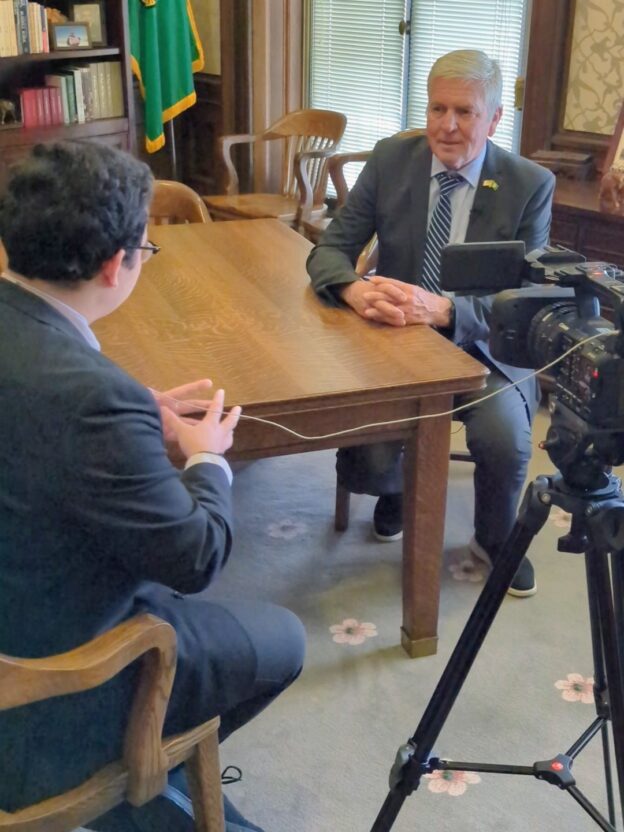
Late in the session, as more bills came up for deciding votes, it was common for senators to step out of the chamber for interviews with the news media. This was for a Seattle TV station about a public-safety bill.

***

I am working to make living in our state more affordable, make our communities safer, uphold our paramount duty to provide for schools, and hold state government accountable. I’ll work with anyone who shares those goals and wants to find solutions.

Please reach out to my office with your thoughts, ideas and concerns on matters of importance to you. I am here to serve and look forward to hearing from you.

Sincerely,


Perry Dozier
State Senator
16th Legislative District

Here they come: one proposed tax hike, then another, then…

BFST committee

Dear Neighbor,

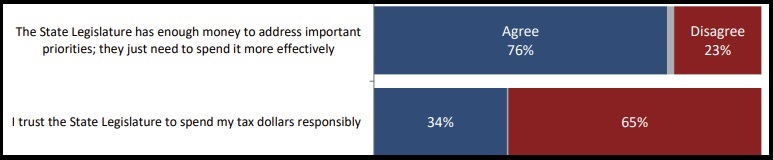
The results of a recent survey of 600 Washington voters showed up in my inbox earlier this month. Most of the survey questions had to do with state spending, one way or another. That makes sense considering how years of overspending have finally caught up with the majority Democrats, and put state government in a multibillion-dollar hole that has to be solved before legislators can adjourn for the year.

It’s no surprise to me that more than three-fourths of those responding think the Legislature doesn’t need more money to address important priorities, and more than three out of five responding simply don’t trust the Legislature on spending.

poll result

Click here for a full presentation of the survey results.

So what are the Democratic majorities in the Senate and House doing? Well, they’ve stepped up their efforts to raise taxes. It’s the easy way to get out of the budget hole while continuing to add to the size of state government.

In the meantime, Republicans are coming up with ways to reduce spending and solve the budget deficit without tax increases. I invite you to look at some of the cost-saving ideas at our $ave Washington webpage.

Here’s where three of the Democrats’ proposed tax hikes stand as the fifth week of this year’s 15-week legislative session wraps.

  • A new tax on each mile you drive? For many years, Democrats have wanted to impose a mileage tax. Senate Bill 5726, introduced Tuesday, would create a “road usage charge” (RUC for short) starting at 2.6 cents per mile, plus an assessment of 10% on the total RUC a person pays. That’s right — the “assessment” is really a tax on a tax.The supporters of a mileage tax argue Washington’s 49.4-cent per gallon gas tax isn’t generating enough money as it is, with more electric and hybrid vehicles on our state’s roads. But I wonder if they understand, or appreciate, how a mileage tax would hurt rural drivers disproportionately.

    Also, this would be another “regressive” tax — meaning it hits lower-income people harder — from the party that is always complaining about Washington’s tax code being regressive.

    Washington’s constitution guarantees gas-tax money can only go toward highways and bridges. The mileage-tax bill doesn’t (and can’t) guarantee how the 2.6 cents per mile would be used. Also, the 10% assessment could be used only for “multimodal,” meaning transit, rail, and pedestrian/bicycle purposes.SB 5726 will get a public hearing Tuesday afternoon before the Senate Transportation Committee. If you want to testify about the bill or at least make your opinion known, there’s a link at the end of this report that will help.

    The identical House bill (HB 1921) already received a public hearing. From what I’m told, the House majority is pushing harder for this tax than the Senate, but that is not reassuring.

  • Higher property taxes, Part I: Last year the Senate Democrats tried to lift the cap on the annual growth of property-tax rates. They wanted a 3% limit, rather than the 1% Washington voters had approved (which was later confirmed by a Democrat-controlled Legislature).That attempt fizzled after intense opposition from the public and Senate Republicans. But this year the House Democrats are making a run at tripling the property-tax growth rate, with House Bill 1334.

    It’s the same bad idea as before, and my argument against it is also the same. Beyond the fact that this would be another regressive tax increase that makes living in our state harder to afford, cities and counties already have the ability to increase property-tax rates beyond 1%. They try to make it sound like the Legislature is holding them back, but that’s false. All they have to do is get permission from the voters.

    The 1% cap applies only to the annual property-tax increases that get voted on at the council/commission level. This bill would basically let local governments take more without asking first. HB 1334 received a committee hearing Tuesday, and I expect it will continue to move ahead unless, like last year, enough pressure is applied to stop it.

  • Higher property taxes, Part II: There’s a reason a 60% majority vote is required to pass school bond issues. Unlike enrichment levies, school bonds create debt that typically takes decades to pay back. To me — and according to Washington’s constitution, for the past 80 years — such an obligation needs to be supported by more than a simple majority.The Democratic members of the Senate Early Learning and K-12 Committee, on which I serve, voted yesterday to pass legislation that would require only a simple majority to approve bond issues: Senate Bill 5186, and Senate Joint Resolution 8200. I and the other Republican committee members voted no, meaning we want to maintain the taxpayer protection afforded by the long-standing three-fifths approval standard.

    Because dropping to simple-majority approval would require a change in the state constitution, SJR 8200 would have to be passed with a two-thirds vote in the Senate and in the House, then a majority of voters would have to agree at the next general election.

    I know the supporters of bond issues are disappointed when those measures fail, but let’s not blame the 60% approval requirement. If a school district makes a persuasive argument to the voters, and the bond issue is the right size at the right price, shouldn’t 60% support be attainable?

media Feb 11

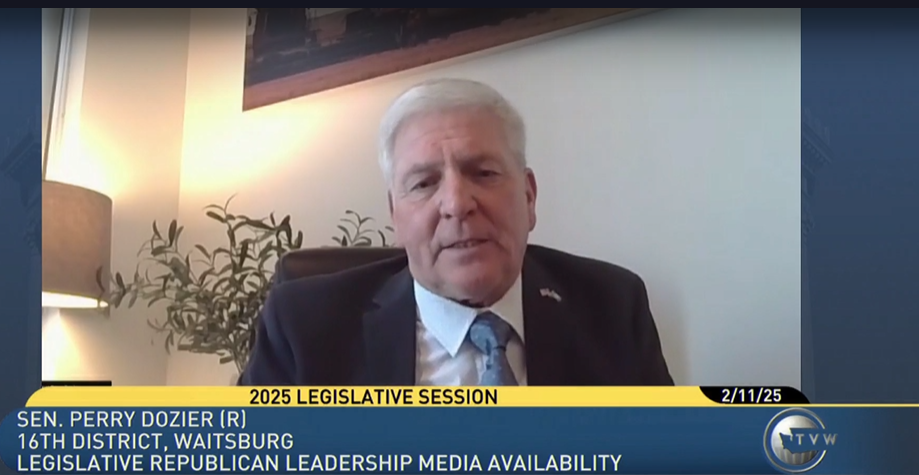
Each week, if there’s a long enough break between committee meetings and floor sessions, Republican lawmakers make themselves available to news reporters who are covering the 2025 session. I took part in this week’s meeting, commenting on tax-related questions as a member of the Senate Ways and Means committee — and was prepared to field questions about parental rights, being the originator of the Senate’s parental-rights bill and a member of the Senate Early Learning and K-12 Committee. To learn what reporters are asking about, and hear our responses, click here.

***

I am working to make living in our state more affordable, make our communities safer, uphold our paramount duty to provide for schools, and hold state government accountable. I’ll work with anyone who shares those goals and wants to find solutions.

My priorities (shared by Senate Republicans) are:

Here’s how to:

Please reach out to my office with your thoughts, ideas and concerns on matters of importance to you. I am here to serve and look forward to hearing from you.

Sincerely,

dozier signature

Perry Dozier
State Senator
16th Legislative District