



Dear Neighbors,
There are now less than 10 days left for legislators to wrap up their work at the Capitol. The time remaining in this session will be devoted to debating and voting in the Senate chamber, while some of us put in extra hours negotiating final versions of the three budgets (operating, capital, transportation) — including a lot of hours this Sunday, when we’re not scheduled to be on the “floor” voting.
We have through Friday to complete our work on bills passed over to us by the House of Representatives. Then the focus narrows to two things: acting on bills that are labeled “necessary to implement the budget” and deciding whether to accept changes made to Senate bills by the House.
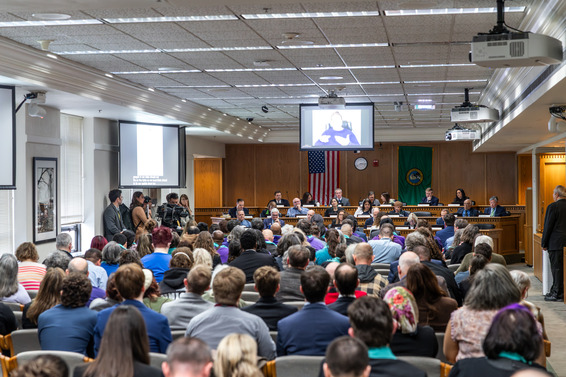
Yesterday the Senate Ways and Means Committee, which handles the operating and capital budgets, met for what is likely the final time this session. Nearly 60 bills were on our committee’s agenda, and it makes sense that most were House bills, most also come with a price tag — at a time when the Legislature already has a $1.5 billion budget gap to fill.
This is important because, in spite of all the talk we heard about affordability when lawmakers arrived at the Capitol, this session is reaching deeper into the pockets of people across our state. The operating budget approved by the Senate majority on Friday is a prime example. Please keep reading for more about that budget and the other two spending plans adopted by the Senate.
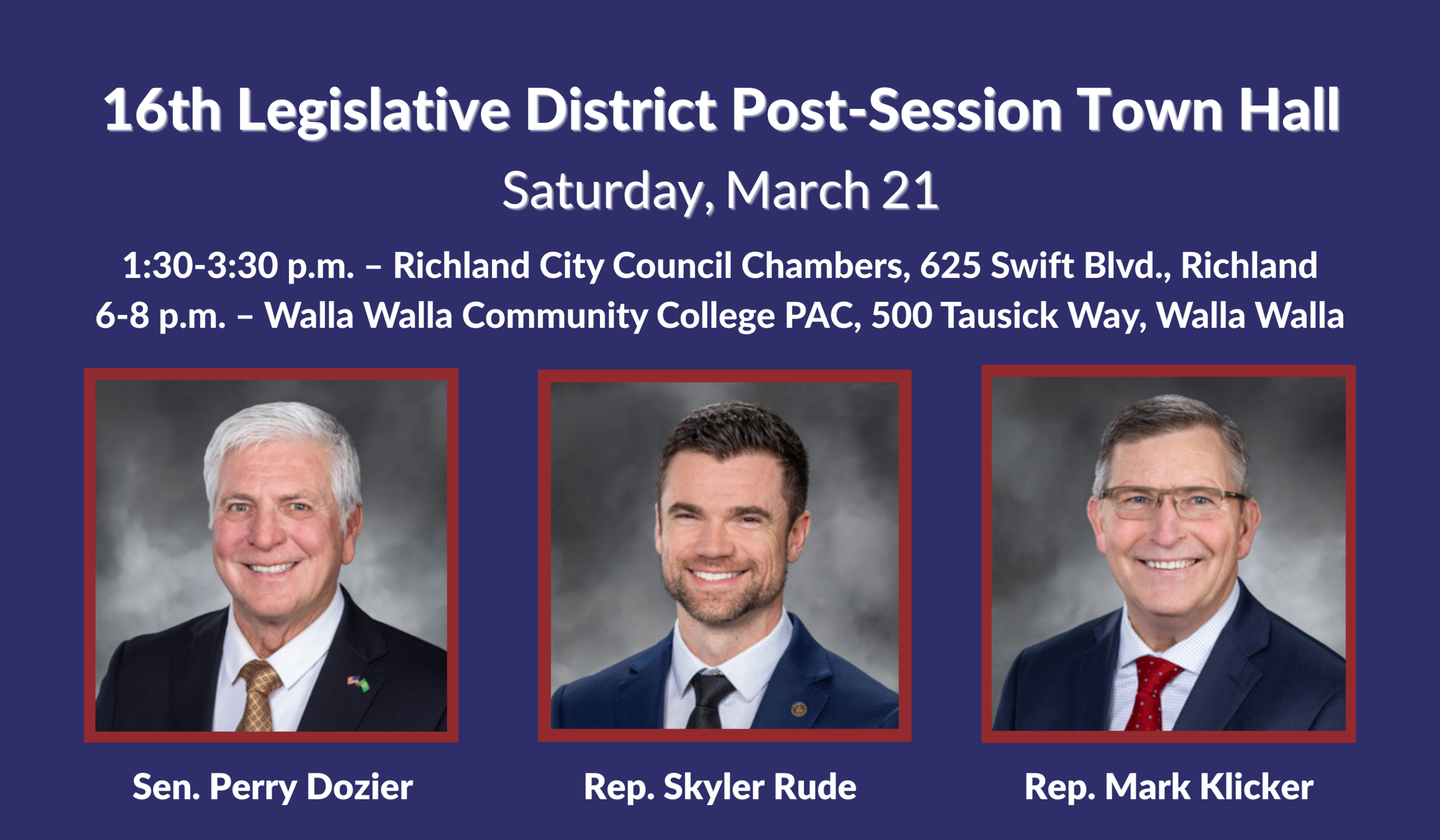
Also, mark your calendar for the pair of post-session town-hall meetings our 16th District delegation has scheduled. I hope you can join us!
Senate’s $80-billion operating budget depends on raiding funds, more tax increases
The new operating budget is labeled “supplemental” because it’s about revisiting the two-year operating budget adopted in 2025 and making adjustments to get through the remainder of this budget cycle — meaning the end of June 2027.
The Senate majority says its plan (Senate Bill 5998) reflects “incredibly difficult decisions in a constrained fiscal environment.”
I’m having trouble seeing how adding $2.3 billion in spending, on top of the $77.9 billion approved less than a year ago, reflects any difficult decisions. And considering a state-record $12.3 billion package of tax increases was also approved in April 2025, how can there be any fiscal constraints?
There is no good reason for state spending to be growing twice as fast as household income in our state. And what the chart below doesn’t show is how the increase in spending on K-12 and higher education has tracked pretty well with the growth of household income — the overspending is happening in non-education areas, and it’s been going on for years regardless of who’s in charge in Washington, D.C.
It also concerns me that the Senate budget relies heavily on what we call “one-time” money to balance. Not only would it drain the state’s reserves and hit the rainy-day fund hard, but it also takes hundreds of millions that should have gone into the capital budget and also raids the Public Works Fund. On top of that, the Senate budget includes more tax increases and assumes the Legislature will adopt a state income tax this year. All of that is irresponsible and unsustainable.
In a statement following the 30-19 party-line vote on the Senate version of the supplemental operating budget, our Republican budget leader refers to this budget “as an $80‑billion house of cards on a shaky foundation of assumptions and short term fixes.”
He’s right — the better approach would be to keep new spending within the available revenue, to avoid new taxes and the use of budget gimmicks. I’m concerned that the Democrats’ approach will simply lead to another budget shortfall next year and a push for another big tax increase. That’s not the way to make living in Washington affordable.

Capital Budget: This was another productive session for our Senate capital-budget team, and we appreciated the unanimous support our work received. Sen. Mark Schoesler of Ritzville and I offer our take on the Senate budget here.
The image below gives a sense of how we worked to make sure the Senate capital budget (Senate Bill 6003) funds infrastructure and other community projects in all four corners of the state, not only in the more populated Puget Sound area.
The task now is to negotiate with the House, which adopted its own capital budget, to produce a final version that will be adopted before the Legislature adjourns. The House version also includes funding to deal with the enormous waste tire pile outside Richland. I’ll wait until then to detail the investments coming to our legislative district and region.

Transportation Budget: This also received unanimous support in the Senate. The fact that the Senate version (Senate Bill 6005) doesn’t rely on taxes and fees is a welcome change from the base transportation budget adopted in 2025. I appreciate that it’s strong on for money for road and bridge preservation, maintenance and facilities.
As with the capital budget, I’ll wait until a compromise is negotiated between the Senate and House before detailing the funding secured for projects in and around our 16th Legislative District.
Encouraging news for Prescott School District is bright spot in budget — but why was bill to protect other districts rejected?
In case you hadn’t heard the great news already — the supplemental operating budgets adopted by the Senate and the House both include money to help put the local Prescott School District back on sound financial footing. It makes me cautiously optimistic that the funding will carry into the final version.
I know the Senate Democrats’ budget leader was aware of the overwhelming community support for Prescott’s Feb. 10 school levy. While I can’t say the “yes” vote of over 86% clinched the budget appropriation, it had to help.
The dollars earmarked for Prescott are not tied to the one-time money being used to balance the supplemental budget. These are unspent funds left from assisting the Marysville School District in 2025.
Prescott needs to present a financial plan capable of convincing the superintendent of public instruction to withdraw his petition to dissolve the district. The budget appropriation will be the anchor of that plan.
Senate Bill 6065 would help Prescott (and potentially other districts) by clarifying the policy that allows school districts to make interfund loans in response to specific financial issues. It passed 49-0 in the Senate and is awaiting a vote by the full House.
Who could be opposed to stronger financial oversight?
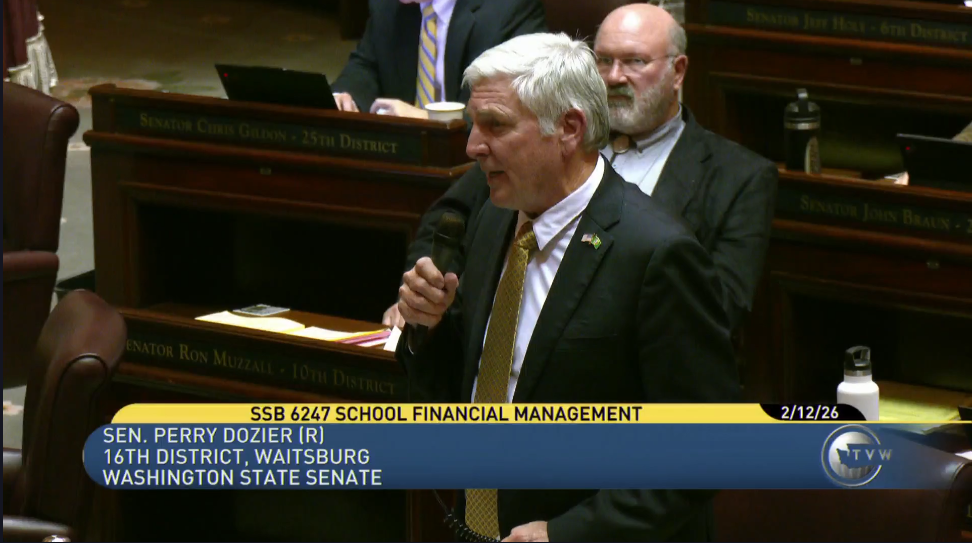
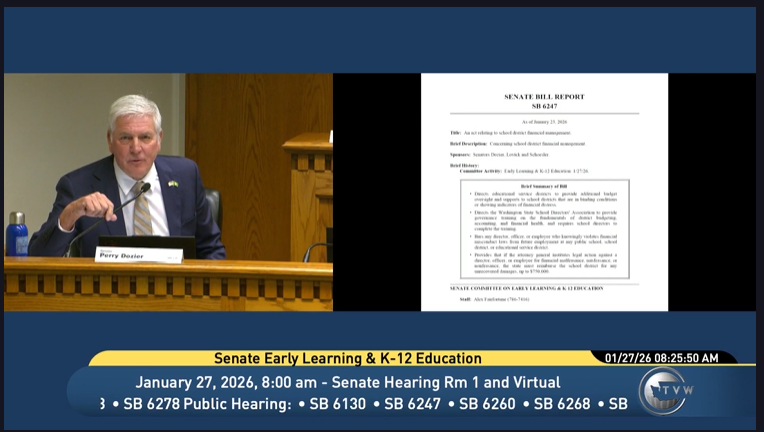
Knowing that Olympia’s effort to dissolve the Prescott district originated with financial management by former district employees, I had introduced Senate Bill 6247 to hopefully spare other districts from going through the same ordeal.
My bill would create what amounts to an early-warning system regarding a school district’s finances. Although the Senate passed it unanimously, the education committee in the House made 13 changes before moving it forward to the House Appropriations Committee — which then let the bill die.
I’ve seen a lot of good Senate bills die in this same committee over the years, but it’s very difficult to understand why any legislator would not want to prevent waste, fraud and abuse in our schools — especially the kind that can ruin a district financially.

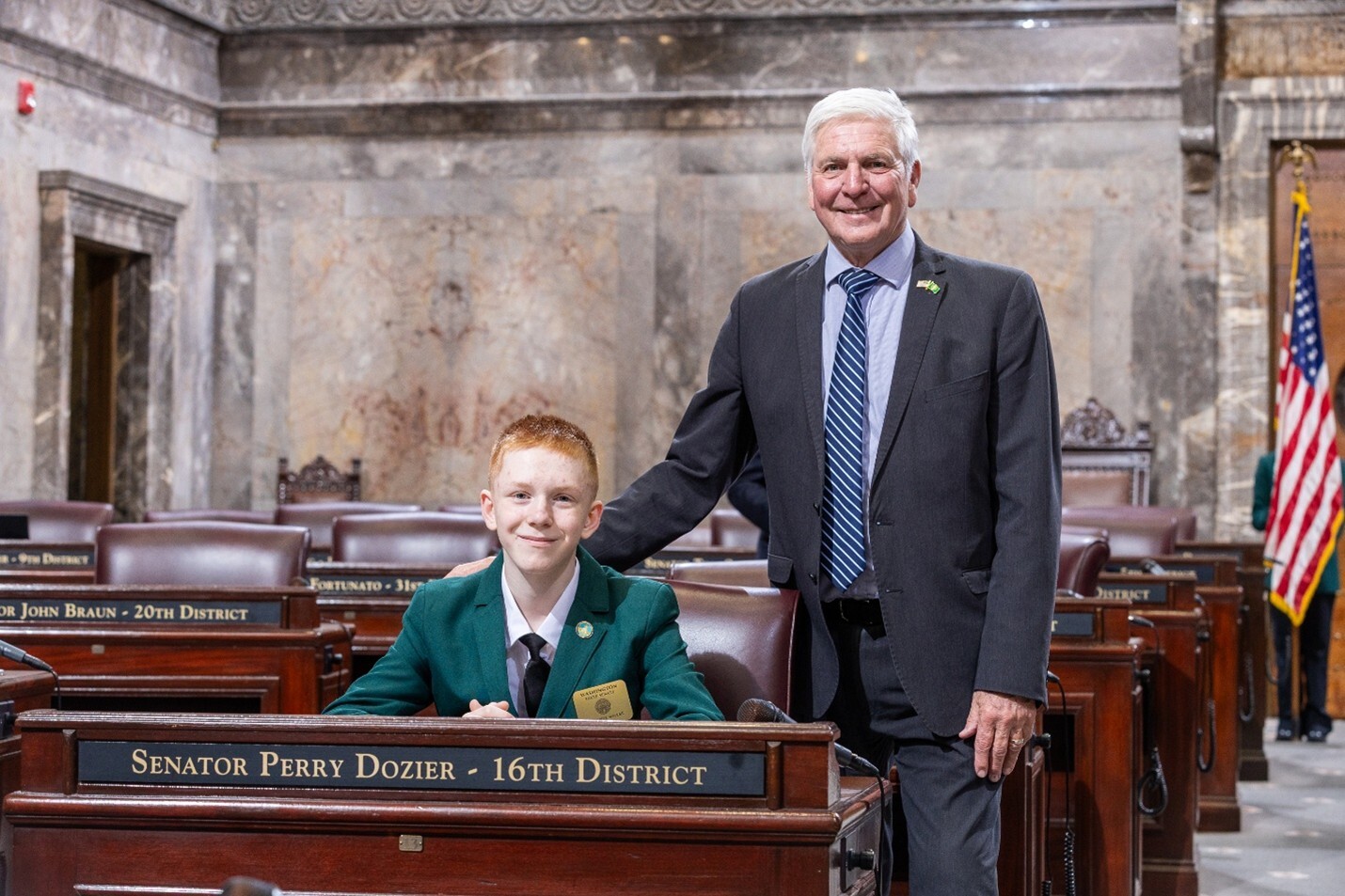
I enjoyed sponsoring Ruwaida El-Atwani as a Senate page recently. She’s a junior at Hanford High School and the 16-year-old daughter of Kadriye and Osman El-Atwani of West Richland.
***
I am working to make living in our state more affordable, make our communities safer, uphold our paramount duty to provide for schools, and hold state government accountable. I’ll work with anyone who shares those goals and wants to find solutions.
Please reach out to my office with your thoughts, ideas and concerns on matters of importance to you. I am here to serve and look forward to hearing from you.
Sincerely,
Perry Dozier
State Senator
16th Legislative District
EMAIL: Perry.Dozier@leg.wa.gov
OLYMPIA PHONE: (360) 786-7630
OLYMPIA OFFICE: 342 Irving R. Newhouse Building
MAILING ADDRESS: P.O. Box 40416, Olympia, WA 98504